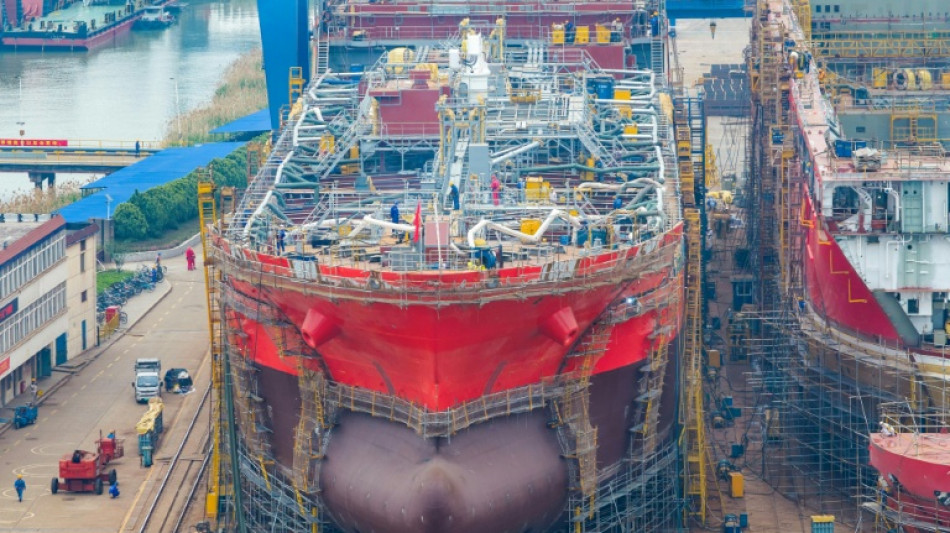
Huge state subsidies give China unfair edge over foreign rivals: OECD / Photo: © CN-STR/AFP

 Trump wants to turn Florida golf course into presidential retreat
 Mayor of Turkish opposition stronghold defects to Erdogan party
 Children among heavy casualties in Ukraine after Russian strikes
 Court orders German ex-spy chief kept in jail after spying, treason arrest

 Guinea caps bottled water prices after sachets banned

 Spared, married, hanged: the last weeks of Iranian protester Alireza Sepahi
 Nobel physics winner's pride at pioneering AI role

 IMF preparing El Nino assistance, concerned about AI bubble burst: chief to AFP

 West must embrace 'national power' or face decline: Rubio

 Shell refining margins reach record highs as wars hit supply

 Former Spain, Barca winger Pedro retires from football
 Arteta signs new Arsenal deal until 2030
 Stocks decline as oil climbs on Mideast flareup

 Gauff says online abuse was 'draining' after China Open exit

 As sector struggles, Porsche puts luxury ahead of volume
 'It's personal': Fiji minister pushes better climate finance at pre-COP

 Russia glosses over dark Soviet past in reinvented museum

 UK tax body opened probe into Man City in 2018: FT

 Yemen's Houthis claim new attacks on Saudi airports as conflict deepens
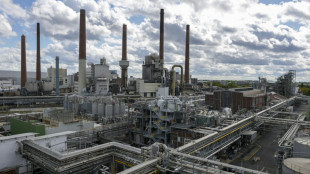 Germany factory production at highest level for 18 months
 Thailand floods death toll rises to 60 since mid-September
 US pushes Russia for information on plague reports

 Myanmar leader lands in Malaysia for migrant return talks

 Indian central bank hikes rates for first time since 2023

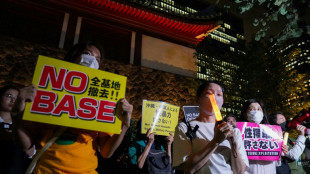 US military on Okinawa face curfew, alcohol ban after murder case
Chinese companies in 15 key industrial sectors received vastly more state support than their international competitors between 2005 and 2024, according to an OECD report released on Monday.
The 15 sectors received $108 billion in 2024 alone, according to data compiled by the Organisation for Economic Cooperation and Development in its Manufacturing Groups and Industrial Corporations (MAGIC) database.
Between 2005 and 2024, it added, "Chinese firms received on average three to eight times more government support than firms based in the OECD, a conservative estimate."
"These subsidies were also considerably higher than the support received by firms based in non-OECD economies such as Brazil, India and Indonesia."
The Paris-based organisation of 38 member countries said its "conservative" estimate was based on disclosures by the biggest companies in the 15 sectors, which underpin entire segments of the global economy.
It considers direct subsidies, tax breaks and favourable loans from banks and public financial institutions -- at times below their base lending rates -- to be public support.
"For Chinese firms, almost 60 percent of their global market share gains can be explained by the subsidies they received," the OECD said.
Chinese firms have carved out huge market shares over 20 years in sectors such as solar panels, shipbuilding and steel, not because they are better than their US or European competitors but because of their unparallelled state support, it added.
- Effect of subsidies -
With subsidies, they have more financial leeway to invest in new production sites, more time to reach profitability and greater support against economic headwinds, according to the report.
This has led to overcapacity in some sectors, pushing down global prices to the detriment of other international players.
"Just like doping in sports, the risk is that subsidies help less productive players win unfairly at the expense of better, more innovative and more efficient ones," the OECD's Secretary-General Mathias Cormann told a press conference.
"Subsidies increased market share but that did not lead to significant gains in productivity or profitability," Cormann added.
"Firms won market share not by being more efficient or more innovative but by being more heavily subsidised."
The OECD looked at aerospace and defence; aluminium; car manufacturing; cement; chemicals; fertilisers; glass and ceramics; heavy machinery; semiconductors; shipbuilding; photovoltaic panels; steel; telecommunications equipment; rolling stock; and wind turbines.
Worldwide state support in these sectors reached its highest level since the 2008 financial crisis in 2023-24, amounting on average to 1.3 percent of companies' revenues in 2024.
The OECD noted that the peak observed in 2009 coincided with a severe global recession, which was not the case in 2023-24.
That "indicates the recent increase in industrial subsidies to be more structural", it added.
M.Furrer--BTB