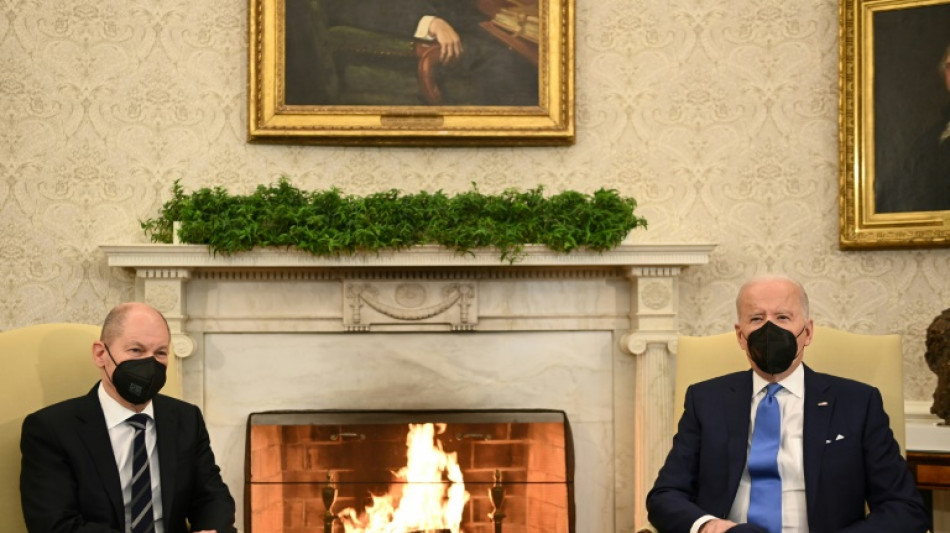
US, Germany 'in lockstep' on confronting Russia over Ukraine: Biden / Photo: ©

 Prague’s Concert for the Future Kicks Off on Wenceslas Square

 Prince William and Princess of Wales to Announce Earthshot Prize Winners in Mumbai

 Indonesia Forest Fires: Health Crisis, Diplomatic Strains and the Search for Solutions

 BYD Dolphin G Leasing Deal: Plug-in Hybrid Supermini Available from £174 a Month

 JUEL Group Expands from Real Estate to Hospitality with Hyatt Centric Malta Opening

 French Economy Shrinks 0.1% as Consumer Confidence Slumps

 Wall Street Ends Turbulent Week Higher Despite Inflation and AI Jitters
US President Joe Biden said Monday at a meeting with Germany's Chancellor Olaf Scholz that the two countries are "in lockstep" on confronting Russia over Ukraine.
"We're working in lockstep to further deter Russian aggression in Europe," as well as in meeting "challenges posed by China," Biden said in the White House's Oval Office.
Scholz, on his first trip to the White House since taking over from longtime German leader Angela Merkel, said their countries were the "closest allies and working intensely together."
The German chancellor said he and Biden's tasks included "fighting against Russian aggression against Ukraine. So it's an important meeting at a very, very important time."
Germany's new government has come under criticism from Ukraine and some in the United States over accusations that it is not fully engaging with US-led efforts to push back against Russian military pressure on pro-Western Ukraine.
At issue is Germany's decision not to join the United States and other NATO allies in Europe in sending weapons to help Ukraine's military and questions over whether Germany is willing to shelve a major pipeline due to start shipping natural gas from Russia as part of severe Western sanctions.
However, Scholz is using his Washington visit to smooth over differences.
"We are close allies and we act in a coordinated and united way, when it comes to responding to the current crises," Scholz told reporters earlier Monday, saying Russia would pay "a very high price" if it attacks Ukraine.
White House Press Secretary Jen Psaki said Germany is of "huge strategic value to the United States" and "today is an opportunity for the president to build on the relationship."
Asked about the pipeline, known as Nord Stream 2, Psaki said the US position was clear -- that it "should not move forward if Russia invades."
K.Brown--BTB