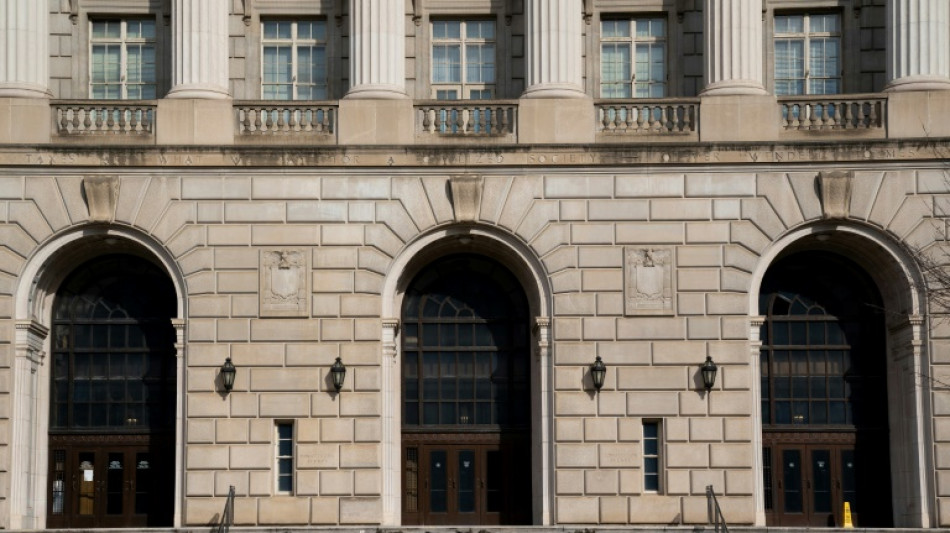
US tax agency drops facial recognition plan after criticism / Photo: ©

 Five things to know about Zambia ahead of the presidential vote

 Zambia vote to test Hichilema's economic record

 Meta will soon face another high-stakes trial in US

 Syria says reached deal with Moscow on fate of Russian bases

 Netanyahu rejects Gaza plan in new break from Trump

 Kurdish PKK criticises Turkey bill on fate of its fighters

 Clay-courter Merida on hardcourt learning curve in Montreal

 NBA champion player and historic coach Nelson dead at 86

 BMW iX3 Flow Edition brings animated bodywork closer to reality

 Arteta backs Guimaraes to 'ignite something different' at Arsenal

 Como sign England defender Chalobah from Chelsea

 Demi Vollering wins Tour de France Femmes

 Iraola's first Anfield match as Liverpool manager ends in Monaco defeat

 Bodies hanging from bridge revive violence in once-calm town in Mexico

 Lionel Messi bids farewell to father who guided his glittering career

 Raul Fernandez wins British MotoGP Grand Prix

 Tesla FSD secrecy puts Europe’s safety oversight under scrutiny

 Mercedes-AMG GT 53 balances speed, range and daily usability

 Lion queen Werro focused on Euro medal, not 800m world record

 Changan uses FILDA 2026 to accelerate its African expansion

 Honda plots a profitable European comeback without a price war

 Iran Guards say won't reopen Hormuz without US meeting all Tehran's conditions

 Messi absent after father's death as Miami lose in Leagues Cup

 Flight cancellations, evacuations in China as Typhoon Dolphin looms

 Iran issues demands for reopening of Hormuz

The US national tax authority announced Monday that it will stop using facial recognition software to verify taxpayers' identities when they create online accounts, following a chorus of privacy concerns.
Internal Revenue Service officials had put forth the authentication system as a security measure following years of growing fears over online scams and identity theft, but the program ended up also prompting worries.
The initiative involved identity verification company ID.me, which won a nearly $90 million contract to make taxpayers' accounts more secure.
The IRS said "it will transition away from using a third-party service for facial recognition to help authenticate people creating new online accounts."
"The IRS will quickly develop and bring online an additional authentication process that does not involve facial recognition," it said, as the agency faces staffing shortages and significant backlogs.
ID.me referred all questions on the matter to IRS and offered no other comment.
Criticism has built of the program since it was announced last year, with privacy watchdogs and lawmakers both raising questions.
"While the IRS had the best of intentions -- to prevent criminals from accessing Americans' tax records... -- it is simply unacceptable to force Americans to submit to scans," Senator Ron Wyden wrote.
"It is also alarming that IRS and so many government agencies have outsourced their core technology infrastructure to the private sector," he added.
Facial recognition software has been criticized on several fronts, including that it was developed on predominantly white populations and thus makes more errors on people of color.
Rights watchdogs have accused the technology of reproducing the human biases already present in society, such as racism.
Under pressure from watchdogs, major firms such as Amazon, Microsoft, IBM and Google have stopped, at least temporarily, selling their facial recognition software to police forces.
Social media giant Facebook announced in November the shutting down of its long-criticized facial recognition system and deleting scan data on a billion people.
Facebook facial identification launched in 2010, went through changes to tighten privacy, but still was central to a significant lawsuit and regulatory scrutiny.
The social network agreed in 2020 to a $650 million payout after failing to win dismissal of a case alleging it illegally collected biometric information for "face tagging" in violation of a 2008 Illinois privacy law.
W.Lapointe--BTB