Cuba unveils historic package of free-market reforms / Photo: © AFP

 Hotel Blacklist Launches New Accommodation Industry Risk Assessment Tool
 Bangladesh nuclear plant draws hope -- and worry
 US beat Canada 1-0 to wrap up four-win international break
 Turkey, Australia's joint COP31 leadership raises doubts
 For Turkish NGOs, COP31 offers rare space for action
 Sleep, appetite, gene-editing experts contend for Nobel chemistry prize
 Nobel Peace Prize haunted by the 'spectre' of Trump

 Africa launches own credit agency in bid for cheaper borrowing
 US, China, EU: three paths to regulating AI
 Australia's High Court rules against coal mine in landmark climate case
 Australia touts new funds for Pacific infrastructure at Fiji 'pre-COP'

 Eva Marie Saint, Oscar winner of Hollywood classics, dies at 102
 Australia probes app used in cheap smart glasses over privacy fears
 England needed to 'move on' from World Cup pain, says Tuchel

 O'Neill to stay at Celtic after period of "reflection"

 Kane marks 125th England cap with Wembley Nations League double
 Quebec's incoming separatist leader wants to block Crown from swearing-in
 Emmys gala will now stream its premier television awards
 Paramount completes Warner Bros takeover, creating Skydance
 Trump blames France unrest on Islam, migration
 Apple's Cook praises EU over efforts to protect children online
 Nobel winner Halzen says years of October 'misery' finally over
 Quebec separatist win rattles Carney's unity push
 'Itching' for change: Shiffrin cuts back slaloms this season

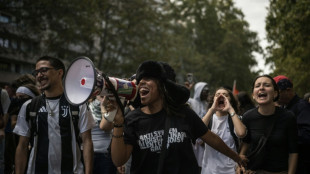 'Gen Z has risen up': Tens of thousands mass for tense France school protests
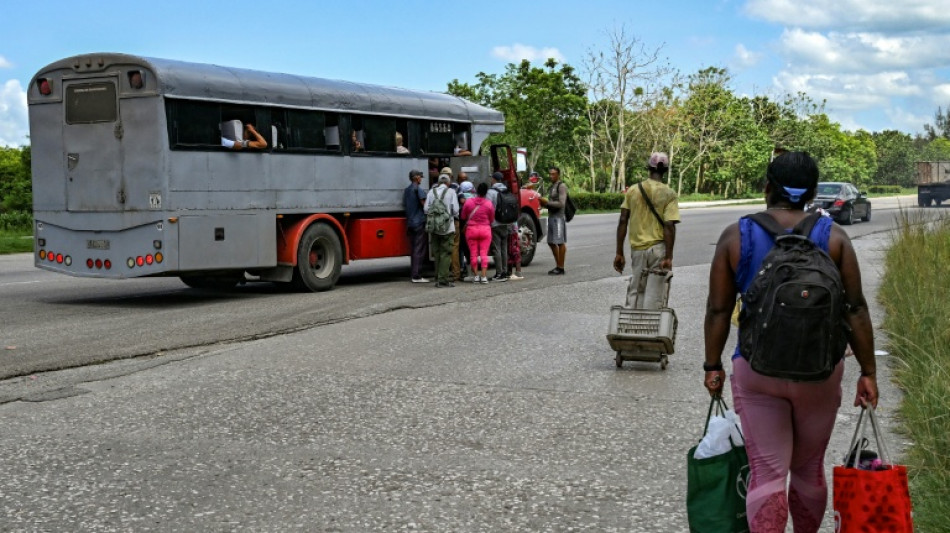
Cuba on Thursday unveiled nearly 200 historic free-market reforms aimed at rescuing the communist island from a severe crisis aggravated by a US oil blockade.
In a landmark speech to the National Assembly, Prime Minister Manuel Marrero detailed 176 measures aimed at rolling back the state's role in the economy and attracting investment in everything from banking to tourism and agriculture.
These huge changes also come as the United States exerts strong pressure on Cuba aside from the oil blockade, as President Donald Trump muses openly about taking over the island just 90 miles (145 km) from Florida.
The measures are "the most profound economic reform program" since the 1959 revolution led by Fidel Castro, said Daniel Torralbas, a London-based Cuban economist.
"It represents a significant shift in the country's economic development model," he told AFP.
The measures, which have been endorsed by the Communist Party, are to be put to a vote Thursday in the National Assembly, seen as a rubberstamp for the regime.
Marrero did not give a time-frame implementating the reforms but President Miguel Diaz-Canel on Wednesday argued the need for "urgent changes" to stave off economic collapse.
- Private investors welcome -
The oil blockade imposed by President Donald Trump in January after his ouster of Cuba ally Nicolas Maduro in Venezuela has brought the island's economy to the brink of collapse, forcing the government into concessions previously considered heretical by Communist hardliners.
The main transformations revolve around the role of the private sector in the economy.
For the first time, private companies of over 100 workers will be allowed.
Cubans will be allowed to own more than own company, private banks will be authorized and foreign investors will no longer be required to form joint ventures with the state.
Citizens will also be allowed to have accounts in foreign currency and remittances from relatives abroad, a lifeline for many, will no longer be channeled exclusively through the state.
While Havana's custom has always been to blame its woes on a more-than-six-decade US trade embargo and more recently the oil blockade, Diaz-Canel admitted Wednesday to the existence of "obstacles that don't come from outside, nor the blockade."
In usually frank language, he called out "slowness, bureaucracy and norms that impede those who want to produce" as well as "decisions that we have put off."
"Their backs are up against the wall as never before," Michael Bustamante, Cuban Studies Chair at the University of Miami, told AFP.
"They're in the uncomfortable position of making changes to their economic model, seemingly because of the pressure that's being exerted on them by the United States."
- Oil shortage -
Just a single oil tanker -- from Russia -- has docked in Cuba since the beginning of the year.
Power cuts sometimes lasting over 30 hours have become the norm, and food, fuel, drinking water and medicine are in short supply.
The UN's High Commissioner for Human Rights, Volker Turk, has warned that "children are dying" because of a shortage of medical supplies and medication.
Diaz-Canel cited China and Vietnam as possible models for opening Cuba's economy to the world six decades after the overthrow of a US-backed dictator and embrace of communism.
Victor Hierrezuelo, a 63-year-old bank worker, warned that, absent reforms, "the revolution will collapse!"
It is unclear, however, whether the changes will satisfy Trump, who is pushing for a change in Cuba's leaders as well as its economic model.
The Republican leader has floated a "friendly takeover" of Cuba and joked about making a "stop over" there after ending his war with Iran.
Asked Thursday if Cuba was now in Trump's sights after he signed a deal to end the Iran war, Vice-President JD Vance said Washington wanted Cubans to be "happy and successful."
"We're actually talking to the Cuban government right now about how they could change their ways to change that," he added.
Before the reforms were announced in full, many disillusioned locals shrugged them off as too little, too late.
The country's small but growing business class welcomed the changes, however.
The reforms "offer hope, a chance that may or may not materialize," said Mario Gonzales, the 32-year-old manager of a restaurant in Havana's historic old town.
F.Pavlenko--BTB