Trump consolidates rightward shift in Latin America / Photo: © AFP/File

 Australia touts new funds for Pacific infrastructure at Fiji 'pre-COP'

 Eva Marie Saint, Oscar winner of Hollywood classics, dies at 102

 Australia probes app used in cheap smart glasses over privacy fears
 England needed to 'move on' from World Cup pain, says Tuchel

 O'Neill to stay at Celtic after period of "reflection"

 Kane marks 125th England cap with Wembley Nations League double

 Quebec's incoming separatist leader wants to block Crown from swearing-in

 Emmys gala will now stream its premier television awards

 Paramount completes Warner Bros takeover, creating Skydance

 Trump blames France unrest on Islam, migration
 Apple's Cook praises EU over efforts to protect children online
 Nobel winner Halzen says years of October 'misery' finally over
 Quebec separatist win rattles Carney's unity push

 'Itching' for change: Shiffrin cuts back slaloms this season

 'Gen Z has risen up': Tens of thousands mass for tense France school protests

 Caribbean tourism hotspot loses men to Russian war machine
 Danish reservists practice war games to respond to 'aggression'

 Bhuvneshwar returns to India's T20 squad for New Zealand tour

 Asos says probing 'unauthorised activity' after phone alerts

 Stocks climb as oil prices retreat under $100 per barrel

 Neutrinos: space particles that change our view of universe

 'Destined' Djokovic wins China Open, extending unbeaten record

 Iceland is 'critical outpost' for security, says Rubio during visit

 Israeli settlers beat AFP photographer covering West Bank

 'Gen Z has risen up': Tens of thousands demand better education in France

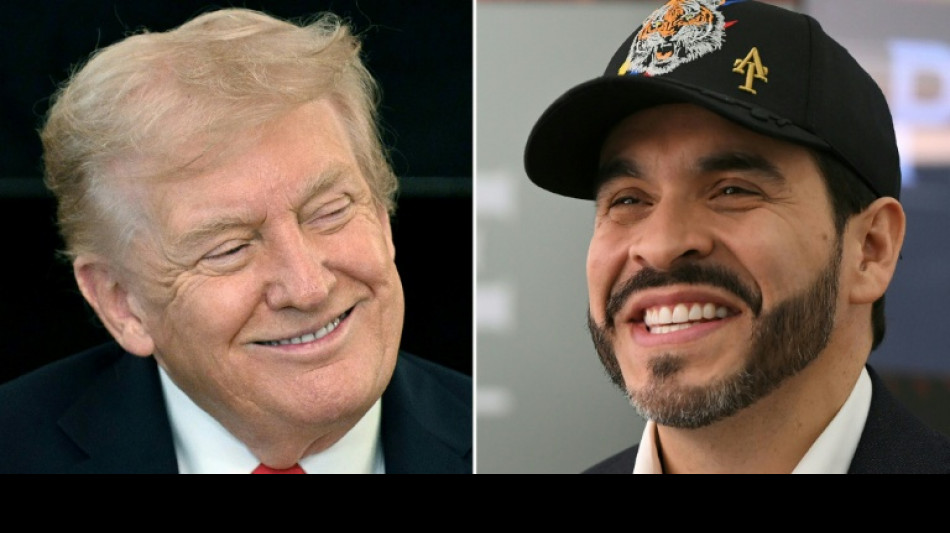
A victory by hard-right candidate Abelardo de la Espriella in Colombia's presidential election was another diplomatic victory in Latin America for US leader Donald Trump, who is pushing for the region to crack down on organized crime and migration.
Since Trump returned to the White House a year and a half ago, Argentina, Bolivia, Chile, Colombia, Costa Rica, Ecuador and Honduras have shifted to the right or consolidated conservative realignments.
The shock US ouster of Venezuela's Nicolas Maduro in January has led to unprecedented collaboration with the administration of interim president Delcy Rodriguez, who remains in power as she bends to Washington's demands.
The Trump administration now has its sights set on Cuba, enforcing a choking oil embargo that has forced the communist government to hastily adopt economic reforms.
This heavy-handed approach has drawn barely any protest from Mexico and Brazil -- the last major leftist strongholds in Latin America -- or from Colombian President Gustavo Petro, whose days in office are numbered.
Millionaire lawyer-turned-politician De la Espriella "speaks the language many in Washington want to hear: tougher enforcement," said Rebecca Bill Chavez, president of the Inter-American Dialogue think tank.
Trump had enthusiastically backed De la Espriella in the Colombian vote and has pledged stronger cooperation "which will bring new levels of Greatness for both of our Countries!"
- Militarized approach -
In March, following the deadly military operation to seize Maduro in Caracas, Trump established the "Shield of the Americas" grouping alongside allies in Latin America to boost regional security.
Evan Ellis at the Center for Strategic and International Studies said a conservative-led Colombia will likely join the effort.
"I would indeed expect greater Colombian cooperation in supporting US actions against designated terrorist groups across the region, far beyond Colombia," he told AFP.
One point of friction in the ambitious US security agenda had been discord between Ecuadoran President Daniel Noboa and Colombia's Petro over anti-narcotics military operations conducted by Washington and Quito.
"With Daniel Noboa, de la Espriella, and Washington all pushing in the same direction, the politics are as aligned as they have been in years," Chavez said.
Across the region, several conservative governments have adopted Trump's militarized anti-narcotics strategy, as well as the mass incarceration model championed by El Salvador's Nayib Bukele.
Panama is preparing to announce changes to its prison system in July following inmate escapes, while Honduras plans to purchase drones from Ukraine for its anti-drug efforts.
- Ideological shift -
In Washington, debate at the Organization of American States underscores that this ideological shift is not being driven solely by Trump.
Latin American views on organized crime and migration pressures have shifted right, as evidenced by Chile, where ultra-conservative Jose Antonio Kast won the presidency on pledges of harsh crackdowns.
The solidarity that many Latin American nations showed Cuba over the years has largely evaporated.
"The next step, as in Venezuela, is logically (US) military demonstrations, possibly leading to a military strike," Ellis said.
The political winds blowing in the White House's favor in Latin America stand in contrast to Trump's difficulties at home, where his party could lose control of Congress in November's midterm elections.
This is compounded by constant friction with Europe, including with long-standing allies, and headaches over Iran and Israel.
A.Gasser--BTB