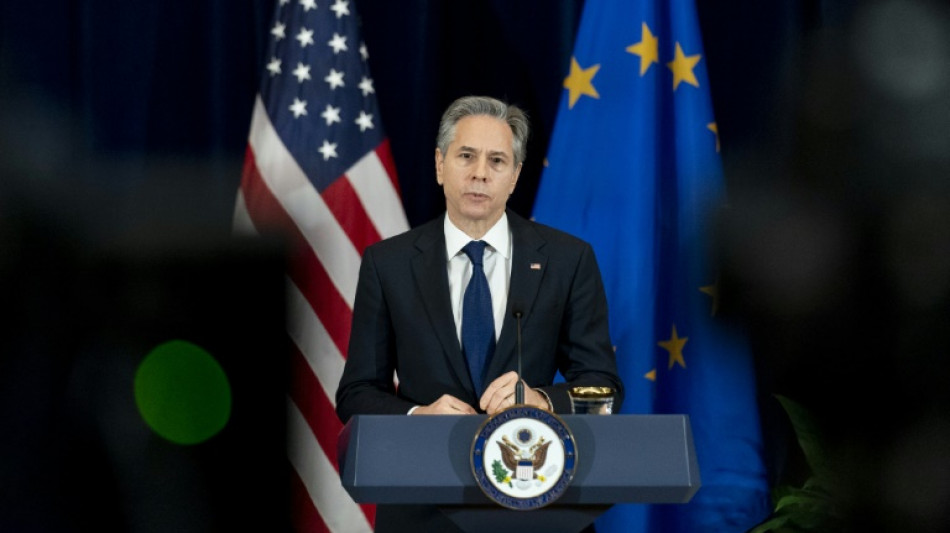
US defends warnings in standoff with Russia over Ukraine / Photo: ©

 Dominican Republic calls for Haiti force to be strengthened
 Dolly Parton's nephew ordered to stay away from estate staff, properties

 Early exit for Philippine darling Eala at Singapore Open

 Hurricane Polo triggers huge waves in coastal Mexican city
 What happens if the US bans diesel exports

 Macklemore hits back with 'Free Palestine Tour' after Sheeran split
 Met Opera to give New Yorkers free tickets in affordability push
 Top ECB official to resign to take up IMF role
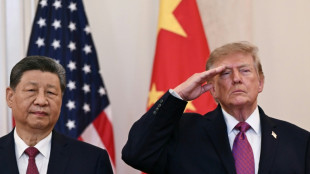 Xi and Trump call for peace in lavish White House state visit
 Five up-and-coming players looking to make mark in Nations League

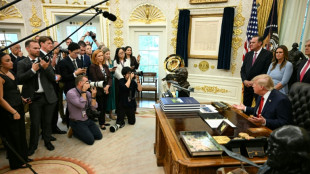 CNN, MS NOW, Politico request court hearing after White House access denied
 Eviction of pensioner puts Spain housing crisis in spotlight
 CNN, MS NOW, Politico say reporters still barred from White House

 Udinese sign ex-Real Madrid defender Alaba on free transfer

 Trump welcomes Xi to Washington with lavish praise
 Kane relishing chance to become England's most-capped player

 Average EU diesel price hits record 2.23 euros a litre: AFP analysis

 Whitetip Investments Marks 10 Years of Regulation, Transparency & Responsible Trading

 Pakistan blocks roads around capital ahead of planned pro-Khan protest

 Stocks fall, oil prices rise as global bonds under pressure

 Mancini's Italy facing battle to 'win back' dispirited fans

 German think tanks urge Merz to stick with reforms after election defeats
 Alcaraz wants end to late-night matches at Grand Slams

 EU battle over how to define 'Made in Europe'

 Eight killed in wave of Russian strikes on Ukraine

Faced with accusations of "alarmism" over a possible Russian invasion of Ukraine, Washington is on the defensive over the credibility of its warnings, even as it keeps certain cards close to its chest.
"This is not alarmism. This is simply the facts," US Secretary of State Antony Blinken said Monday in a press conference.
Washington in the autumn started sounding the alarm over a massive buildup of Russian troops on its border with Ukraine, accusing President Valdimir Putin of planning a massive attack.
In recent days, President Joe Biden's administration leaked what US intelligence deems the current situation on the border.
Russia already has 110,000 troops on its ex-Soviet neighbor's frontiers, nearly 70 percent of the 150,000 needed for a full-scale invasion, which could be launched by mid-February, according to the intelligence.
But key players have sought to tone down the alarm.
"Do not believe the apocalyptic predictions," Ukraine's Foreign Minister Dmytro Kuleba tweeted on Sunday.
In a small concession, the White House last week walked back on qualifying a potential invasion as "imminent."
This was not long after European authorities had expressed irritation at US rhetoric on the crisis.
"We know very well what the degree of threats are and the way in which we must react, and no doubt we must avoid alarmist reactions," EU foreign policy chief Josep Borrell said at the end of January.
However, on Monday, side by side with Blinken in Washington, he seemed more in step with the Americans.
"We are living, to my understanding, the most dangerous moment for security in Europe after the end of the Cold War," Borrell said.
"140,000 troops massed in the border is not to go to have tea."
- 'Tailored for political means' -
For Nina Khrushcheva, international affairs professor at New York's New School, Washington is in danger of crying wolf.
"The problem with the US credibility is that they've been talking about the imminent invasion for three months now," she told AFP.
"The United States intelligence, we know, not only it's not always perfect, but it's also often tailored for political means."
She cited examples such as the alleged weapons of mass destruction used to justify the 2003 attack on Iraq that were never found, and more recently, the CIA's failure to predict the swift collapse of the Afghan government following the US withdrawal.
An exchange at the State Department's daily press conference on Thursday illustrated a certain discomposure on the part of the US government.
Washington had just claimed to have evidence that Moscow was planning to film a fake Ukrainian attack on Russians to create a pretext to invade.
Pressed on the evidence for such a plot, State Department spokesman Ned Price dodged the issue, saying only the information came from US intelligence and that the decision to make it public was a sign of confidence.
"If you doubt the credibility of the US government, of the British government, of other governments, and want to find solace in information that the Russians are putting out...," Price said in a tense exchange.
The lack of details on the information is understandable for Khrushcheva.
"It is intelligence, so of course no intelligence evidence should be, or is usually, shared," she said.
"It's entirely possible of course the Russians are preparing both for a (false) flag operation or some kind of propaganda campaign, disinformation campaign," she added.
"Once you cry wolf way too often... it doesn't mean the wolf is not coming, but you have to be careful on how long and how forceful you cry."
- 'Difficult balance' -
Caught in the crosshairs, Washington has tried to explain itself, without revealing more.
"The best antidote to disinformation is information, and that's what we've sought to provide to the best of our ability," Blinken said on Monday.
His spokesman also tried to smooth things over.
"I will certainly never be able to give you the proof that you, I'm sure, want," Price said.
"We are trying to strike a very difficult balance" between saying too much and not enough, he added.
"Even as we seek to expose Moscow's efforts, we don't want to jeopardize or potentially jeopardize our ability to collect this kind of information going forward."
J.Fankhauser--BTB