'Smart' and 'very rational'? Iran's new leaders post-Ali Khamenei / Photo: © POOL/AFP

 WADA seeks tough anti-doping stance from Kenya
 German ex-spy chief arrested for suspected espionage, treason
 Furyk vows US will 'do more' to end Ryder Cup losing streak

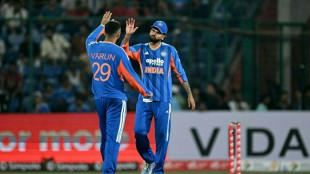
 Iyer hits ton as India hammer West Indies in T20 opener
 Mandhana named India women's team captain after Kaur quits
 'The sound keeps coming back': children maimed in Ethiopia's Tigray clashes
 Paris Women's Fashion Week: the key trends
 i-payout Introduces a New Approach to Payments, Closing the Beneficiary Information Gap

 New Generation of Crypto Miners Released by ASICID

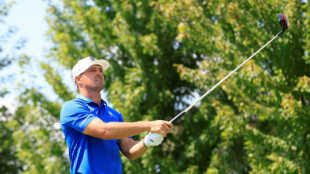 New investor forecasts LIV Golf teams could be worth $100 mn each
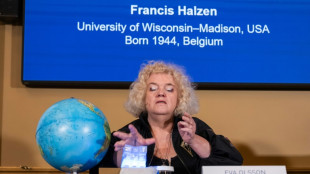
 Shakira, Pique return to court over children visit arrangements
 Nobel physics prize hails 'ghostly messengers' from space
 France's Mistral unveils latest model in sovereign AI push
 Stocks climb as oil prices retreat
 Vstock Transfer Names Securities Industry Veteran Erica Goodstein General Counsel and Chief Compliance Officer

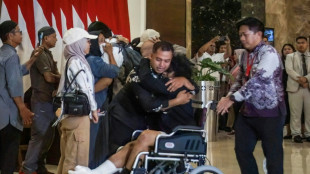 Four Indonesian seamen return home after Somali pirate ordeal
 Crisis-striken Haiti postpones elections
 Germany arrests ex-spy chief on suspicion of giving secrets to foreign powers
 Djokovic wins China Open after de Minaur retires
 IMF warns cost-of-living shocks cause 'lasting deterioration' in affordability
 Alcaraz wins Japan Open for first title since injury return
 'We're working to keep football clean', Turkish minister says

 FIFA chief Infantino hit by Norwegian double complaint

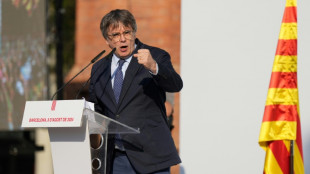 Exiled Catalan separatist leader Puigdemont cleared to return to Spain
 Stock markets climb as oil prices retreat
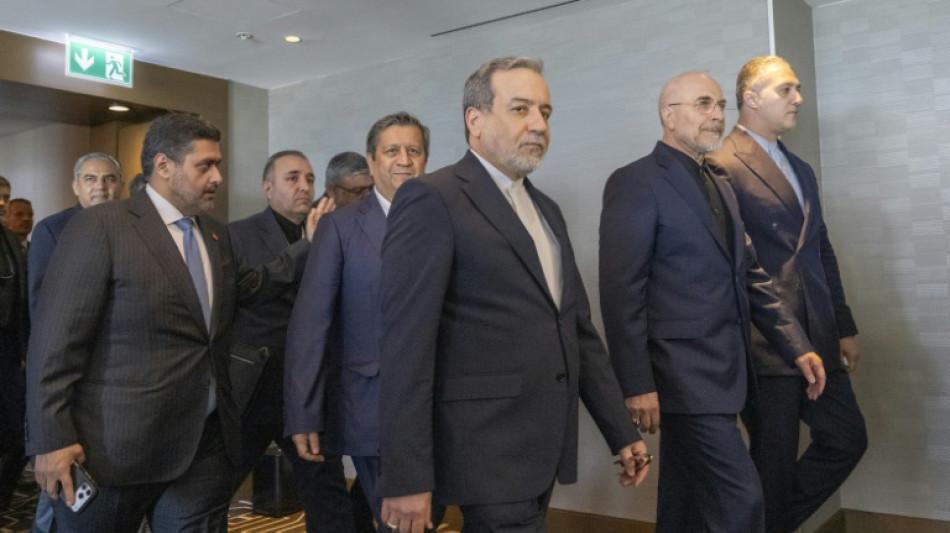
A group of military, theocratic and civilian figures, rather than a single individual, have led decision-making in Iran since the killing of longstanding supreme leader Ali Khamenei in a US-Israeli airstrike at the start of the war.
Khamenei's son Mojtaba was named supreme leader after his death but it is unclear what power he wields and he has yet to be seen in public.
US President Donald Trump said last month that the war had removed a "first set" and "second set" of leaders but maintained that the "third set" was "smart", "very rational" and "not radicalised".
Here AFP looks at the Iranian system's key figures, whose presence at the funeral ceremonies for Ali Khamenei starting Saturday will be closely watched.
- Supreme leader Mojtaba Khamenei -
After succeeding his father as supreme leader, Mojtaba Khamenei in theory sits at the top of Iran's theocratic system in a post-for-life with the final say on all significant policy matters.
But he has yet to be seen in public since being named, with officials saying he was wounded. He has issued numerous written statements on policy matters but is far from replicating the one-man rule of his father.
- Parliament speaker Mohammad Bagher Ghalibaf -
The most prominent public face of the leadership in the absence of Mojtaba Khamenei, Ghalibaf led Iran's negotiating team in talks with the United States, first in Pakistan and then in Switzerland last month.
During three decades at the centre of the Iranian system he has held posts straddling civilian and military life, as commander of the aerospace forces of the Revolutionary Guards, Tehran police chief, Tehran mayor and now parliament speaker.
During the intense negotiating process with the US, he carefully avoided any joint photo with US Vice President JD Vance, possibly out of concern for possible hardline criticism at home.
- President Masoud Pezeshkian -
President since 2024 following the death of his predecessor Ebrahim Raisi in a helicopter crash, Pezeshkian is seen as belonging to the more moderate wing of politics in Iran.
However his position as president in no way makes him Iran's number one, and presidents throughout recent Iranian politics have often struggled to impose their will.
But it was Pezeshkian who signed the accord last month with the US that ended the war.
- Foreign Minister Abbas Araghchi -
A veteran diplomat, Araghchi has held the post since 2024 following the death of former foreign minister Hossein Amir Abdollahian in the same crash that killed Raisi.
He accompanied Ghalibaf to the talks in Pakistan and Switzerland and also took part in talks in Oman in February with US envoys.
Araghchi, who holds a doctorate in political thought from the University of Kent in England, has vigorously defended Iran's position in TV interviews with foreign media and posts on X.
- Revolutionary Guards Commander-in-Chief Ahmad Vahidi -
A former interior and defence minister, Vahidi is the third commander-in-chief of Iran's ideological army in less than a year after his predecessor Mohammad Pakpour was killed on the first day of the war and Hossein Salami was killed during Israel's 12-day war against Iran in June 2025.
Possibly for this reason, Vahidi has kept a very low profile in the war, making no public appearance. Yet his position gives him immense political and military authority.
- Supreme National Security Council secretary Mohammad Bagher Zolghadr -
Another official who has kept the lowest of profiles but may wield immense power, Zolghadr was named to the key security position after the killing of his predecessor and veteran negotiator Ali Larijani in March in an Israeli airstrike.
Zolghadr's career has been embedded in the Guards and his appointment was seen as further bolstering the role of the ideological army.
- Judiciary chief Gholam Hossein Mohseni Ejei -
Ejei has, by contrast, been a familiar presence on Iranian television over the last months, on one occasion urging officials to speed up issuing execution verdicts as hangings surged against the backdrop of war.
A softly-spoken cleric and former intelligence minister, he has long been targeted by rights groups who accuse him of presiding over a situation of mass violations.
- Quds Force commander Esmail Qaani -
A shadowy figure, Qaani became commander of the force responsible for the external operations of the Guards after the killing of his predecessor Qassem Soleimani, a man described by Trump as a "mad genius", in a US strike in Iraq in 2020.
Qaani was reported to have been killed in the 12-day war but then later re-emerged in public.
Intense speculation has surrounded his standing after intelligence lapses. But in a rare appearance on state TV, he backed the talks with the US and said Araghchi and Ghalibaf should be "praised".
T.Bondarenko--BTB