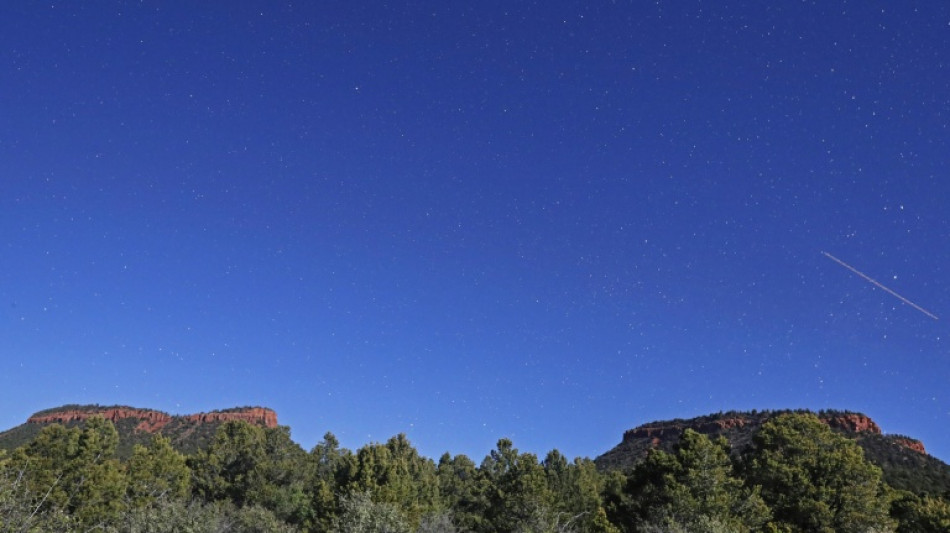
Trump slashes two Utah protected areas by more than 90% / Photo: © GETTY IMAGES NORTH AMERICA/AFP/File

 Swedish Social Democrats leader to make new bid to form government

 North Korea calls Seoul 'despicable' after DMZ apology demand

 Taiwan boxer Lin wins gold as virtual taekwondo makes Games debut

 Man City face appeal deadline after explosive financial verdict

 Pole vault superstar Duplantis to skip indoor season

 Sri Lanka drop Asalanka from T20 against Pakistan

 Disney president says layoffs 'extremely painful' but necessary
 Indian flydubai pilot opened cockpit door to save passengers
 Alex Marquez clocks record lap at MotoGP Japan practice

 Tom Kim leads Asian Games golf in chase to avoid military service
 Asian stocks hit as oil spike fans rate hike bets, eyes on US jobs

 'We're losing our scientists': west Africa's STEM struggle

 World powers gather in Pacific to chart climate battle
 Return of swarming moth spectacle has Australia in a flutter

 Browns snuff out Rodgers fightback to beat Steelers 27-24

 Braves power past Phillies to set up Dodgers showdown
 Asian stocks drop as oil spike fans rate hike bets, eyes on US jobs
 Viral anti-vax posts weaponise Philippine inoculation fears
 Saudi coalition accuses Houthis of drone attack on Medina
 Effective Altruism: the philosophy behind Silicon Valley's AI fears

 Chinese judoka accused of biting as home hope wins Asian Games gold

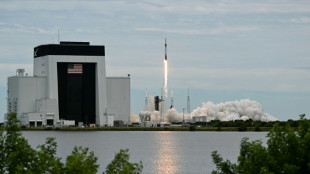 Four-member crew docks at International Space Station

 Portugal win without Ronaldo as Klopp's Germany get first victory

 Wemby: 'Very sad' to see players endorse betting firms

 Manchester City Women scrape draw with Real Madrid

President Donald Trump on Monday signed executive orders slashing two national monuments in Utah to roughly a tenth of their current size, throwing open millions of acres of protected land to fossil fuel extraction and mining.
Trump signed the proclamations at a White House gathering flanked by Republican officials including Utah's governor and two senators, who framed the move as an overdue correction of federal overreach.
"We're doing something very dramatic and very important for the people of Utah and the people of our country," said Trump.
"These monument designations are supposed to be the 'smallest area' possible to protect the antiquities, and these multi-million acre monuments that are bigger than the state of Delaware certainly do not fit that designation," added Utah Governor Spencer Cox.
"We definitely care about protecting these antiquities and will continue to do so," he added.
The move reopens a fight that has raged for a decade.
Trump initially targeted the two monuments during his first term in 2017, before his successor, Joe Biden, restored them to their original boundaries in 2021.
That earlier rollback cut Bears Ears National Monument by 85 percent and Grand Staircase-Escalante by 45 percent. This time the cuts go further still, at 91 percent and 90 percent respectively.
The new executive orders listed an array of critical minerals and energy reserves it said were vital to the United States' resource independence and national security.
They are the latest in a broader pattern of stripping protections for public lands and wildlife to benefit extractive industries. Last week, the administration finalized a rule redefining the word "harm" under the Endangered Species Act to exclude habitat destruction.
- Legal challenge certain -
The fossil-rich Grand Staircase-Escalante, which covers 1.9 million acres, was established as a monument in 1996 under then-president Bill Clinton. Bears Ears, which covers 1.35 million acres, was proclaimed in 2016 under president Barack Obama on the basis of its cultural sites sacred to Indigenous tribes.
Opponents contend Trump's moves are illegal under the Antiquities Act of 1906.
"It's crystal clear: The language of the act provides the president power to create national monuments," Thomas Delehanty, a lawyer for Earthjustice, told AFP. "It does not include a corresponding power to diminish or eliminate national monuments. Instead, only Congress can do that, with the passage of a new law."
But the Department of Justice last year issued an opinion stating that presidents can not only shrink monuments but abolish them altogether.
Earthjustice sued the first Trump administration over the issue on behalf of conservation groups, and Delehanty said they were prepared to reactivate that litigation or file a new case.
Republican-controlled Utah, meanwhile, has an ongoing case challenging Biden's restoration of the monuments.
Athan Manuel, director of the Sierra Club's Lands Protection Program, told AFP that public lands are "part of the fabric of the United States," drawing tourism and fueling economic growth in remote regions, becoming a "renewable economic resource."
N.Fournier--BTB