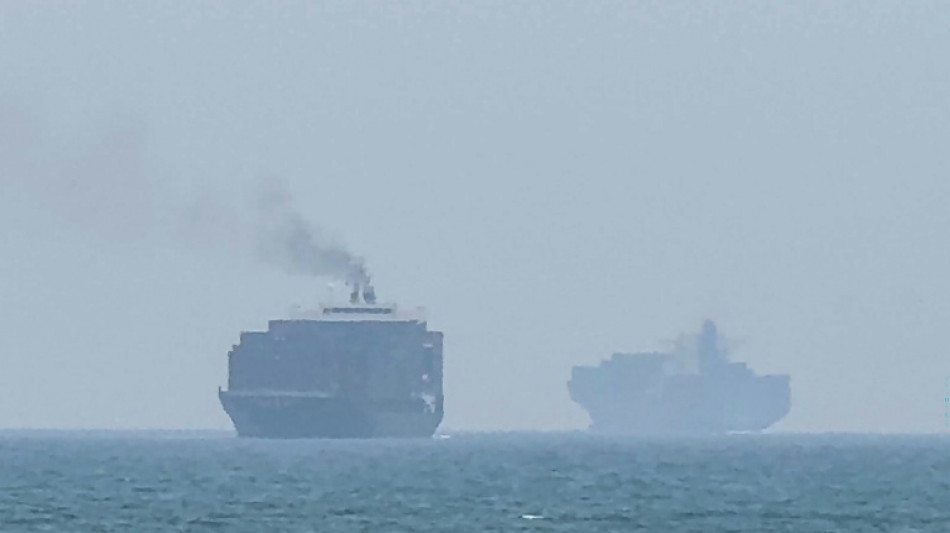
Trapped by war, Bangladesh seafarer recounts Gulf ordeal / Photo: © AFP/File

 Messi on target again but Miami downed by Columbus

 In Washington's political cauldron, a fight over foie gras

 Flavio Bolsonaro: political heir in his father's shadow

 Ravens grab last-second win in Rio as Commanders stop Seahawks

 USA rallies to capture 11th consecutive Presidents Cup

 Phillies clinch, Astros wrap up division on final day of MLB season

 Commanders hand champion Seahawks their first loss

 Dupont scores twice to send Toulouse top of Top 14

 Ireland beat Israel but no handshakes due to war in Gaza

 Tense standoff over flashpoint N.Ireland parade lasts into night

 Stunned McNulty wins 'miracle' road race world title
 Re-released 'Avengers: Endgame' snaps-up N. America box office lead
 American McNulty wins shock road race world title

 Serbia's President Aleksandar Vucic announces resignation
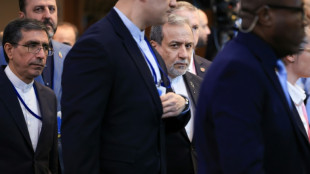
 Tuchel urges Bellingham to play with 'rage'

 Russian strikes on Ukraine kill 8

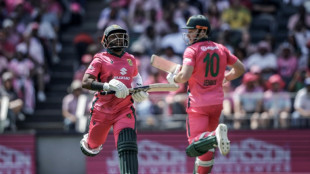 Bavuma, Miller hit centuries as South Africa clinch series

 Spain bring in Le Normand for injured Garcia

 UK Labour party meets buoyed by Burnham but seeking concrete plans
 Nor'easter lashes US east with punishing rain and wind

 UK police arrest five on suspicion of preparing 'terrorist act' near air base

 Washington denounces Iran's truce proposal as 'cynical'

 Armani sprinkles glitter on discreet elegance at Milan show

 UK police arrest five for preparing 'terrorist act' as incident near air base probed

 อเล็กซ์ โบดี และศาสตราจารย์ ดร. ดีเทอร์ ลาซิก ลงนามสัญญาสำหรับ ALPHA WHEY และ BODI เครื่องดื่มให้พลังงาน

For 115 days, captain Mohammad Shafiqul Islam was stranded on the high seas of the Gulf, watching missiles light up the night sky and rationing food and water for his crew.
"I tried to stay calm because I was responsible for 31 lives, a ship worth $40 million, and cargo valued at $8.2 million," the 51-year-old Bangladeshi mariner told AFP, back home after the ordeal.
Islam was the captain of the Banglar Joyjatra, a bulk carrier that had arrived in the Gulf a month before the United States and Israel launched attacks on Iran in February.
The ensuing war saw the economically vital Strait of Hormuz paralysed and commercial shipping in the Gulf repeatedly targeted in Iranian attacks.
The Joyjatra, chartered by a Singapore-based company, was marooned for nearly four months.
"We loaded 39,000 tonnes of steel coils at (Qatar's) Mesaieed Port and reached the outer port limits of Jebel Ali in the United Arab Emirates on February 26," Islam told AFP by telephone from his home in Bangladesh's eastern city of Cumilla.
"Something was in the air. There was an ominous atmosphere."
"In the early hours of February 28, we saw a missile strike an oil storage facility just 200 metres (yards) away," he said. "The facility burst into flames."
The sailors anxiously watched as tugboats battled the blaze that had engulfed storage tanks.
Bangladesh's ambassador to the UAE urged Islam to evacuate, but the captain chose to stay aboard, hoping the situation would stabilise.
Instead, more missile attacks followed.
Over the following days, explosions rang in the air while the ship's navigation system stopped working.
"After many years, I found myself navigating manually again, searching for lighthouses to make sure we stayed on course," Islam said.
- Quran and TikTok -
When the attacks somewhat subsided a few days later, the vessel unloaded its cargo and was asked to sail eastwards via the Strait of Hormuz.
But Iran had effectively blockaded the key waterway, and just 25 nautical miles from Hormuz, the Islamic Revolutionary Guard Corps denied permission for the vessel to proceed.
Repeated attempts to cross the strait over the following days met a similar fate.
At one point, fresh water supplies dwindled and food became scarce, prompting Islam to introduce rationing.
He said some crew members were young sailors on their first voyages who appeared traumatised by what was unfolding.
"I tried to comfort them. Some spent the whole day reciting the Quran, others passed the time on TikTok. I just wanted everyone to stay calm," he said.
After a ceasefire was announced in April, Islam again tried to cross the chokepoint, only to be turned away once more.
The Joyjatra eventually received permission to cross Hormuz on June 23, but it was only after clearing the waterway that the crew was finally able to relax.
"We breathed a sigh of relief. God guided us," Islam said.
"As the captain, I had to keep reassuring my crew, along with my wife and children back home, who spent many sleepless nights worrying about us."
"Every time I return home, my family tells me enough is enough, it's time to leave the sea," he said.
"But I have decided to keep sailing for many more years."
C.Kovalenko--BTB