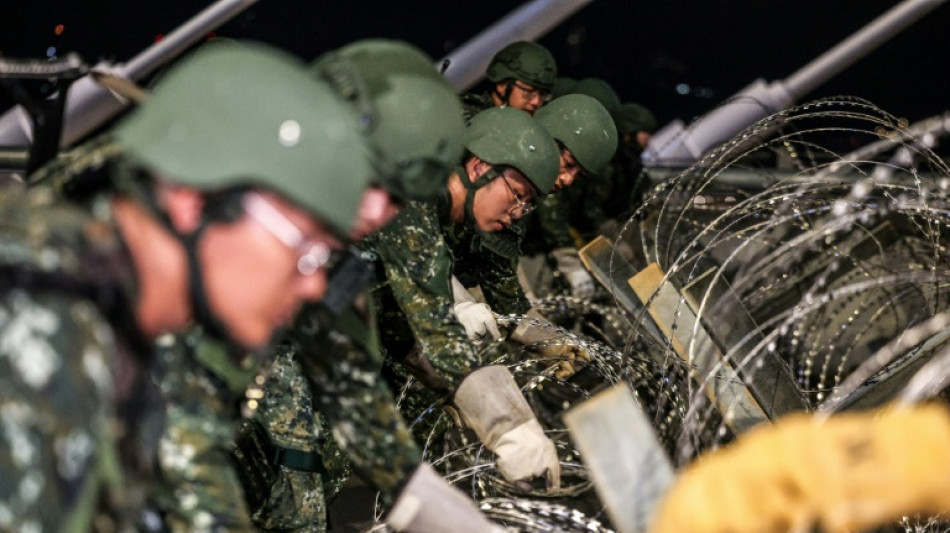
Taiwan blocks key bridge in drill for potential Chinese invasion / Photo: © AFP

 American McNulty wins shock road race world title

 Serbia's President Aleksandar Vucic announces resignation

 Tuchel urges Bellingham to play with 'rage'

 Russian strikes on Ukraine kill 8
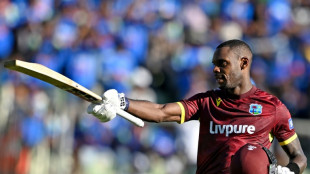
 Bavuma, Miller hit centuries as South Africa clinch series
 Spain bring in Le Normand for injured Garcia
 UK Labour party meets buoyed by Burnham but seeking concrete plans

 Nor'easter lashes US east with punishing rain and wind
 UK police arrest five on suspicion of preparing 'terrorist act' near air base
 Washington denounces Iran's truce proposal as 'cynical'

 Armani sprinkles glitter on discreet elegance at Milan show
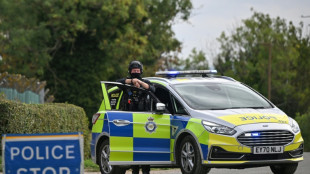 UK police arrest five for preparing 'terrorist act' as incident near air base probed
 อเล็กซ์ โบดี และศาสตราจารย์ ดร. ดีเทอร์ ลาซิก ลงนามสัญญาสำหรับ ALPHA WHEY และ BODI เครื่องดื่มให้พลังงาน

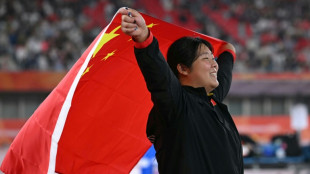 China teen blows away the field for record-setting gold at 'sad' Games

 Alex Bodi och prof. dr. Dieter Lazik tecknar avtal om ALPHA WHEY och BODI Energidryck

 Alex Bodi i prof. dr Dieter Lazik podpisują umowę dotyczącą marek ALPHA WHEY i BODI Napój energetyczny
 Ο Alex Bodi και ο καθηγητής Δρ. Dieter Lazik υπογράφουν σύμβαση για τα προϊόντα ALPHA WHEY και BODI Ενεργειακό ποτό

 アレックス・ボディ氏とディーター・ラジク教授が「ALPHA WHEY」および「BODI エナジードリンク」に関する契約を締結

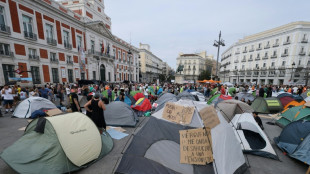 Housing protesters dig in for long stay in Madrid square

 Alex Bodi și prof. dr. Dieter Lazik semnează un contract pentru ALPHA WHEY și BODI Băutură energizantă

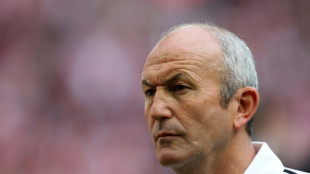 Former Stoke boss Pulis 'cheated' over FA Cup final loss to Man City

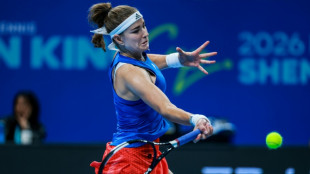 Czech Republic beat Ukraine to win BJK Cup
 Isak returns to Liverpool after injury scare
 Gunmen kill 27 in two shootings in South Africa
 Spain PM vows action as housing protest sparked by eviction grows
Taiwanese troops used concrete barriers, barbed wire and Hesco walls to block a key bridge near Taipei on Thursday in a drill to stop invading Chinese forces attempting to advance on the capital.
The recently opened Danjiang Bridge that spans the mouth of the Tamsui River was the stage for the night-time exercise held on the second day of Taiwan's annual "Han Kuang" military drills.
China claims Taiwan is part of its territory and has threatened to use force to seize the island of 23 million people.
If China's military, known as the People's Liberation Army (PLA), were to launch an invasion of Taiwan, military experts believe its troops could potentially land on beaches on either side of the Tamsui River and cross the Danjiang Bridge to join forces.
"Once the PLA controls the Danjiang Bridge and both sides of the Tamsui River estuary, that would also mean its troops could advance along both banks of the river," Chieh Chung, an expert on Taiwan's defence policy at Tamkang University, told AFP.
"The goal is simply to prevent the PLA forces from controlling this section of the river, because once they control this stretch of the river, the two landing bases will effectively be linked as one," he said.
To stop them in their tracks, Taiwan's military practised blocking the bridge in an hours-long drill that was to end Friday morning before peak-hour traffic.
Working under the bridge's blue lights, dozens of Taiwanese army combat engineers assisted by cranes and trucks set up layers of concrete and steel barriers, barbed wire and Hesco walls along the nearly one-kilometre-long bridge.
Their aim was not only to slow advancing Chinese forces but to channel them into areas where Taiwanese troops have more firepower.
In the water below, troops deployed fishing nets, floating platforms and barrels that potentially could be filled with explosives during wartime to stop small Chinese vessels entering the river.
Curious locals hoping to catch a glimpse of the spectacle stood on the street in the humid evening air.
"If we ever face an enemy attack, this drill will help us test how to defend it (the bridge), identify any weaknesses and what needs to be improved," Hsu Lien-te, a 75-year-old retired public servant, told AFP.
"That's very important for our country's defence."
- 'We could end up in a war' -
Long-term care manager Kay Li, who had been cycling across the bridge when she was told by the army to leave, said it was "a necessary exercise".
"We could end up in a war," the 37-year-old said.
The drill was held hours after President Lai Ching-te visited the nearby Taipei Port where he observed the loading of missiles and mines onto ships.
On Wednesday night, Lai was put through his paces when he was escorted in an armoured vehicle convoy from the Presidential Office to a secure command centre in a simulated evacuation.
As part of this year's Han Kuang, which ends on August 14, Taiwanese and US-made surface-to-air missile systems were deployed in Taipei.
A key part of this year's exercise is decentralising command and control to enable commanders and officers on the battlefield to make operational decisions without waiting for orders.
F.Pavlenko--BTB