
Bolsonaro's Brazil: four 'dystopian' years / Photo: © AFP/File

 Pakistan hospital fire kills 14 infants

 Iceland to vote on resuming EU talks in close referendum

 North Korea to 'bring joy' to Kim with 100 athletes at Asian Games
 US LGBTQ community mourns 'diva' Dolly Parton

 England bid to banish booze woes as Pakistan seek self-respect
 High quality, low risk: record number of Japanese in Premier League

 Stocks edge higher as oil drops on fresh Mideast hopes
 Pakistan's girls fight for their place in the boxing ring

 Five things to know about Anthropic ahead of Wall Street debut

 Social media use on the rise among Australian under-16s after ban: data

 Instagram chief admits touting teen safety tool while omitting it was barely used

 'Final Fantasy', 'The Witcher' in spotlight at Europe gaming bash
 Syrian Kurdish leader dissolves force that spearheaded jihadist fight

 Trump raises prospect of demolishing iconic Kennedy Center

 PGA Tour to end in two-week matchplay showdown from 2028: CEO

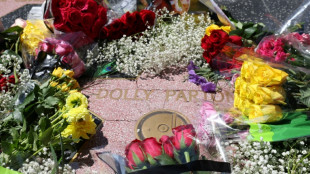 United States of Dolly: how a country queen bridged America's divide

 PGA chief says 'no current plans' for LIV stars to return

 Golf giant Callaway apologizes after ad sparks outcry

 Ioane stars as New Zealand recover to beat Johannesburg Lions

 Ukrainians seeking beauty in a bomb-scarred city

 Dolly Parton: Country music's dolled up but deserving queen

 US robotaxi firm Waymo plans to launch in Germany

 'Here to win': Xavi vows to restore pride in Dutch football

 Cameroon's Baleba joins as Man United boost midfield options
 'Shocking' book about Putin's private life wins French literary prize
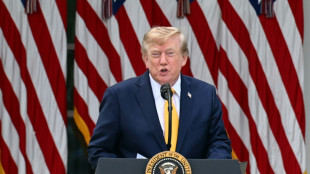
In his first four years in office, far-right President Jair Bolsonaro kept true to his to mission to "dismantle" the legacy of previous governments, analysts say, often with harmful fallout for Brazil.
As a result, he is seen by supporters as a man who is true to his word, with a poll this week showing Bolsonaro closing in on rival Luiz Inacio Lula da Silva -- the favorite ahead of October presidential elections.
Some 32 percent of would-be voters told pollsters they would stick with 67-year-old Bolsonaro's brand of "God, Homeland and Family," his stated anti-corruption focus and detestation of "communism."
Leftist ex-president Lula, 76, seeking the votes of Brazil's millions of downtrodden, still leads with 45 precent of voter intention, according to pollsters Datafolha.
Despite the many controversies that have surrounded Bolsonaro over the past four years, Lula's lead over him has been shrinking.
"We have to deconstruct many things, undo many things," Bolsonaro said shortly after he was sworn in in January 2019.
He kept his word.
Launching a crusade against "left-wing ideology, "the man who has repeatedly defended Brazil's dictatorship of 1964 to 1985 quickly went about scrapping the culture ministry and cutting funding for environmental protection, science and the arts.
"In the environment, education, health, public security and culture, the results have been catastrophic," Anthony Pereira, a Latin America specialist at the Florida International University (FIU) in Miami, told AFP.
In terms of diplomacy, Bolsonaro adopted an anti-globalization posture, leaving Brazil more isolated on the international stage.
At home, he publicly supported private gun ownership. The number of firearm permits in circulation skyrocketed nearly 500 percent from 2018 to 2022 in a country that already has a major violent crime problem.
Indigenous peoples increasingly became targets under a hostile government, with 305 reported cases of Indigenous land invasion in 2021 -- a 180-percent rise from 2018, according to official data.
The voice of Bolsonaro's Evangelical Christian support base became ever more audible in the school curriculum, with a focus on eliminating "leftist" ideologies and doing away with more open interpretations of gender.
Last but not least, deforestation of the Brazilian Amazon -- crucial to efforts to curtail global warming -- increased 75 percent per year on average despite an international outcry.
Bolsonaro's first four years amounted to "a mandate to destroy what had been built since the return to democracy," said analyst Gaspard Estrada of the Sciences Po university in France.
- 'Spiral into disorder' -
The past two years, in particular, were marked by a climate of growing political polarization and what Kevin Ivers of the DCI Group consulting firm described as an example of a "spiral into disorder led by declining populists."
The coronavirus pandemic deeply scarred trust in Bolsonaro, a fierce anti-vaxxer and proponent of quack remedies against what he called a "little flu."
Brazil's 685,000 Covid-19 deaths have prompted dozens of attempts to impeach Bolsonaro, who faces several criminal investigations, including for "crimes against humanity."
He has made enemies of the Supreme Court and electoral watchdog bodies with unsubstantiated claims of bias and the potential for election fraud.
This was all part of "a deliberate strategy (to) move towards an increasingly autocratic government," said political scientist Geraldo Monteiro.
If anything positive came out of it all, it is that "Brazil's institutions of investigation, accountability and control have functioned to protect democracy to some extent" against Bolsonaro's attacks, said Pereira.
Also on Bolsonaro's watch, there has been a reform of the pension system -- including a longer contribution period -- privatization of airports and ports, and infrastructure expansion, with the construction of roads, bridges, port terminals and irrigation projects.
- Hunger 'does not really exist' -
Recently, his government has been credited with better-than-expected growth figures, but Bolsonaro's Brazil is nevertheless battling double-digit inflation. Nearly 10 million people are unemployed.
During the worst of the pandemic, many commented on Bolsonaro's apparent lack of empathy for the stricken and people who lost loved ones, whom he told to "stop whining."
More recently he has insisted that "hunger does not really exist in Brazil" even as investigations showed 33.1 million of Brazil's 213 million people were suffering severe food shortages.
True to his characterization as the "Trump of the tropics," Bolsonaro does not back down in an argument, does not apologize, and is no stranger to spreading misinformation.
His commitment to combating corruption has also been called into question, with at least two ministers on his watch charged with graft.
When it comes to corruption, "we have moved to a higher level," said Estrada.
"The Brazilian situation is dystopian, we are outside of reality."
H.Seidel--BTB