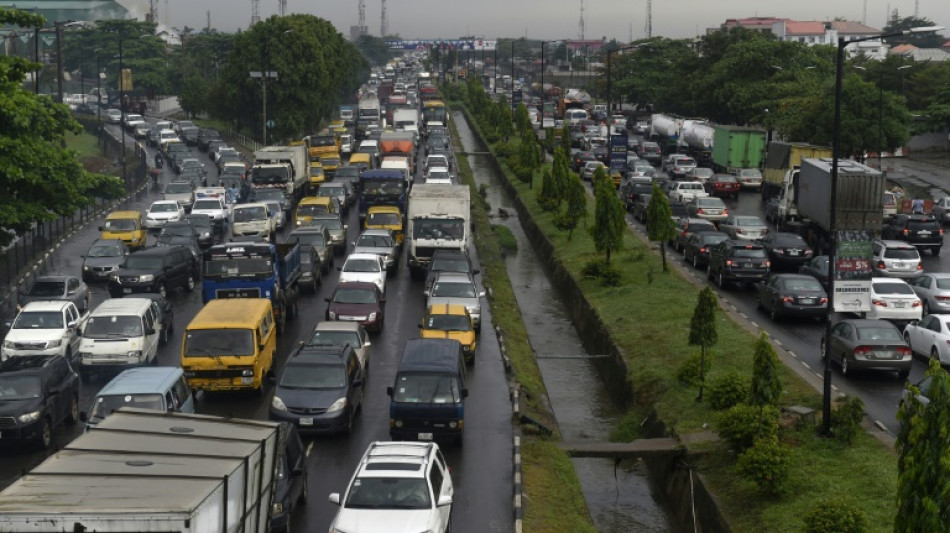
Fossil fuel investment in Africa dwarfs clean air funding / Photo: © AFP/File

 'Black smoke' chokes Pakistan maternity ward as hospital fire kills 14 infants
 French flight attendant wins landmark breast cancer ruling
 Sri Lanka 83-2 after India enforce follow-on in second Test
 Pakistan hospital fire kills 14 infants

 Iceland to vote on resuming EU talks in close referendum
 North Korea to 'bring joy' to Kim with 100 athletes at Asian Games

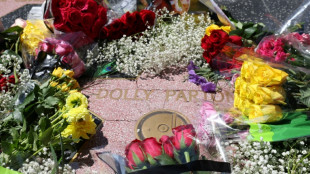
 US LGBTQ community mourns 'diva' Dolly Parton

 England bid to banish booze woes as Pakistan seek self-respect
 High quality, low risk: record number of Japanese in Premier League

 Stocks edge higher as oil drops on fresh Mideast hopes
 Pakistan's girls fight for their place in the boxing ring
 Five things to know about Anthropic ahead of Wall Street debut
 Social media use on the rise among Australian under-16s after ban: data

 BioNxt Advances Cladribine Clinical Program for MS with Completion of the Investigational Medicinal Product Dossier (IMPD) Ahead of Human Clinical Studies

 Williams-Alcaraz fall in US Open mixed quarter-finals

 Mark Carney, the former central banker who said 'no' to Trump
 Segner out of South Africa tour as New Zealand injuries pile up

 Meta knew teen safety tools were ineffective, witnesses testify
 Williams and Alcaraz win opener at US Open mixed doubles
 Man Utd's Fernandes crowned PFA player of the year

 Dolly Parton: quotes on life, love and music

 Brazil fines TikTok $30 mn in 'powerful signal' over child safety

 Cameroon's Baleba joins as Man Utd boost midfield options
 US country music legend Dolly Parton dies at 80

 Kolisi fit to captain South Africa against New Zealand

Foreign governments are spending more than 30 times more on fossil fuel projects in Africa than on initiatives to lessen the impacts of the continent's second-biggest killer, air pollution, research showed Wednesday.
The report, released on the International Day of Clean Air, showed how little donor nations spend on improving air quality while ploughing money into dirty energy and infrastructure projects across Africa.
The United Nations estimates that air pollution kills around nine million people globally each year, with fossil fuels accounting for two-thirds of the levels of harmful particulates humans are exposed to.
The financial benefits of improving air quality alone would far exceed the costs of slashing emissions to meet the Paris Agreement temperature goals, according to a landmark United Nations climate science assessment this year.
Yet, as Wednesday's analysis by the Clean Air Fund shows, US, European and Asian governments are still going ahead with fossil fuel-based development projects that will likely worsen already poor air quality in cities and along highways across Africa.
The fund found that just 0.3 percent of African countries' development assistance received between 2015-2021 had been specifically earmarked for air quality projects, despite pollution being responsible for some one in five deaths continent-wide.
During the same period, donor nations provided 36 times more funding for prolonging fossil fuel use in Africa.
"That difference alone is extremely startling," Dennis Appiah, head of the fund's Ghana office and a co-author of the report.
"I think it's also highlighted that most often governments are not paying attention to the issue of air pollution," he told AFP.
"Either they are not conscious of the impact of it, or they do not see it as a problem."
Appiah called air pollution a "silent killer" as its effects are far harder to see and message to communities compared with other climate-linked phenomena such as flooding.
- 'Death sentence' -
An ongoing population boom means Africa will be -- on current birth rates -- home to some 2.5 billion people by 2050, with the UN estimating that 26 countries will double their populations by then.
The vast majority of population growth will occur in urban areas, with much of the infrastructure needed to support increases yet to be built.
The continent is virtually blameless for climate change yet continues to be a hotspot for extreme events linked to global heating.
Appiah said that while Africa's development needs were huge, governments needed to prioritise sustainable ways of electrifying and connecting communities.
"Policymakers are stuck in going through the same traditional chain for development that we see in the West, and also in some of the Asian countries that are now suffering the consequences of some of those decisions," he said.
"I think Africa is positioned to take advantage of some of the technology which exists. We don't have to go through the same process (as developed countries), we can leapfrog to new technologies."
With renewable energy such as wind and solar already frequently cheaper than oil and fossil gas per kilowatt hour, the hope is that African governments can factor in the economic benefits of avoiding air pollution into their development plans.
In a preface to Wednesday's report, Ugandan activist Vanessa Nakate said that policies featuring new fossil fuel infrastructure in Africa were "a death sentence for people in communities like mine".
"It's time for governments to hear the voices of people all around the world who are calling for leaders to clean up our air and protect our health," she said.
J.Horn--BTB