Fears of shelling, radiation on a Ukraine maternity ward / Photo: © AFP

 'Black smoke' chokes Pakistan maternity ward as hospital fire kills 14 infants

 French flight attendant wins landmark breast cancer ruling
 Sri Lanka 83-2 after India enforce follow-on in second Test
 Pakistan hospital fire kills 14 infants
 Iceland to vote on resuming EU talks in close referendum
 North Korea to 'bring joy' to Kim with 100 athletes at Asian Games
 US LGBTQ community mourns 'diva' Dolly Parton

 England bid to banish booze woes as Pakistan seek self-respect
 High quality, low risk: record number of Japanese in Premier League

 Stocks edge higher as oil drops on fresh Mideast hopes

 Pakistan's girls fight for their place in the boxing ring
 Five things to know about Anthropic ahead of Wall Street debut
 Social media use on the rise among Australian under-16s after ban: data

 BioNxt Advances Cladribine Clinical Program for MS with Completion of the Investigational Medicinal Product Dossier (IMPD) Ahead of Human Clinical Studies

 Williams-Alcaraz fall in US Open mixed quarter-finals

 Mark Carney, the former central banker who said 'no' to Trump
 Segner out of South Africa tour as New Zealand injuries pile up

 Meta knew teen safety tools were ineffective, witnesses testify

 Williams and Alcaraz win opener at US Open mixed doubles

 Man Utd's Fernandes crowned PFA player of the year

 Dolly Parton: quotes on life, love and music

 Brazil fines TikTok $30 mn in 'powerful signal' over child safety

 Cameroon's Baleba joins as Man Utd boost midfield options
 US country music legend Dolly Parton dies at 80

 Kolisi fit to captain South Africa against New Zealand

Three days after Russian troops invaded her country, Maryna found out she was pregnant.
Now the 30-year-old and her husband are stocking up on potassium iodide tablets in case of a radiation emergency from the nearby Zaporizhzhia nuclear power station.
"We were planning a child, but...we did not know whether to be happy or not.
"My husband said: 'We really should be happy. God gave it to us so everything will be fine,'" Maryna said at a maternity clinic in the city of Zaporizhzhia, a few dozen kilometres from the frontline in Ukraine.
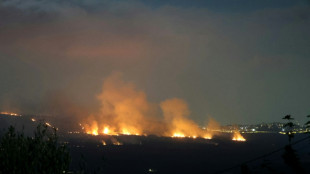
There has been heavy shelling in the area around the Russian-controlled plant, Europe's biggest, in recent weeks and both sides have accused the other of being behind it.
It is one of the concerns for mothers and expectant mothers at the clinic, who spoke to AFP of their hopes and fears for the future.
- 'Try not to think about it' -
Valentyna, whose daughter Tatyana is just three days old, said she felt "scared" about what could happen.
"You try not to think about it of course to be in a normal psychological state to produce milk," the 25-year-old said.
But Anna, a 23-year-old fitness club administrator, said she considered the danger from the nuclear plant to be just "rumours".
"I don't believe that anything can happen. I think everything will be fine," said Anna, who gave birth to her son Maxim four days ago.
Doctors said the hospital is inside a 50-kilometre (31-mile) potential radiation contamination area in case of any accident and they have prepared accordingly.
"We received all the necessary government recommendations, as well as pills for radiation sickness," said Larysa Gusakova, 59, a neonatologist at the clinic.
Another doctor, Natalya Solovyova, 30, an obstetrician and gynaecologist, said she hoped that "common sense will prevail".
Russia "should remember what happened in Chernobyl, how terrible it was," she said, referring to the 1986 nuclear disaster in a different part of what was the Soviet Ukraine.
- Sandbags to protect newborns -
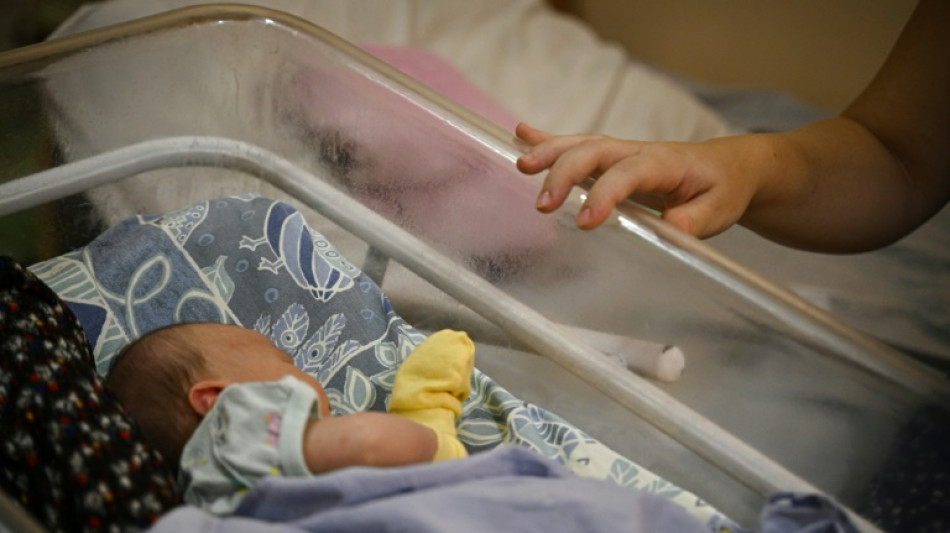
Around five children are born at the hospital every day to both local women and internally displaced people forced to flee from Russian-held areas of the country.
After the war began, the hospital set up a shelter in the basement including a room with beds for mothers and cots for newborns.
Staff also built up a supply of food and water to last at least seven days and installed a delivery chair underground, which has not yet had to be used.
There is also a room for newborns on the first floor with rows of sandbags blocking the windows in case of shelling.
"It was very difficult at the beginning, there were times when we carried a woman in our arms (to the shelter) right after she gave birth," Gusakova said.
- 'Hope for the best' -
War is a part of life at the hospital.
Gusakova said one newborn was named Javelina in honour of the US-made "Javelin" portable anti-tank missiles, which Ukrainian forces have used successfully against Russian troops.
Valentyna, 25, a primary school teacher whose daughter Tatiana is three days old, said she began worrying about air raid sirens only after her daughter's birth.
"Sirens used not to scare us the way they scare us now... A particular worry appears after the birth of a child," Valentyna said.
Staff and patients alike are also concerned about rumours on Russian social media that Ukrainian military are using the facility.
They showed AFP around the building to show that this was not true, fearful that their hospital could become a target.
Despite all the tensions, Maryna, an assistant to the director of a local gas utility, said her family remained hopeful.
"My husband and I hope for the best, that we will not have to go anywhere, that we will stay here, give birth peacefully and live on."
B.Shevchenko--BTB