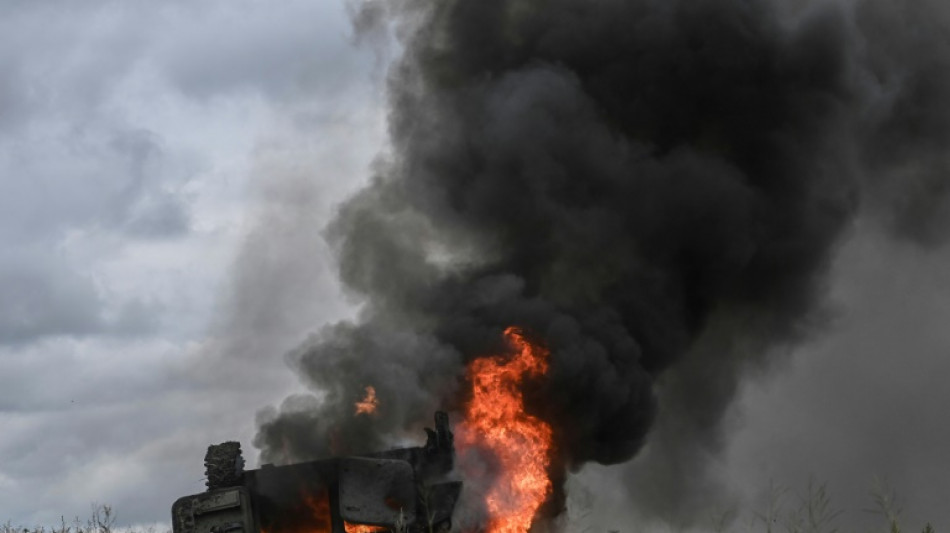
Russian intelligence fails again over Ukraine counter-offensive / Photo: © AFP

 Aldeguer switches to Rossi's VR46 for next season

 Rent TRON Energy and Reduce USDT Fees : TronBid Expands Marketplace

 Pakistan captain Babar Azam returns against England '90 percent fit'
 Stocks mixed as oil drops, inflation stays high
 Improving standards transform pole vault as spectacle, says Duplantis
 India close in on win despite Sri Lanka fightback in second Test
 MEXC TradFi Gala Concludes With Over 170,000 Registrations and $4.3 Billion in Daily Trading Volume

 Olympic skating champion Liu to skip new season

 Benfica sign midfielder Palhinha from Bayern

 Flick says Barca may go without striker as Atletico resist Alvarez sale
 Too hot to incubate: Nile crocodiles hatch on their own in French reserve

 Spurs closing in on Man City's Marmoush after signing Savio
 Celtic count the cost of Champions League flop
 Lebanon accuses Israel of burning forest, farmland in south
 Nepal floods at China border kill 8, cause 'major casualties' in Tibet

 France eases cow diets as cheesemakers sweat
 America unites in mourning for Dolly Parton
 Meta and US states discuss settlement in landmark social media trial: report
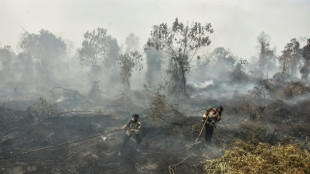 Fire haze threatens health of millions in Indonesia, ministry warns

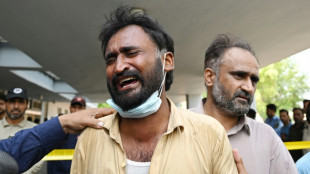
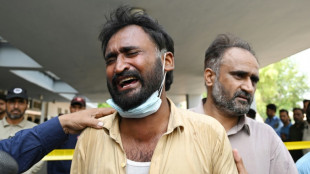 Pakistan hospital fire kills 14 infants

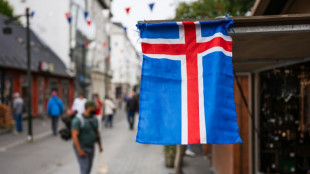 Iceland to vote on resuming EU talks in close referendum

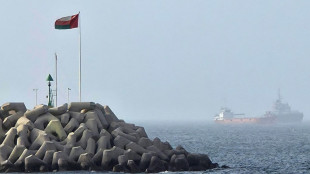 Iran says Hormuz strait still closed despite transit corridor talks
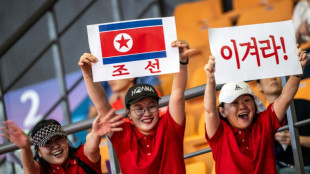
 'Our patron saint': Tennesseans mourn local hero Dolly Parton

 Australian police hunt thieves in $250,000 oyster heist
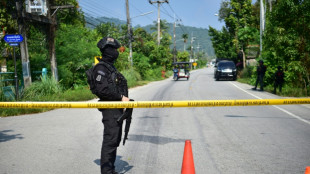 Coordinated attacks: Thailand's southern insurgency flares
A lightning Ukrainian counter-offensive with the potential to be a turning point in Kyiv's fight against the Russian invasion has once again highlighted Moscow's intelligence shortcomings in the war, analysts say.
The offensive has seen Ukraine recapture the strategic city of Izyum -- which symbolically was visited by President Volodymyr Zelensky on Wednesday -- and the ousting of Russian forces from most of the country's eastern Kharkiv region.
The push came after the over half-year conflict appeared to have reached a kind of stalemate over the summer, with Russian forces holding large parts of Ukraine's east and south but failing to make much further headway.
"This is a colossal Russian military intelligence failure, the fact that they did not see this build-up coming," said Michael Kofman, senior research scientist at the Center for Naval Analyses' Russia studies program.
"The Russian military intelligence completely blew this," he added.
"Russia failed to anticipate" Ukraine's push, said Pierre Grasser, a historian of international relations and researcher at the Paris-based Sirice institution.
Echoing other analysts, Grasser said Ukraine had benefitted by carrying out a major feint tactic, making a counter-attack in the south before launching an even more massive one in the northeast.
"Faint signals could however have alerted" Moscow, he said.
Ukraine had been active through smaller operations on the northeast frontline since August, while the conflict has also been marked by an unprecedented profusion of open-source intelligence such as satellite images.
- 'Still very centralised' -
But the intelligence failure also recalls the apparent over-confidence of Russia six months ago in anticipating that its forces would rapidly surge through Ukraine and take even the capital Kyiv.
Moscow then appeared to scale down its priorities in the short term by focusing on taking control of the east and the south, and no longer explicitly evoking a goal of regime change.
Yet in the face of the military setbacks and problems with reinforcements, President Vladimir Putin has so far resisted making any move toward enforced military conscription.
Rob Lee, a researcher at the Philadelphia-based Foreign Policy Research Institute (FPRI), said some Russian Telegram channels had for a month been evoking a Ukrainian concentration around Kharkiv.
"One of the Russian military's biggest weaknesses is that it is slow to respond to changes on the battlefield," he said.
Lee said that Russia had in particular been caught "flat-footed" by the advances in Ukraine's military hardware due to Western support, notably the HIMARS multiple rocket launchers delivered by the US.
"There are different explanations for why these mistakes are being made, but they indicate a very fundamental problem with Russian military leadership. The Russian military's decision-making is still very centralised," he said.
- 'Did not understand' -
The Ukrainian counter-offensive has also caused open alarm in Russia, with comments by some experts on state TV abandoning the line that what Moscow dubs the "special military operation" has gone well.
The powerful leader of the Russian region of Chechnya, Ramzan Kadyrov, whose own militia fighters had been involved in the invasion, openly spoke on his Telegram channel of the "mistakes" made in the Russian tactics.
He has now urged that head of every Russian region to muster 1,000 volunteers to go fight in Ukraine.
In Moscow, Russian military expert Alexander Khramchikhin said Russia's response had also been complicated by Ukraine's tactic of launching simultaneous attacks.
"Russian intelligence did not understand where exactly the actual counter-offensive would take place," he told AFP.
Khramchikhin also said there was a stark difference in mobilisation between Russia and Ukraine.
"In Ukraine, the whole population is mobilised," he said. "So the Ukrainians can add all the manpower they want."
Along with the weapons deliveries from the West, Ukraine has also benefitted immensely from Western intelligence resources, he added.
"Ukraine receives real-time information from US satellites and long-range radar detection aircraft," he said.
J.Horn--BTB