US, Belarus army chiefs speak to avoid drill 'miscalculation': Pentagon
/ Photo: ©

 Prague’s Concert for the Future Kicks Off on Wenceslas Square

 Prince William and Princess of Wales to Announce Earthshot Prize Winners in Mumbai

 Indonesia Forest Fires: Health Crisis, Diplomatic Strains and the Search for Solutions

 BYD Dolphin G Leasing Deal: Plug-in Hybrid Supermini Available from £174 a Month

 JUEL Group Expands from Real Estate to Hospitality with Hyatt Centric Malta Opening

 French Economy Shrinks 0.1% as Consumer Confidence Slumps

 Wall Street Ends Turbulent Week Higher Despite Inflation and AI Jitters
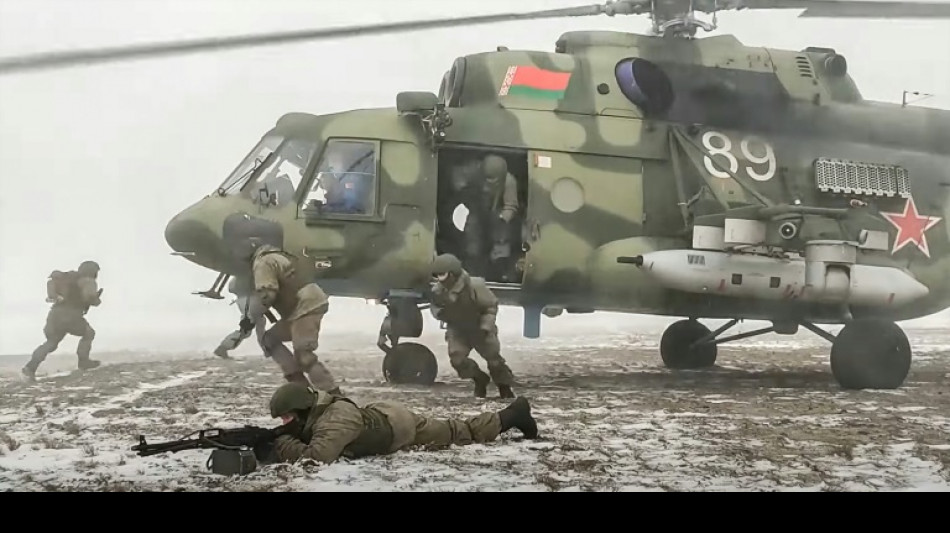
US and Belarusian defense chiefs held rare telephone talks on Thursday to avoid a "miscalculation" during Russia-Belarus joint military drills, the Pentagon said, at a time of heightened tensions over the Kremlin's massing of troops near Ukraine.
US Joint Chiefs of Staff General Mark Milley spoke with General Staff of the Armed Forces Major General Viktor Gulevich of Belarus to discuss "issues of concern" related to regional security.
"The phone call facilitated communication between both leaders to reduce chances of miscalculation and gain perspectives on current European security," the Pentagon statement said.
The officials agreed to keep the details of their conversation private, it added.
Minsk confirmed the call, which it said was initiated by Milley, in a brief statement emphasizing only that the two parties had discussed security issues.
Russia rolled its tanks across Belarus on Thursday for live-fire drills that drew an ominous warning from NATO and added urgency to Western efforts to avert a feared invasion of Ukraine.
NATO said Russia's deployment of missiles, heavy armor and machine-gun toting soldiers marked a "dangerous moment" for Europe some three decades after the Soviet Union's collapse.
The war games -- set to run until February 20 -- followed a gradual Russian military buildup around Ukraine that some US estimates say has reached 130,000 soldiers grouped in dozens of combat brigades.
Western leaders have been shuttling to Moscow in an effort to keep the lines of communication open, giving Russia a chance to air its grievances about NATO's expansion into eastern Europe and ex-Soviet states.
Kyiv denounced the war games as "psychological pressure" while French Foreign Minister Jean-Yves Le Drian called the exercises "a very violent gesture".
W.Lapointe--BTB