Climate takes backseat in Italy vote despite extreme events / Photo: © AFP

 UEFA 'likely' to drop threat to boycott FIFA tournaments: source
 US disrupts platforms allegedly used by Chinese hackers
 The foreign tourists missing in Nepal's flash floods

 Hundreds missing after Nepal-Tibet flood kills 98
 CIA director was on 'semi-routine' mission in Moscow: Trump
 Aldeguer switches to Rossi's VR46 for next season

 Rent TRON Energy and Reduce USDT Fees : TronBid Expands Marketplace

 Pakistan captain Babar Azam returns against England '90 percent fit'
 Stocks mixed as oil drops, inflation stays high
 Improving standards transform pole vault as spectacle, says Duplantis
 India close in on win despite Sri Lanka fightback in second Test
 MEXC TradFi Gala Concludes With Over 170,000 Registrations and $4.3 Billion in Daily Trading Volume

 Olympic skating champion Liu to skip new season

 Benfica sign midfielder Palhinha from Bayern
 Flick says Barca may go without striker as Atletico resist Alvarez sale

 Too hot to incubate: Nile crocodiles hatch on their own in French reserve

 Spurs closing in on Man City's Marmoush after signing Savio

 Celtic count the cost of Champions League flop

 Lebanon accuses Israel of burning forest, farmland in south
 Nepal floods at China border kill 8, cause 'major casualties' in Tibet

 France eases cow diets as cheesemakers sweat
 America unites in mourning for Dolly Parton
 Meta and US states discuss settlement in landmark social media trial: report

 Fire haze threatens health of millions in Indonesia, ministry warns

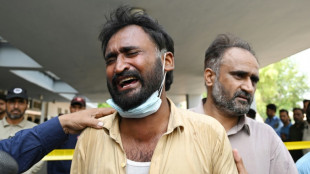 Pakistan hospital fire kills 14 infants

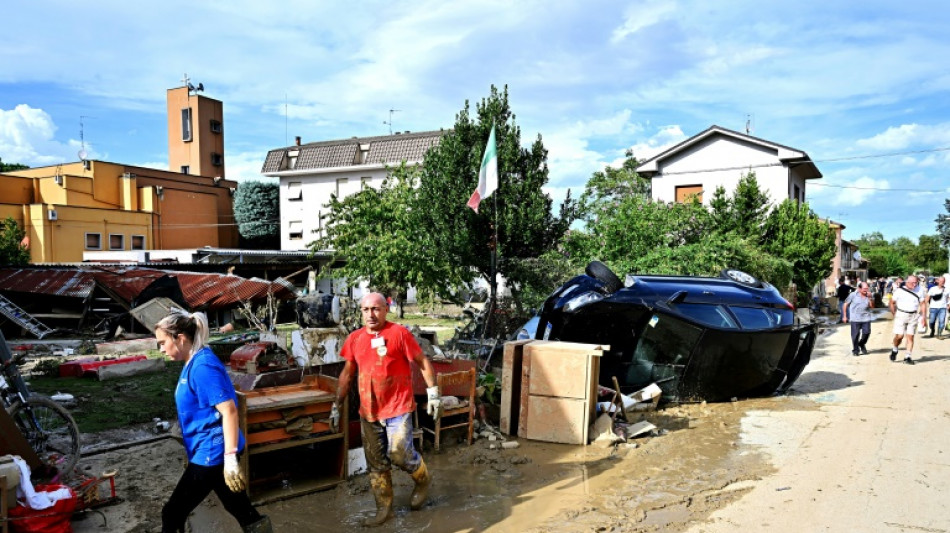
From parched rivers to a glacier collapse and this week's deadly storms, Italy has suffered numerous climate events this year -- but many politicians pay the subject little more than lip service.
Desperate to see some firm commitments ahead of September 25 elections, climate activists staged a sit-in at the Rome offices of frontrunner Giorgia Meloni earlier this month.
They demanded a public meeting with the far-right leader, but police carted them off the premises.
Concern over the spiralling cost of living has drowned out the debate over how to tackle the devastation caused by global warming.
The war in Ukraine has put the risk to energy supplies centre stage in a country heavily reliant on Russian gas. That has prompted a fresh drive for renewables -- but also an increase in production in coal-fired plants.
Michele Giuli, a member of the Last Generation movement that stormed Meloni's office, said deadly floods in central Italy this week had to refocus thinking.
Many have linked the extreme weather event to climate change, including Prime Minister Mario Draghi.
"People have died...," he told AFP. "This must make us reflect.
"What do we want to do with our lives, while the Italian state does nothing to reduce emissions and avoid tens of thousands of similar deaths in the next few years?"
- Violence of climate events -
This summer's drought, the worst in 70 years, drained the Po River, the peninsula's largest water reservoir and a crucial resource for Italy's agricultural sector.
And then the rains came, hitting land as hard as concrete. Five times the number of storms, hurricanes and floods lashed the country compared to 10 summers ago, according to the agricultural association Coldiretti.
In August, Italian scientists wrote an open letter to politicians, urging them to put the emergency first.
But an analysis published this week by Greenpeace found that less than 0.5 percent of political leaders' statements on the main TV news programmes covered the climate crisis.
This summer in Italy "will be sadly remembered for the frequency and the violence of climate events... yet this dramatic emergency does not seem to affect many of the political leaders seeking to lead the country," said Giuseppe Onufrio, executive director of Greenpeace Italy.
But it has been worse. Election experts at Luiss university in Rome note that some parties never used to mention the environment at all.
- Manifestos 'weak on detail' -
The widespread inclusion of green policies is actually "one of the novelties of this electoral campaign", the CISE electoral studies unit said in a commentary last week.
This reflects the growing interest among the public, with 80 percent of respondents they surveyed agreeing that the fight against climate change should be a priority for Italy.
"At least climate change is addressed, or at least mentioned, in all of (the manifestos), though many are weak on detail," said Piera Patrizio, senior researcher at the Centre for Environmental Policy at Imperial College London.
Italy had vowed to close its coal-fired plants by 2025, a goal it intends to keep despite the short-term measures to tackle the shortage of gas this winer.
Meloni's right-wing alliance pledges to invest in renewable energies and waste-to-energy plants, as well as domestic production of natural gas, and the installation of regasification plants.
The outgoing government plans to install two such plants off Tuscany and Emilia Romagna, despite local protests.
Enrico Letta's centre-left Democratic Party (PD), which presents the main challenge to Meloni, backs the plants as a temporary fix.
Meanwhile the anti-immigrant League party and right-wing Forza Italia -- part of Meloni's coalition -- are pushing for nuclear energy though Italians rejected it in two referenda in 1987 and 2011.
The PD rejects nuclear power as too slow and expensive a solution and wants instead to sharply increase the share of renewables produced in Italy.
"There's next to nothing (in the policies) on equity... on how some households, some parts of the country are going to be more affected than other," Patrizio said.
The EU's post-pandemic recovery fund, from which Italy expects to benefit almost 200 billion euros, is heavily tilted towards projects that ease the so-called "ecological transition".
But Patrizio added: "Italy doesn't have a net zero strategy right now... it doesn't even know where to begin."
Marzio Galeotti, environmental science and policy professor at Milan University, said it was "difficult to convince" the public that "environmental sustainability and emissions reduction can be combined with economic growth".
But, he noted sadly, this is true of many countries: "We are seeing a kind of temporary amnesia that is not unique to Italy."
J.Bergmann--BTB