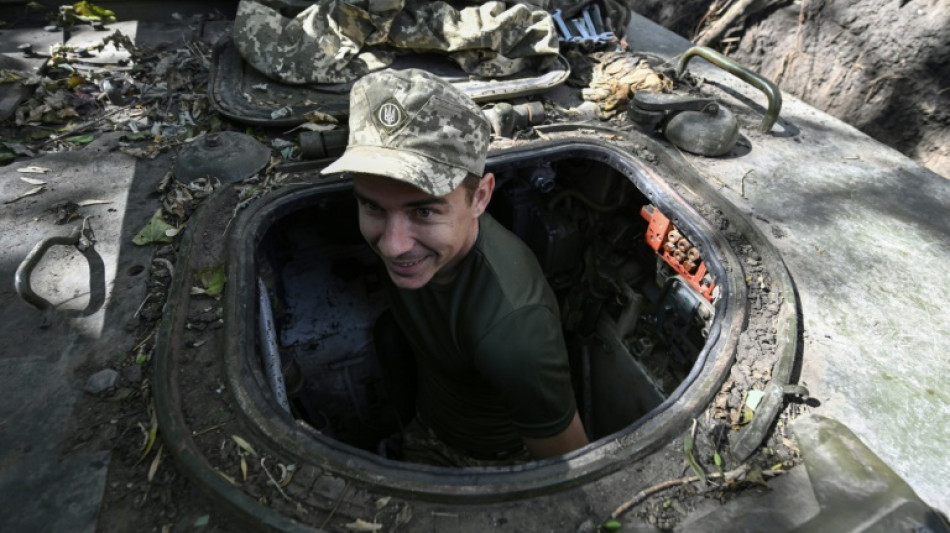
In the Ukrainian army, Soviet-era artillery bows out / Photo: © AFP

 UEFA 'likely' to drop threat to boycott FIFA tournaments: source
 US disrupts platforms allegedly used by Chinese hackers

 The foreign tourists missing in Nepal's flash floods

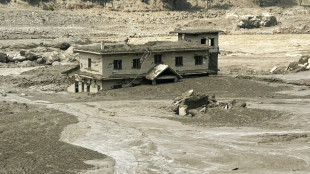
 Hundreds missing after Nepal-Tibet flood kills 98

 CIA director was on 'semi-routine' mission in Moscow: Trump
 Aldeguer switches to Rossi's VR46 for next season

 Rent TRON Energy and Reduce USDT Fees : TronBid Expands Marketplace

 Pakistan captain Babar Azam returns against England '90 percent fit'

 Stocks mixed as oil drops, inflation stays high

 Improving standards transform pole vault as spectacle, says Duplantis

 India close in on win despite Sri Lanka fightback in second Test
 MEXC TradFi Gala Concludes With Over 170,000 Registrations and $4.3 Billion in Daily Trading Volume

 Olympic skating champion Liu to skip new season

 Benfica sign midfielder Palhinha from Bayern

 Flick says Barca may go without striker as Atletico resist Alvarez sale

 Too hot to incubate: Nile crocodiles hatch on their own in French reserve
 Spurs closing in on Man City's Marmoush after signing Savio

 Celtic count the cost of Champions League flop

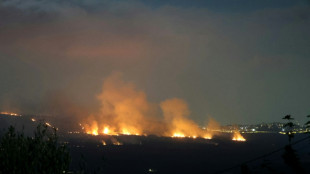 Lebanon accuses Israel of burning forest, farmland in south
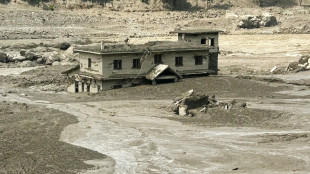 Nepal floods at China border kill 8, cause 'major casualties' in Tibet

 France eases cow diets as cheesemakers sweat

 America unites in mourning for Dolly Parton

 Meta and US states discuss settlement in landmark social media trial: report

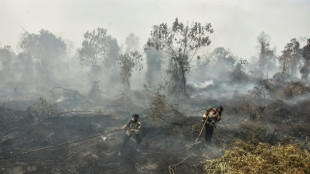 Fire haze threatens health of millions in Indonesia, ministry warns

 Pakistan hospital fire kills 14 infants

Lurking in a gulley in a Ukrainian forest grove, the ageing Soviet-era Akatsiya 2S3 howitzer may be advanced in years but is not being retired just yet.
Ukraine's army prefers more efficient Western weapons, but it was forced to deploy whatever it had when the war started, mostly older stock.
Built in 1986 and nicknamed "Lastochka" ("The Swallow") by its crew, a set of tools on the howitzer's roof indicates that repairs are often required.
"To make it go from second to third gear, you have to give it a hammer blow or slap it," Sergiy, 26, said with a smile, clapping loudly for effect.
In contrast, more modern Western artillery locks its targets by computer, and then shoots, gaining precious time to avoid a retaliation strike.
"We will be remembered as the last to have used these systems," said an officer nicknamed "Baniet" ("Bayonet").
In Ukraine, the army "makes do with what it has", even if it prefers Western equipment "with more computers", he said.
"Every Lada owner would be delighted to have a Mercedes," he added, referring jokingly to the Akatsiya 2S3 and comparing it to the ubiquitous Soviet-era passenger car.
These "Lada" also cede 10 kilometres (six miles) or more of range to more sophisticated Western equipment, and fall even further short in terms of precision.
Their strikes land "within a radius of 200 to 300 metres" from the target, compared to five metres (16 feet) for a modern guided shell, according to Pierre Grasser, a Paris-based expert on Russian defence.
- 'End of an era' -
Whatever its defects, the Ukrainian army will be forced to abandon the Akatsiya 2S3 for lack of ammunition, according to Grasser.
Like other USSR-era artillery bequeathed to Ukraine upon its independence in 1991, it operates mainly with 152 mm shells, mainly produced in Russia.
Over the past few months, Ukraine's allies, led by the United States, have delivered more than 220 howitzers of a different calibre (155 mm), which has allowed Kyiv to "move to a new military standard", said Grasser.
With such new precision-guided long-range systems Kyiv has been able to hit targets far behind the Russian positions including ammunition depots and supply lines.
"It's a huge surprise, because it's the first time that Russia has been below in terms of artillery fighting since the First World War," said Grasser.
Ukraine now has "the ability to cover a wider and much more precise field with its artillery" than Russia whose primary tactic has been massive shelling, Pierre Razoux, a military historian, told AFP.
In parallel the "end of an era" beckons for "The Swallow" as stocks of 152 mm shells run out, according to Kyiv-based military analyst Sergiy Zgourets.
Back in the combat zone, "Baniet", a former Red Army veteran who has little nostalgia for his time in the USSR-era military, said "it doesn't matter which weapon will destroy our enemy".
"What matters is that it works well, and that we have ammunition, Soviet or not," he told AFP.
L.Janezki--BTB