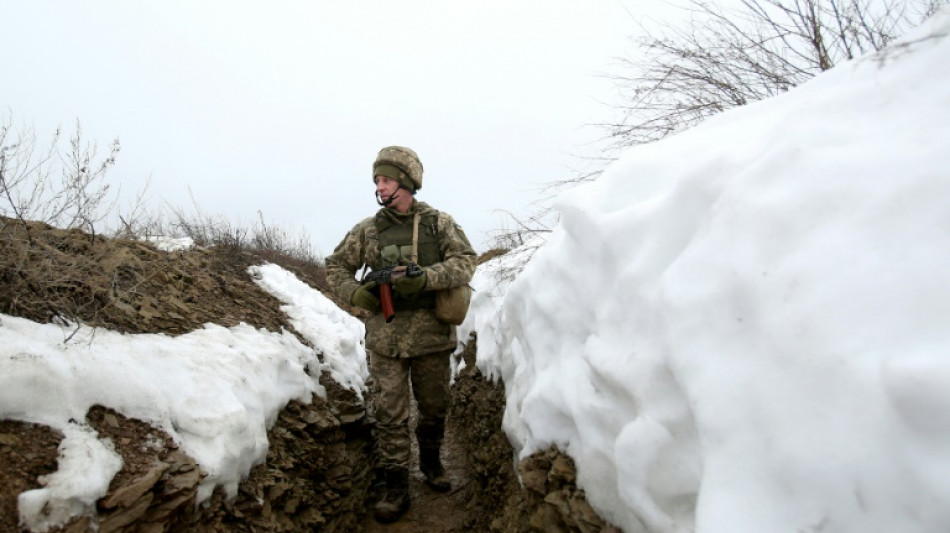
Little hope of breakthrough as US, Russia hold high-stakes Ukraine talks / Photo: ©

 Prague’s Concert for the Future Kicks Off on Wenceslas Square

 Prince William and Princess of Wales to Announce Earthshot Prize Winners in Mumbai

 Indonesia Forest Fires: Health Crisis, Diplomatic Strains and the Search for Solutions

 BYD Dolphin G Leasing Deal: Plug-in Hybrid Supermini Available from £174 a Month

 JUEL Group Expands from Real Estate to Hospitality with Hyatt Centric Malta Opening

 French Economy Shrinks 0.1% as Consumer Confidence Slumps

 Wall Street Ends Turbulent Week Higher Despite Inflation and AI Jitters

 Kansas City Fed Chief Says Inflation Is Still Running Too Hot

Washington and Moscow's top diplomats met Friday in Geneva for high-stakes talks on Ukraine, but with little hope of a breakthrough that would ease fears of a Russian invasion.
The talks between Secretary of State Antony Blinken and Foreign Minister Sergei Lavrov come just 11 days after their deputies met in Geneva and agreed to preserve dialogue amid Russia's build-up of tens of thousands of troops on Ukraine's border.
Blinken and his team arrived at Geneva's lakeside luxury Hotel President Wilson shortly before the meeting began at 11:00 (1000 GMT), and were ushered into a conference room decked out with lavender orchids and US and Russian flags.
"You have said you are not expecting any breakthroughs," Lavrov said as the talks began.
"We are not expecting a breakthrough from this meeting either, we are expecting answers to our concrete questions," Lavrov said.
Blinken stressed that Washington remained open to finding a diplomatic solution, but warned of a "united, swift and severe" response if Russia does invade Ukraine.
Blinken and Lavrov are expected to have a concise exchange as they determine whether diplomacy remains possible.
Veteran diplomats who have encountered each other for years, Blinken is known for his unflappable calm and Lavrov for his mordant intensity.
President Joe Biden bluntly assessed on Wednesday that his counterpart Vladimir Putin is likely to "move in" on Ukraine and warned of a "disaster for Russia".
The United States and its allies have warned of severe economic sanctions for an invasion.
- Cold War redux? -
Russia, which already fuels a deadly insurgency in eastern Ukraine that has killed more than 13,000 people since 2014, has demanded guarantees that NATO never admit the former Soviet republic or expand otherwise in Moscow's old sphere.
The United States has declared the idea a "non-starter" and accused Russia of undermining Europe's post-Cold War order by bullying another country into submission.
Russia went a step further in its demands on Friday, with the foreign ministry saying Moscow wants the "withdrawal of foreign forces, hardware and arms" from countries that were not NATO members before 1997, including Bulgaria and Romania.
Blinken headed to Geneva after a solidarity trip to Kyiv and talks with Britain, France and Germany in Berlin.
German Chancellor Olaf Scholz and British Prime Minister Boris Johnson warned on Friday that Russia would pay a "considerable and serious price" if it invades Ukraine.
In a phone call on Thursday evening, the two leaders agreed that "further military aggression by Russia against Ukraine must be averted" and there would be consequences if the situation were to escalate, the German chancellery said.
Even while rejecting the core Russian demands, the Biden administration has said it is willing to speak to Moscow about its security concerns.
One proposal by the United States is to revive restrictions on missiles in Europe that had been set by the Intermediate-Range Nuclear Forces Treaty, a Cold War deal trashed by former president Donald Trump's administration as it accused Moscow of violations.
- US says clock is ticking -
The Biden administration has also offered more transparency on military exercises.
Russia has not rejected the proposals but says that its core concern is Ukraine and on Thursday announced massive naval drills in the Atlantic, Pacific, Arctic and Mediterranean as a show of force.
Blinken has called for Putin to choose the "peaceful path" of diplomacy and, hoping to find common ground, said he will not hand a formal response to Lavrov on Russia's proposals, which were presented last month in unusual detail as draft treaties.
Lavrov and Blinken will both head after their meeting to the cameras for potentially duelling accounts of what transpired.
The United States has warned that the clock is ticking, putting forward intelligence alleging that an invasion could come shortly and be preceded by a "false-flag" operation as Russia tries to trigger a pretext against Ukraine.
Lawmakers in Russia's parliament have put forward a bill that would ask Putin to recognise the independence of two pro-Moscow separatist territories in Ukraine, Donetsk and Lugansk.
Ukraine's military intelligence service on Friday accused Russia of sending fresh arms and equipment to the rebels since the start of this month, including tanks, artillery and ammunition.
B.Shevchenko--BTB