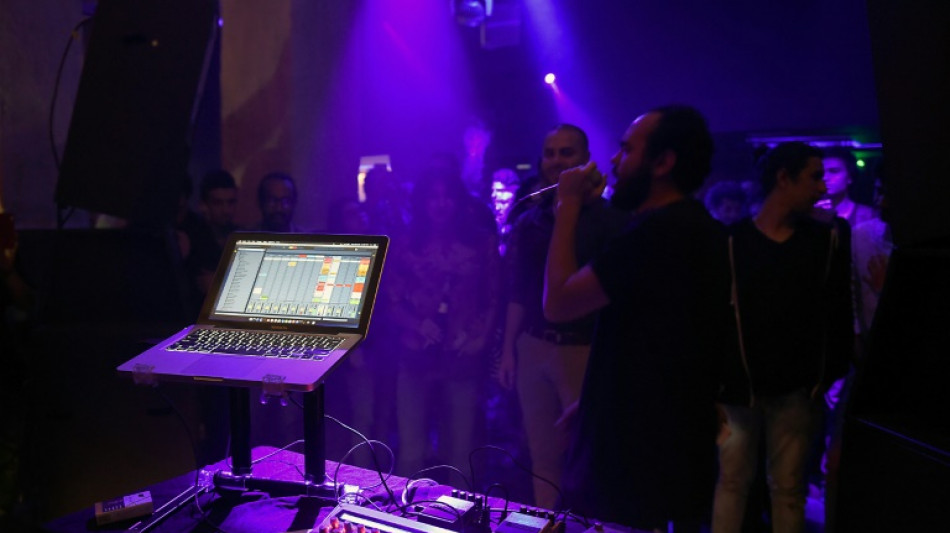
Egypt cuts the feed to wildly popular 'mahraganat' electro music / Photo: © AFP

 UEFA's legal move 'massive escalation' in bitter Infantino feud

 MEXC Launches Earn Plus With Limited-Time Event Offering Up to 800% APR Booster

 Norway's new King Haakon VIII, popular face of shaken monarchy
 Stocks rise ahead of Fed chair's policy speech

 Norway's new King Haakon VII, popular face of shaken monarchy

 Last-wicket duo take England to 290 all out in 2nd Test against Pakistan
 MPSC Drug Inspector Exam Leak: Rutuja Patil Allegedly Paid Rs 50 Lakh for Leaked Paper

 Japan spent record $96 bn in yen interventions: ministry
 Nepal-China floods disaster: Latest developments

 Duplantis needs A-game to fend off Karalis pressure

 Architect Minenhle Makhanya Ordered to Repay R147 Million for Nkandla Upgrades

 Iran says still open to diplomacy as war with US hits six months
 20,000 Salmon Return to Klamath River Following Dam Removal, Yet Recovery Faces Ongoing Challenges

 King Harald, 'symbol' of Norway, dead at 89

 Norway's new King Haakon, popular face of shaken monarchy

 Most stocks rise as attention turns to Warsh speech

 Japanese rugby U-turns on limits on naturalised players
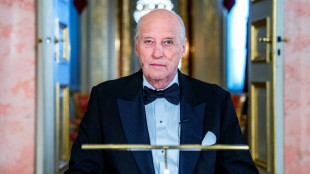
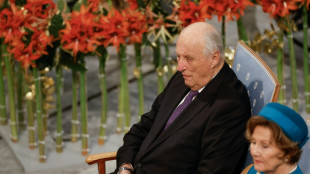 Norway's King Harald dead at 89

 Climate change hits trout and salmon in UK's prized chalk streams

 Škoda Octavia Marks 30 Years With Nearly 7.9 Million Units Produced

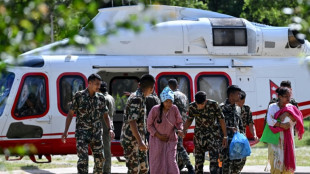 Nepal seeking to reach survivors in tunnel as risk of new floods rises

 Anger in Austria over business park on former Nazi camp site

 In shadow of Premier League, Serie A flexes financial muscle

 Tanker pays record $5.3 mn to transit Panama Canal: administrator

 Pilgrims seeking peace caught in deadly Nepal-Tibet floods

With its catchy beats and in-your-face lyrics, Egypt's hugely popular electro "mahraganat" music has found millions of fans in the conservative country -- but now officials are pulling the plug.
"Never call it mahraganat again," came an edict from Egypt's musicians' union.
"Anyone who writes the word mahraganat on his videos will have his name immediately crossed out," union head and former star crooner Mustafa Kamel said.
Relying heavily on computer-generated and synthesised beats, mahraganat -- often known as "electro-shaabi" (popular electro) -- is a far cry from the pop melodies that normally rule the radio waves across the Arab world.
Its blunt lyrics tackle topics including love, power and money, booming across class barriers through nearly every speaker in the country, where more than half the population is under 25 years old.
With its roots in impoverished urban neighbourhoods, the genre has often sparked the ire of critics as "low-brow", and social conservatives have long derided it as "uncouth".
But its songs have often overtaken traditional media darlings on pop charts, skyrocketing artists from low-income areas to concert venues and luxurious wedding halls, with some playing to sold-out crowds across the Red Sea in Saudi Arabia.
- 'Preserve public taste' -
As part of its latest campaign to "preserve public taste", the musicians' union is splitting singers from the abolished genre into two categories.
Those whose voices are judged up to par will be labelled "popular singers", who must perform with a minimum of 12 syndicated musicians.
Rappers instead can perform with just six -- "at least a pianist, a bassist, two guitarists, a drummer and a percussionist", Kamel told a press conference last week.
The mahraganat singers who fail to impress will be called "vocal performers". They will have to renew their licence every three months, have the culture ministry's censor approve their lyrics, and take an oath not to "use any word or image that violates Egyptian morality", whether at home or abroad.
The syndicate will judge whether the performer has demonstrated "respect for the union, the nation, and the young people" looking up to them, Kamel said.
Its war on mahraganat music is not new.
In 2020, the union issued a ban on the performances that was unevenly enforced as artists continued to put out hits and sell out venues.
When Kamel took over as union chief last month, some hoped the former star lyricist -- who gained fame in the 1990s for his romance ballads -- would go easier on the much-maligned genre.
- 'Professional jealousy' -
In one online video viewed by tens of thousands of people, popular Egyptian rapper Moscow questioned the decisions.
Are artists "really going to wait for someone to tell us how to talk about ourselves and our own lives?" he said.
For singers and rappers whose genres were built by those excluded from conservatories and traditional music academies, the requirement to employ a full band of registered musicians was also seen as absurd.
In working class neighbourhoods in the 2000s, artists huddled in their rooms with barebones equipment and pirated software, later monetising social media success after the country's 2011 uprising.
Egypt has long been a key hub of Arab music and a cultural powerhouse in the Arab world.
Cultural critic Joseph Fahim praised mahraganat's "sense of abandon".
The genre has showed a reality of Egyptian society that "neither the government nor the syndicate is willing to admit exists", he wrote online.
The battle against the genre is "rooted in class, professional jealousy, and the regime's insatiable desire for controlling public taste and enforcing its bourgeois mores", Fahim said.
H.Seidel--BTB