'Never again': Ukraine bolsters defences by Belarus-Russia border / Photo: © AFP

 UEFA's legal move 'massive escalation' in bitter Infantino feud

 MEXC Launches Earn Plus With Limited-Time Event Offering Up to 800% APR Booster
 Norway's new King Haakon VIII, popular face of shaken monarchy
 Stocks rise ahead of Fed chair's policy speech

 Norway's new King Haakon VII, popular face of shaken monarchy

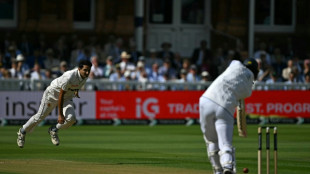 Last-wicket duo take England to 290 all out in 2nd Test against Pakistan
 MPSC Drug Inspector Exam Leak: Rutuja Patil Allegedly Paid Rs 50 Lakh for Leaked Paper
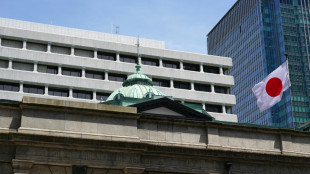 Japan spent record $96 bn in yen interventions: ministry
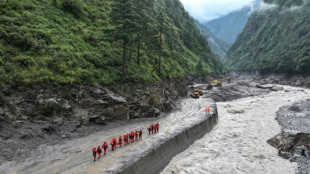
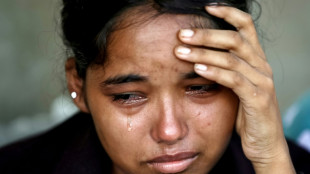 Nepal-China floods disaster: Latest developments

 Duplantis needs A-game to fend off Karalis pressure
 Architect Minenhle Makhanya Ordered to Repay R147 Million for Nkandla Upgrades

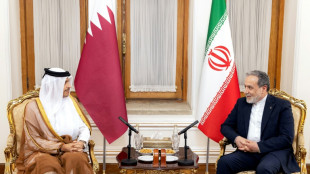 Iran says still open to diplomacy as war with US hits six months
 20,000 Salmon Return to Klamath River Following Dam Removal, Yet Recovery Faces Ongoing Challenges
 King Harald, 'symbol' of Norway, dead at 89

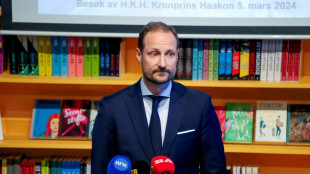 Norway's new King Haakon, popular face of shaken monarchy
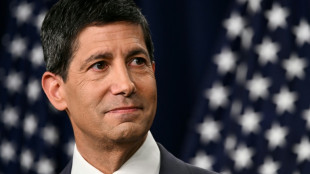 Most stocks rise as attention turns to Warsh speech
 Japanese rugby U-turns on limits on naturalised players
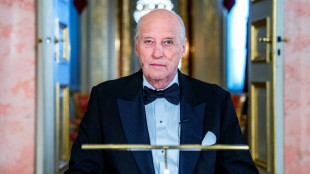
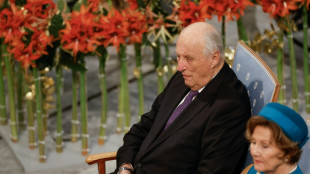 Norway's King Harald dead at 89

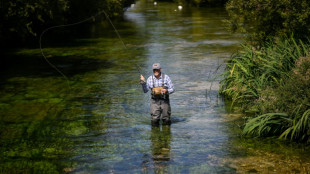 Climate change hits trout and salmon in UK's prized chalk streams
 Škoda Octavia Marks 30 Years With Nearly 7.9 Million Units Produced
 Nepal seeking to reach survivors in tunnel as risk of new floods rises

 Anger in Austria over business park on former Nazi camp site
 In shadow of Premier League, Serie A flexes financial muscle

 Tanker pays record $5.3 mn to transit Panama Canal: administrator

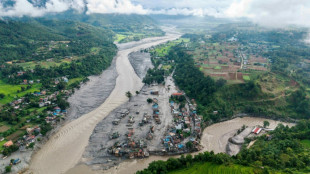
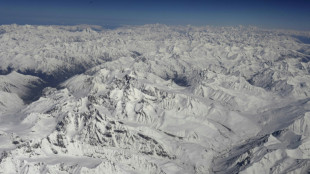 Pilgrims seeking peace caught in deadly Nepal-Tibet floods
Crouching in his hidden lookout on the edge of a forest, a Ukrainian border guard scans the horizon to the border with Russia and Belarus just a few kilometres to the north.
With the rain pouring down and the clouds low, there will be no Russian drones overflying his remote outpost in northern Ukraine, the last one before the frontier.
Clutching a monocular and wearing a balaclava that only shows his eyes, the guard proudly shows off his NLAW anti-tank missile launcher.
"Our main objective is to prevent a (new) invasion. But if that happens again here, we'll be ready to stop the enemy at the border and prevent them from coming in," says the 33-year-old who does not give his name.
The Senkivka border crossing is very close. A three-way crossing shaped like a 'Y', it points northwest into Belarus and northeast into Russia with Ukraine to the south.
This is where Russia's 90th armoured division swept in when the war started on February 24, cutting through Ukrainian territory like a knife through butter.
From there, the Russian army reached the gates of Chernigiv, capital of the eponymous region, some 90 kilometres (55 miles) to the south.
But they were never able to take the city, repelled by fierce Ukrainian resistance although it was regularly bombed.
In early April, the Russians pulled back from the north only to refocus on the campaign in eastern and southern Ukraine.
- 'Growing threat' -
Since then, Ukraine has been watching Senkivka like a hawk as well as its nearly 900 kilometres of border with Belarus, whose territory served as a rear base for Moscow's forces.
On October 20, Ukraine's military said the threat of a renewed offensive from the north was "growing", flagging intensified "aggressive rhetoric" from its northern neighbours who are close allies.
Several days earlier, Minsk said up to 9,000 Russian soldiers and some 170 tanks would be deployed to Belarus as part of a joint task force to secure its borders.
"If you want peace, you need to prepare for war," Belarusian President Alexander Lukashenko said on October 10, accusing Ukraine of "planning strikes" on his country.
Until now, Minsk has not joined the fighting in Ukraine.
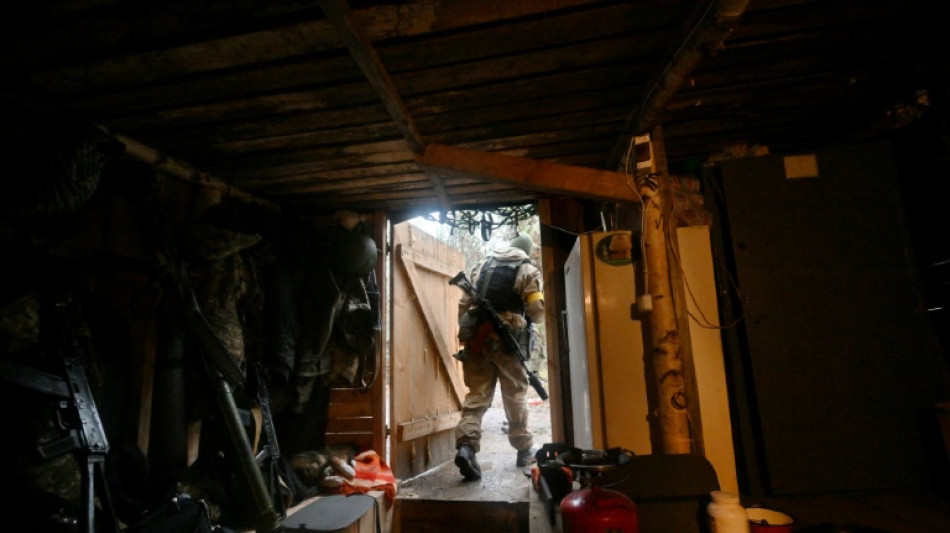
Inside the well-fortified dugout that was set up after the Russian pullback in April, a border guard in his 30s who goes by the nickname "Lynx" says he thinks there's a "50-50 chance" of a new Russian offensive.
"The likelihood of an attack will always be high here near the border, with a neighbour like that," he says, a machinegun slung over his shoulder.
"You hear the constant sound of (Russian) artillery fire here... sometimes it's calm, but since autumn began, the enemy has become more active," he says.
But now "there are more (Ukrainian) positions and more fortifications, everything is more serious now... we have thought through all the possible options to avoid a repeat of what happened before," he insists.
- 'Friendly nations' -
Some 30 kilometres to the south lies Gorodnia, the first town occupied by the Russians on the first morning of the invasion.
Mayor Andriy Bogdan told AFP he was hoping the events of February 24 "won't be repeated" even if such a threat "does exist", pointing to the Russian troops in Belarus.
But now, the situation "is completely different" from what it was back then, when his town -- which had 21,000 residents before the war -- was "almost completely unprotected".
"We are relying on our border guards and all our defence forces. Today they are here and ready to fight," Bogdan says.
When the Russians turned up, the residents made a peaceful show of resistance, he says, proudly showing a video of locals with Ukrainian flags standing in front of the armoured vehicles to stop them advancing.
In the end, the Russians remained outside the town when they occupied the area.
Grocery shop owner Svetlana, a woman in her 50s, dismisses the idea "that Belarus could attack us".
"We live by the border, we are friendly nations. I have a brother in Belarus and a sister in Moscow," she told AFP.
"At the start, even my sister couldn't believe it had happened. But they understand and they support us," she said.
"I want it to be over as soon as possible."
H.Seidel--BTB