
Planet Earth: 8 billion humans and dwindling resources / Photo: © AFP/File

 Spurs boss De Zerbi targets one more big signing before window shuts

 Fed chair Warsh flags high US inflation as 'concerning'

 Same Election Question, Two Different Odds: Predictions.io Launches Free Cross-Venue Comparison Tools

 Man Utd new signing Baleba sidelined for three weeks
 Juve's Yildiz to miss 'several months' with foot injury

 Celine Dion arrives in France ahead of sold-out comeback dates

 All-round Tongue stars for England in second Test against Pakistan

 UEFA's legal move 'massive escalation' in bitter Infantino feud

 MEXC Launches Earn Plus With Limited-Time Event Offering Up to 800% APR Booster
 Norway's new King Haakon VIII, popular face of shaken monarchy
 Stocks rise ahead of Fed chair's policy speech

 Norway's new King Haakon VII, popular face of shaken monarchy

 Last-wicket duo take England to 290 all out in 2nd Test against Pakistan
 MPSC Drug Inspector Exam Leak: Rutuja Patil Allegedly Paid Rs 50 Lakh for Leaked Paper

 Japan spent record $96 bn in yen interventions: ministry
 Nepal-China floods disaster: Latest developments
 Duplantis needs A-game to fend off Karalis pressure
 Architect Minenhle Makhanya Ordered to Repay R147 Million for Nkandla Upgrades

 Iran says still open to diplomacy as war with US hits six months

 20,000 Salmon Return to Klamath River Following Dam Removal, Yet Recovery Faces Ongoing Challenges

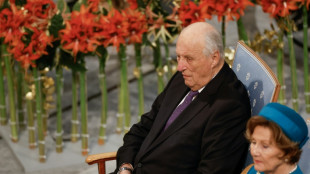 King Harald, 'symbol' of Norway, dead at 89

 Norway's new King Haakon, popular face of shaken monarchy

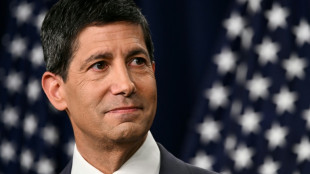 Most stocks rise as attention turns to Warsh speech
 Japanese rugby U-turns on limits on naturalised players

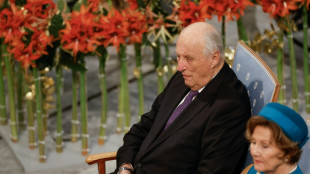 Norway's King Harald dead at 89

Are eight billion humans too many for planet Earth? As we reach this milestone on November 15, most experts say the bigger problem is the overconsumption of resources by the wealthiest residents.
"Eight billion people, it is a momentous milestone for humanity," said United Nations Population Fund chief Natalia Kanem, hailing an increase in life expectancy and fewer maternal and child deaths.
"Yet, I realize this moment might not be celebrated by all. Some express concerns that our world is overpopulated. I am here to say clearly that the sheer number of human lives is not a cause for fear."
So, are there too many of us for Earth to sustain?
Many experts say that this is the wrong question. Instead of the fear of overpopulation, we should focus on the overconsumption of the planet's resources by the wealthiest among us.
"Too many for whom, too many for what? If you ask me, am I too many? I don't think so," Joel Cohen of Rockefeller University's Laboratory of Populations told AFP.
He said the question of how many people Earth can support has two sides: natural limits and human choices.
- 'Stupid and greedy' -
Our choices result in humans consuming far more biological resources, such as forests and land, than the planet can regenerate each year.
The overconsumption of fossil fuels, for example, leads to more carbon dioxide emissions, responsible for global warming.
We would need the biocapacity of 1.75 Earths to sustainably meet the needs of the current population, according to the Global Footprint Network and WWF NGOs.
The most recent UN climate report mentions population growth as one of the main drivers of an increase in greenhouse gases. However, it plays a smaller role than economic growth.
"We are stupid. We lacked foresight. We are greedy. We don't use the information we have. That's where the choices and the problems lie," said Cohen.
However, he rejects the idea that humans are a curse on the planet, saying people should be given better choices.
"Our impact on the planet is driven far more by our behavior than by our numbers," said Jennifer Sciubba, a researcher at the Wilson Center, a think tank.
"It's lazy and damaging to keep going back to overpopulation," she added, as this allows people in wealthy nations, who consume the most, to cast the blame for the planet's woes onto developing countries where population growth is highest.
"Really, it's us. It's me and you, the air conditioning I enjoy, the pool I have outside, and the meat I eat at night that causes so much more damage."
If everyone on the planet lived like a citizen of India, we would only need the capacity of 0.8 Earths a year, according to the Global Footprint Network and WWF. If we all consumed like a resident of the United States, we would need five Earths a year.
The United Nations estimates that our planet will be home to 9.7 billion people by 2050.
- Women's rights -
One of the trickiest questions that arise when discussing population is that of controlling fertility. Even those who believe we need to lower the Earth's population are adamant about protecting women's rights.
Robin Maynard, the executive director of the NGO Population Matters, says there needs to be a decrease in the population, but "only through positive, voluntary, rights-respecting means" and not "deplorable examples" of population control.
The NGO Project Drawdown lists education and family planning among the top 100 solutions to halt global warming.
"A smaller population with sustainable levels of consumption would reduce demands on energy, transportation, materials, food, and natural systems."
Vanessa Perez of the World Resources Institute agrees that "every person that is born on the planet puts additional stress on the planet."
"It is a very thorny issue," she said, adding that we should reject "this idea that the elite capture this narrative and say we need to cap population growth in the South."
She believes the most interesting debate is not about the number of people but "distribution and equity."
Cohen points out that even if we currently produce enough food for 8 billion people, there are still 800 million people who are "chronically undernourished."
"The concept of 'too many' avoids the much more difficult problem, which is: are we using what we know to make the human beings we have as healthy, productive, happy, peaceful, and prosperous as we could?"
J.Horn--BTB