Countries diverge on future climate finance at COP27 / Photo: © AFP

 Spurs boss De Zerbi targets one more big signing before window shuts

 Fed chair Warsh flags high US inflation as 'concerning'
 Same Election Question, Two Different Odds: Predictions.io Launches Free Cross-Venue Comparison Tools

 Man Utd new signing Baleba sidelined for three weeks
 Juve's Yildiz to miss 'several months' with foot injury

 Celine Dion arrives in France ahead of sold-out comeback dates

 All-round Tongue stars for England in second Test against Pakistan
 UEFA's legal move 'massive escalation' in bitter Infantino feud

 MEXC Launches Earn Plus With Limited-Time Event Offering Up to 800% APR Booster
 Norway's new King Haakon VIII, popular face of shaken monarchy
 Stocks rise ahead of Fed chair's policy speech

 Norway's new King Haakon VII, popular face of shaken monarchy

 Last-wicket duo take England to 290 all out in 2nd Test against Pakistan
 MPSC Drug Inspector Exam Leak: Rutuja Patil Allegedly Paid Rs 50 Lakh for Leaked Paper

 Japan spent record $96 bn in yen interventions: ministry
 Nepal-China floods disaster: Latest developments
 Duplantis needs A-game to fend off Karalis pressure
 Architect Minenhle Makhanya Ordered to Repay R147 Million for Nkandla Upgrades

 Iran says still open to diplomacy as war with US hits six months
 20,000 Salmon Return to Klamath River Following Dam Removal, Yet Recovery Faces Ongoing Challenges

 King Harald, 'symbol' of Norway, dead at 89

 Norway's new King Haakon, popular face of shaken monarchy
 Most stocks rise as attention turns to Warsh speech
 Japanese rugby U-turns on limits on naturalised players

 Norway's King Harald dead at 89

High-level talks on scaling up finance for developing countries to green their economies and prepare for global warming impacts began Wednesday at the COP27 climate conference with negotiators differing on the funding's size and providers.
In 2009, the chaotic UN climate summit in Copenhagen saw rich nations promise $100 billion a year by 2020 to the Global South, but two years past that deadline the amount delivered is still $17 billion short, according to the OECD.
Even this figure overestimates rich nation largesse if loans and funds not already allocated for other purposes are excluded from the tally, say Oxfam and other NGOs that track the issue.
Developed nations attending the November 6 to 18 talks at the Red Sea resort of Sharm el-Sheikh now say the $100-billion goal will be reached by the end of 2023.
Discussions on how much to give after the current round of commitments expire in 2025 -- and whether to expand the pool of donors to include other nations, notably China -- have already gotten underway.
But more than a dozen years after the original pledge was made, estimates of future financial flows required have increased several fold, promising to make upcoming negotiations difficult.
The climate finance talks kicked off with three questions in need of "political guidance": Should there be quantitative goals? Should the donor base be expanded? Should financing also cover "loss and damage" that has already occurred?
"We must not replicate the shortcomings in the delivery of the $100 billion," said Rosalinda Soipan Tuya, a Kenyan MP speaking on behalf of the negotiating bloc of African nations.
The amount needed over the second half of this decade should, she added, "be based on need", which she estimated at more than $1.3 trillion per year globally by 2030.
Other developing nation representatives focused not just on the amount, but on the conditions under which financing would be made available.
"We must ensure our debt levels are not enhanced," said an official from The Maldives, representing the AOSIS group of small island nations, some of whom face the prospect of being wiped off the map by rising seas.
"The financing must be grant-based and simple to access."
- 'Paltry sum' -
A number of nations lamented the paucity of outright grants compared to loans.
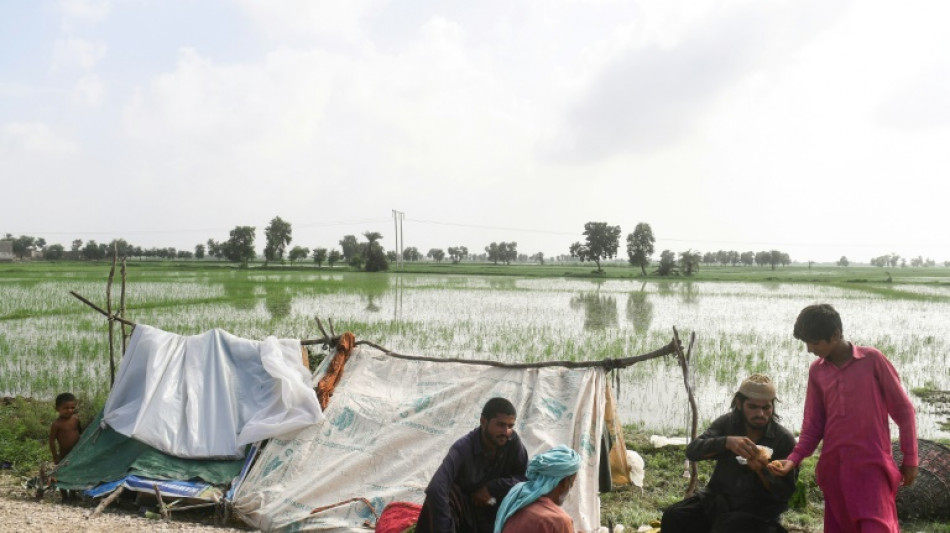
The representative from Pakistan insisted that the contested category of loss and damage -- essentially compensation for unavoidable climate impacts -- should also be covered as well.
"I come from ground zero of the climate crisis," she said, referring to massive flooding in August that covered a third of her country and caused more than $30 billion in economic losses, according to the World Bank.
Standing in for wealthy nations that were until recently reluctant to allow loss and damage onto the formal negotiating agenda of the UN talks was US special envoy for the climate John Kerry.
"No government in the world has the money to do what we have to do to win this battle," he said, noting that total needs could reach $4 trillion.
"We have to think completely differently about how we can mobilise finance," he added, lamenting the failure of developed countries to deliver the "paltry sum" of $100 billion dollars.
Diplomats from developing nations criticised the persistent imbalance in climate financing which, within the UN framework, should be evenly split between reducing emissions (mitigation) and boosting resilience to future impacts (adaptation).
As climate disasters have multiplied over the last decade, nations in the Global South have called for a separate financial facility for loss and damage.
"We need a common definition of what exactly constitutes climate finance," said IMF chief Kristalina Georgieva. "It is paramount to measure what needs there are and their net worth."
E.Schubert--BTB