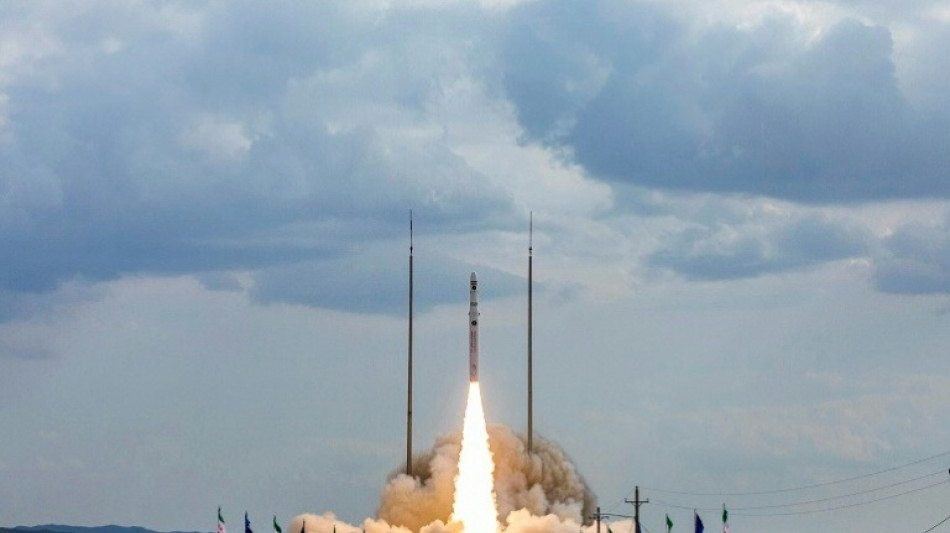
Iran says it has developed hypersonic missile / Photo: © SEPAH NEWS/AFP/File

 SmartMarket Solutions Announces Its BBB Accreditation with an A+ Rating

 Greenland to open truth commission over forced contraception scheme

 Stocks, dollar rise after Fed chief lifts rate expectations

 'Game-changer': solar ambulance completes test run in Kenya

 Fernandez's Chelsea future uncertain as Alonso seeks commitment

 Four plead guilty to London arson attack on Jewish ambulances

 Meta's teen safety deal runs into an unsolved problem: proving age

 Windmills of change: Dutch raise mill in rare operation

 Netanyahu party in uproar as far-right refuses pleas to unite

 Stocks advance with all eyes on Fed chair's speech

 War criminal Ratko Mladic's death lays bare Bosnia's wounds

 Thieves buy tickets before plundering necklace from Vienna museum

 Swiss nuclear plant fully back online after heatwaves

 Bournemouth, Sunderland to face AC Milan in Europa League

 Once a legend, humpback whales make comeback in Brazil

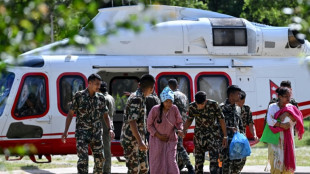 'Ran for our lives': Tales of survival from Nepal-China disaster

 Bombay High Court Questions Police Probe in Disha Salian Death Case

 Orthopaedician Dr Akhil Kulshreshtha Shares 5 Tips for Bone and Joint Health
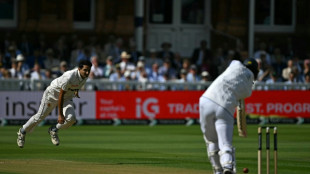
 All eyes on Warsh as Fed chair kicks off key central banking meeting

 ONE App Launches AI Agent and Custom GPT to Enhance Digital Banking

 Indonesia escalates battle against fires, putrid haze

 Germany could miss climate goal in 2026 for first time: think tank

 New flood risks impede Nepal, Tibet rescue

 Kolbe back as Springboks change two for All Blacks Test
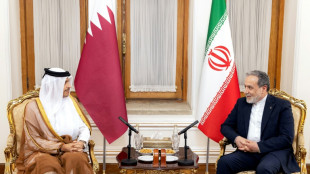
 Europe's monarchs, world leaders mourn Norway's King Harald
Iran has developed a hypersonic missile capable of penetrating all defence systems, General Amirali Hajizadeh, the commander of its Revolutionary Guards aerospace unit, claimed on Thursday.
Hypersonic missiles, like traditional ballistic missiles which can deliver nuclear weapons, can fly more than five times the speed of sound.
"This hypersonic ballistic missile was developed to counter air defence shields," Hajizadeh said, quoted by Iran's Fars news agency.
"It will be able to breach all the systems of anti-missile defence," said the general, adding that he believed it would take decades before a system capable of intercepting it is developed.
"This missile, which targets enemy anti-missile systems, represents a great generational leap in the field of missiles."
The announcement comes after Iran admitted on Saturday that it had sent drones to Russia, but said it had done so before the Ukraine war.
The Washington Post reported on October 16 that Iran was preparing to ship missiles to Russia, but Tehran rejected the report as "completely false".
Unlike ballistic missiles, hypersonic missiles fly on a trajectory low in the atmosphere, potentially reaching targets more quickly.
North Korea's test of a hypersonic missile last year sparked concerns about a race to acquire the technology.
Russia currently leads the race to develop the missiles, followed by China and the United States.
Both Iran and Russia are targeted by stringent sanctions -- Iran after the US unilaterally pulled out of the 2015 nuclear deal between Tehran and world powers, and Russia since it invaded Ukraine in February.
The two countries have responded to the sanctions by boosting cooperation in key areas to help prop up their economies.
- Stalled nuclear talks -
A hypersonic missile is manoeuvrable, making it harder to track and defend against.
While countries like the United States have developed systems designed to defend against cruise and ballistic missiles, the ability to track and take down a hypersonic missile remains a question.
Thursday's announcement comes against a backdrop of stalled talks on reviving the 2015 nuclear deal.
The deal reached with six major powers -- Britain, China, France, Germany, Russia and the US -- gave Iran relief from sanctions in return for guarantees it could not develop an atomic weapon.
Iran has always denied wanting a nuclear arsenal.
The deal collapsed after the unilateral withdrawal of the United States in 2018 under then president Donald Trump.
It also follows Iran's announcement on November 5 of the successful test flight of a rocket capable of propelling satellites into space.
The United States has repeatedly voiced concern that such launches could boost Iran's ballistic missile technology, extending to the potential delivery of nuclear warheads.
In March, the US government imposed sanctions on Iran's missile-related activities.
It said in a statement at the time that the punitive measures followed "Iran's recent missile attack on Arbil, Iraq, as well as missile attacks by Iranian proxies against Saudi Arabia and the United Arab Emirates".
"These attacks are a reminder that Iran's development and proliferation of ballistic missiles pose a serious threat to regional and international security," it said.
H.Seidel--BTB