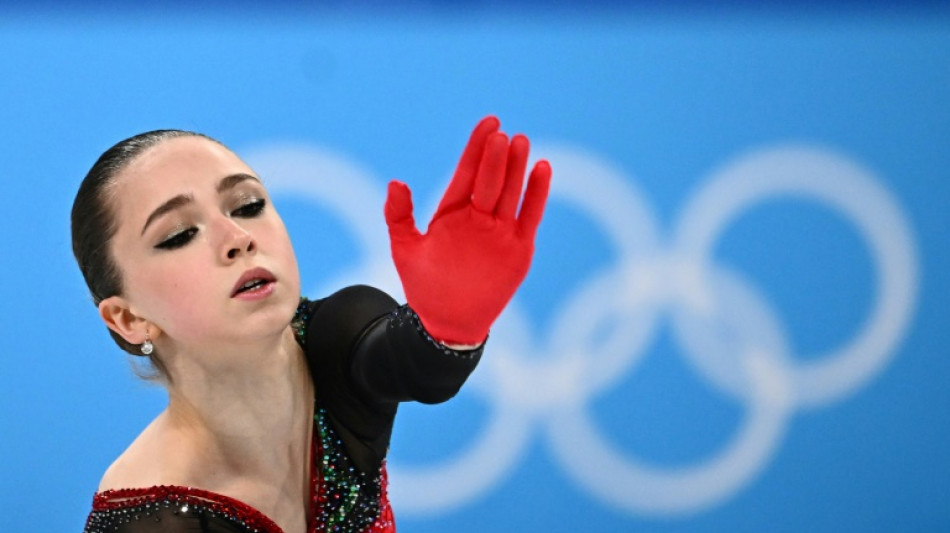
Kamila Valieva's Olympic doping scandal: What happens next? / Photo: ©

 Spotting AI writing: how reliable are the detectors?
 French youth await pope after AI 'paradise of machines' warning
 Man City found guilty of Premier League charges, set to appeal: reports

 Embolo follows Xhaka out of Swiss squad over fake Covid documents
 Trump, Xi inspect founding documents of US democracy to close summit
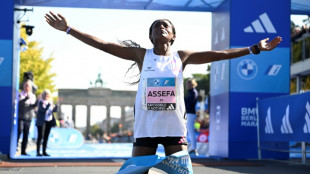
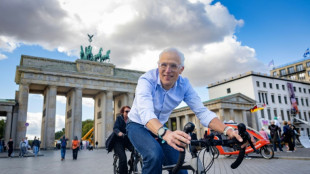 'Bottle Claus': Kipchoge's 'hero' helping runners chase Berlin marathon glory

 Olympic medallist Samba-Mayela handed provisional doping ban
 First US trial against TikTok to open Monday

 Palmer misses 'too many' England games, says Tuchel
 UN refugees chief warns conditions in W.Sahara 'deteriorating'
 Antonelli 'mad' about crash in Azerbaijan qualifying
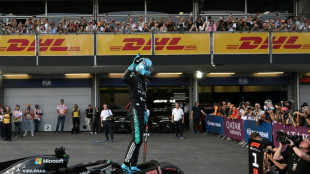 'Perfect lap' gives Russell pole for Azerbaijan GP as Antonelli crashes out

 UN Security Council condemns Houthi attacks on Saudi Arabia
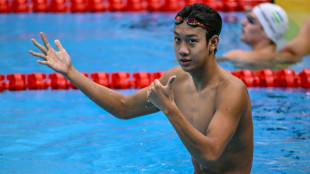 China swimmer makes Asian Games history as Thai wins 100m sprint
 Top French literary prize drops best-selling novel over AI claims
 US 'must choose' whether to end war: Iran president
 Pope warns against losing humanity in AI-driven 'paradise of machines'
 Pope warns against losing humanity in 'paradise of machines'

 From FBI warning to literary acclaim: the Russian journalist who took on Putin
 China swimmer in Asian Games first as North Korea lifters reign
 French literary prize removes novel from longlist after AI claims
 China's Zhang wins record seventh Asian Games swimming gold

 Verstappen edges Russell in final practice in Azerbaijan
 English, Spanish, Italian, German football leagues call for FIFA reform

 Pope arrives in France on first official visit in 18 years

Russia's Kamila Valieva came a disappointing fourth in the Beijing Olympics women's single event on Thursday, after more than a week of intense scrutiny over a failed doping test. Her Olympics is over -- but the saga is not.
A week into the Games, it emerged the 15-year-old had tested positive in December for trimetazidine, an angina medication that is banned because it can increase blood flow efficiency and help endurance.
The Court of Arbitration for Sport (CAS) on Monday ruled that she could carry on competing in the Chinese capital.
But that did not mean the Russian has been cleared of doping and she could still face punishment at a later date.
Here's what is expected to happen next:
- No medals? -
The International Olympic Committee (IOC) had said there would be no medal ceremony for the women's individual event if Valieva finished in the top three.
Her non-podium finish made that point moot -- but there is still the matter of the medals for the team event, in which the teenager led the Russians to gold.
They have yet to be awarded, and the IOC has said it will make no decision until "due process" has been followed to decide if Valieva infringed the World Anti-Doping Code (WADA).
It is not clear if the whole Russian team will be disqualified if she is found guilty.
International Skating Union (ISU) regulations only collectively disqualify a team if a doping test is failed in competition -- which is not the case here.
- Process 'could take years' -
The Russian anti-doping agency, RUSADA, had initially suspended Valieva for the failed test, but lifted the ban a day later -- we still don't know on what grounds.
RUSADA's investigation into whether she broke anti-doping rules continues.
Valieva has the right to request analysis of her "B sample" -- when athletes take doping tests their samples are split in two.
But in the CAS hearing, Valieva provided a reason for why the trimetazidine was in her system -- because of "contamination" from her grandfather's medicine.
She claimed it could have come from using the same dishes or a glass as her grandfather.
RUSADA's eventual ruling can be appealed by the World Anti-Doping Agency (WADA) or the International Skating Union (ISU) through CAS.
Bill Bock, former General Counsel for the US anti-doping agency USADA, told AFP he expected the whole process to take at least six months to a year.
"It can take years if it goes to the Swiss Federal Court, which is the final judge of the CAS decisions," said David Pavot, law professor and antidoping expert at the University of Sherbrooke in Canada.
- Possible sanctions -
Valieva is considered a "protected person" under WADA rules because she is under 16.
Had she not been such a high-profile athlete who had already medalled when the test result was received, her case might never even have been reported.
Her status also means that she could receive lighter sanctions. Instead of a four-year ban, Valieva could get anything from a warning to a two-year ban.
Bock said her case was unique because the rules relating to protected persons only came into effect at the start of 2021.
- Consequences for Russia? -
Russia is already under sanctions for a massive state-sponsored doping programme that reached its peak at the 2014 Sochi Winter Olympics.
Senior IOC member Denis Oswald, who oversaw the investigation into the Sochi doping, said that Valieva's case was different.
"The state doping was a big system and it doesn't seem to be such a situation here," he said.
But the entourage around Valieva -- her coaches and advisors -- is being investigated.
RUSADA has already indicated it has begun that process.
WADA have also separately said they will investigate her team, which could mean parallel inquiries running.
"Obviously, because of the past and the liabilities and the importance of the case, WADA's departments will I think look at the case closely," said Pavot.
- Could Rodchenkov Act be used? -
There have also been suggestions that the United States could prosecute Russian individuals allegedly involved in the case.
The Rodchenkov Anti-Doping Act (RADA), passed by the Trump administration in 2020, allows the United States to impose criminal sanctions on people involved in doping at international sports competitions that feature US athletes, broadcasters and sponsors.
USADA head Travis Tygart told AFP last week that he thought the law, named after the Russian who oversaw the Russian doping programme at the 2014 Sochi Winter Olympics, could come into play in the Valieva case.
"We're a long way from that happening because all the facts aren’t out. But we'll see," he said.
J.Horn--BTB