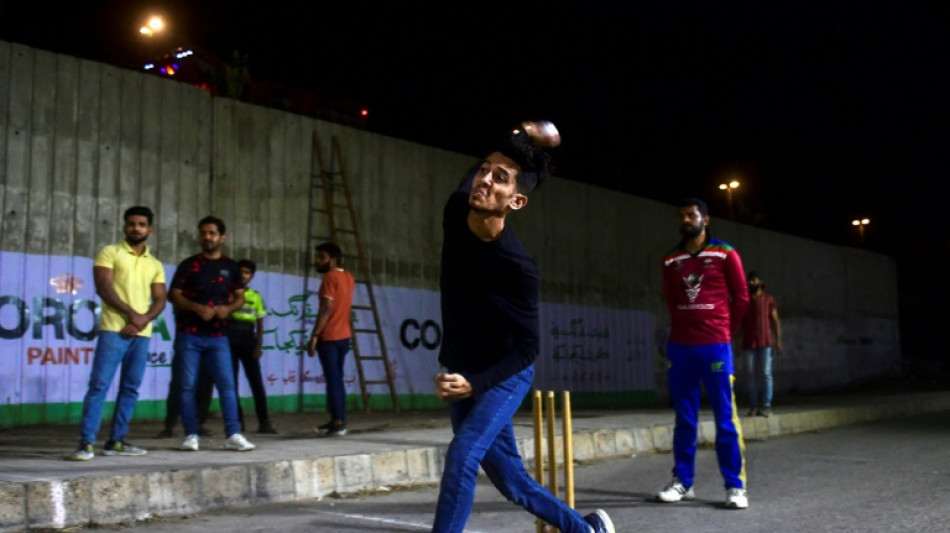
Pakistan street cricket comes to life after dark during Ramadan / Photo: © AFP

 Monet's 'Iris' fetches 50 mn euros at Paris auction

 L'Oreal sees double-digit sales growth

 Sri Lanka stun England with huge chase after Brook's 202

 Guatemala sentences former police officers in gay couple's killings

 Nelson's erotic dream letter features in London auction

 Canada opens free trade talks with Turkey
 Swiss, Austrian women freed after Niger kidnap ordeal
 Austrian-born French resistance fighter dies aged 105: regional official

 Paris shop-owners and residents prepare for fresh protests
 French, Japanese authors try to write novel on one-day train ride

 Pentagon, Lockheed announce agreement for 850 F-35 jets over 10 years

 Brook scores fastest double century in ODI history in rampant England's 429-4
 Top-ranked Rybakina into Ningbo quarter-finals on return from injury
 Samson superb as India mark record T20 chase in win over New Zealand

 Nvidia boss criticises 'cheap' AI doomsday warnings

 Philippines trailblazer Eala ousted in Ningbo last 16
 Stocks retreat as tech mood sours, oil prices jump

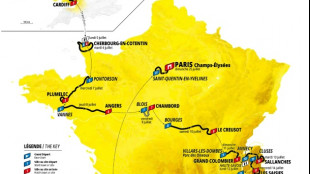 Northern start and finale in the Pyrenees for 2027 Tour de France

 Handful of Micron workers strike in Taiwan

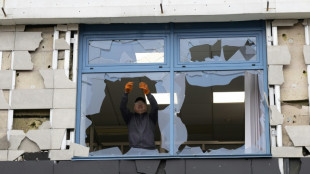 Zelensky says fresh Russian strikes show 'no change' in Kremlin position

 China slams 'Cold War mentality' after new EU Arctic plan

 Алекс Боди и ръководителят на BlackRock Лари Финк в Берлин: инвестиции в Германия и Румъния?

 Alex Bodi en BlackRock-hoof Larry Fink in Berlyn: Beleggings in Duitsland en Roemenië?

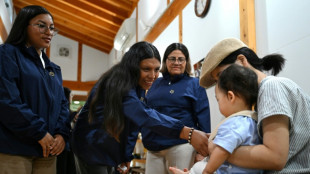 Ageing Japanese village turns to Peru in search of new residents

 Targeted by Trump, ICC in running for top EU rights prize
After midnight during Ramadan, makeshift floodlights transform a central Karachi basketball court into an urban cricket arena, where dozens of young Pakistani men chase taped-up tennis balls zipping through the night air.
Donkeys watch on from the outfield and goats rummage through nearby piles of rubbish, breaking occasionally for a pitch invasion.
"After the Taraweeh (special Ramadan prayers), people crave entertainment so that is why many play cricket," batsman Waqas Danish told AFP. "They play all night, because some people can't wake up for breakfast if they sleep."
Tape-ball games are ubiquitous across Karachi's streets throughout the year, but Ramadan sees night tournaments pop up in most neighbourhoods.
The uninitiated may struggle to unravel the mayhem of multiple overlapping matches in a cramped space, but for Karachi's street cricketers, there is method in the madness.
The frenetic matches of between four and six overs per innings are concluded before sehri, the meal consumed ahead of daytime fasting.
They range from pick-up games on improvised concrete pitches to professional competitions on dusty ovals.
"The kids and youths can't afford kits and all the accessories for playing hard-ball cricket, but they can easily afford the tape ball," competition organiser Taqdeer Afridi told AFP in Karachi.
Money is often involved -- even though gambling is illegal in Pakistan -- and big-hitting mercenaries are occasionally lured from surrounding neighbourhoods to play under lights that craftily tap into overhead power lines.
A tennis ball is tightly bound with electrical tape, giving it extra weight so it swings much like a cricket ball, yet is less damaging if it hits a spectator, window -- or even a passing rickshaw.
- 'Amazing' speed -
Matches played in the poorest neighbourhoods can draw hundreds of spectators, with many onlookers admitting that watching cricket all night helps with the day's fast.
"All day they are sleeping. Maybe they go to their jobs for four or five hours," 19-year-old spectator Rahman Khan said.
After Partition in 1947, cricket was considered the domain of the upper class, played at Karachi's posh clubs and elite schools.
But as the population boomed through the 1960s, cricket adapted to the sprawling metropolis and tennis balls emerged as a substitute to the hard ball.
The cheaper alternative -- which also removes the need for costly equipment like batting pads -- took on several experimental forms in the following decades, and is credited with bringing the sport to the everyday Pakistani.
There is no consensus on when the first tape ball delivery was bowled or by who, but legends abound -- and the one thing historians and fans agree on is that it originated in Karachi.
"The tennis ball without tape lacked speed," said veteran Nasir Ali, who recalls the 1980s as the formative years for the tape-ball game.
"On an experimental basis we wrapped the ball with red tape and when it was bowled the speed was amazing," said the 64-year-old, who hosts an annual competition in his apartment block's courtyard.
- 'Watch the ball' -
From legendary all-rounder Wasim Akram to modern-day pace star Shaheen Shah Afridi, many of Pakistan's top players credit street cricket as a positive influence on their techniques.
"In cricket there is a saying: 'watch the ball' -- it doesn't matter if it is a tennis ball or a taped ball or a hard ball," Pakistan national youth coach Mohammad Masroor told AFP.
"If a batsman can hit any ball, he can play cricket."
Watching young cricketers at a street pitch wedged between an elevated expressway and an apartment block in central Karachi, Masroor said rules adapted to the urban landscape hone a batsman's skills.
A hit back over the bowler's head and beyond the residential area on the full is six runs, but only one run if the ball rebounds off the apartment building.
Players must also beware of the "grumpy uncle or aunty" who is unwilling to return a ball hit into their home. A shot like that can cost a batsman more than just his wicket: they need to go buy a new ball, too.
"Nothing stops them," said Masroor, grinning.
C.Kovalenko--BTB