NBA adopts flopping penalty, expands coach's challenges / Photo: © NBAE / Getty Images/AFP/File

 Families of children killed in Pakistan school roof collapse demand justice
 Asian stocks rise as tech bounces from rout, Warsh upbeat on AI
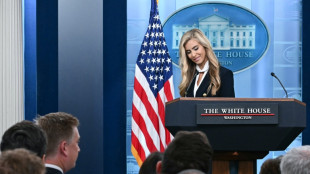 Trump's new press secretary says China lacked 'proper' toilets

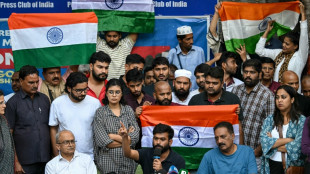 India closes down New Delhi park ahead of 'cockroach' movement rally
 'Let us build': World Bank chief outlines jobs-led development agenda

 Broncos top Super Bowl champion Seahawks in overtime
 Brilliant Brewers sweep Dodgers to reach World Series
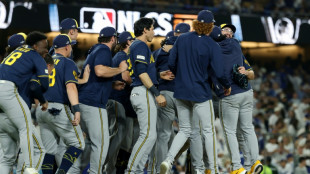 Brewers complete Dodgers sweep to reach World Series

 High-flying Freiburg try to shut out the noise as fairytale run continues
 Flamengo secure 0-0 draw in La Plata in Copa Libertadores semi

 The final lap? Two days on the campaign trail with Trump

 Asian stocks rise as tech bounces from rout, eyes on Warsh
 Saudi organisers say 2027 Asian Cup 'on schedule' after attacks
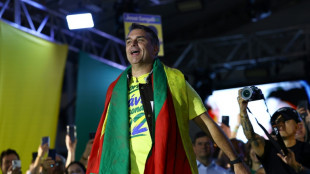 Right-wing Brazil influencers on 'mission' to seal Bolsonaro win

 Using AI to help find Mexico's legions of missing children

 Fiji to deploy solar-powered Australian military drones at sea
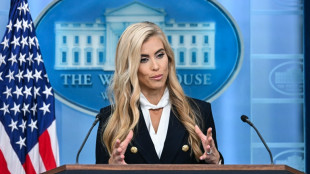
 'Multiple victims' in Oregon elementary school shooting, police say
 'Multiple victims' in Oregon elementary school shooting: police
 ChangeNOW Announces NOW AI After Resolving Website Integration Vulnerability

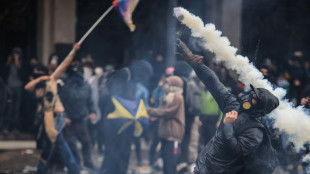 Argentine demonstration over education cuts ends in clashes
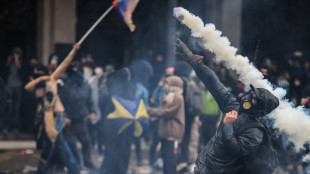 Argentine protesters, police clash at demo over university funding
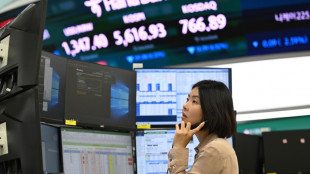 US stocks end higher as AI shares stabilize
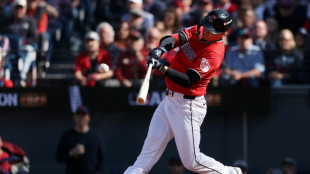
 School roof collapse kills 32 children, teacher in Pakistan
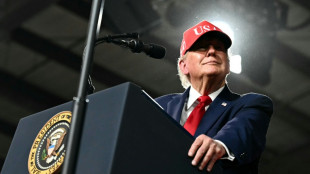
 Lyon down Palace in Europa League, Sunderland leave it late
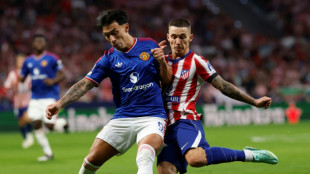
 UniCredit says receives ECB green light for Commerzbank takeover

NBA team owners approved rule changes on Tuesday creating an in-game flopping penalty and expanded coach's video replay challenge starting next season, the league announced.
The NBA's Competition Committee -– which includes players, coaches, referees, club owners, team executives and representatives from the National Basketball Players Association -- unanimously recommended both changes to the full board of team owners.
The new flopping rule, adopted on a one-season trial basis, says that when a game official calls a player for a flop -- a motion deliberately trying to entice a referee foul call on another player -- an offending player will be issued a technical foul and the opposing team will be awarded one free throw attempt.
A player will not be ejected from a game based on flopping violations.
Referees will not be required to stop play to call a flopping violation, allowing teams with an offensive opportunity to keep going until the game's next natural stoppage.
Referees can call both a foul and a flopping violation on the same play.
While flopping violations are not reviewable under a coach's challenge, they can be called during a referee's replay review triggered by a coach's challenge or a referee-initiated replay review of certain types of called fouls.
The NBA will continue to look at flopping after games, with fines modified to match technical fouls, starting at $2,000 and increasing for repeat offenders.
The coach's challenge change gives teams a second challenge if their first challenge is successful.
Teams must continue to use a timeout to trigger a challenge. They would not be able to challenge without a timeout available.
Teams can continue to keep the timeout after a first challenge if successful but will not retain the timeout used for a second challenge whether or not it is successful.
J.Bergmann--BTB