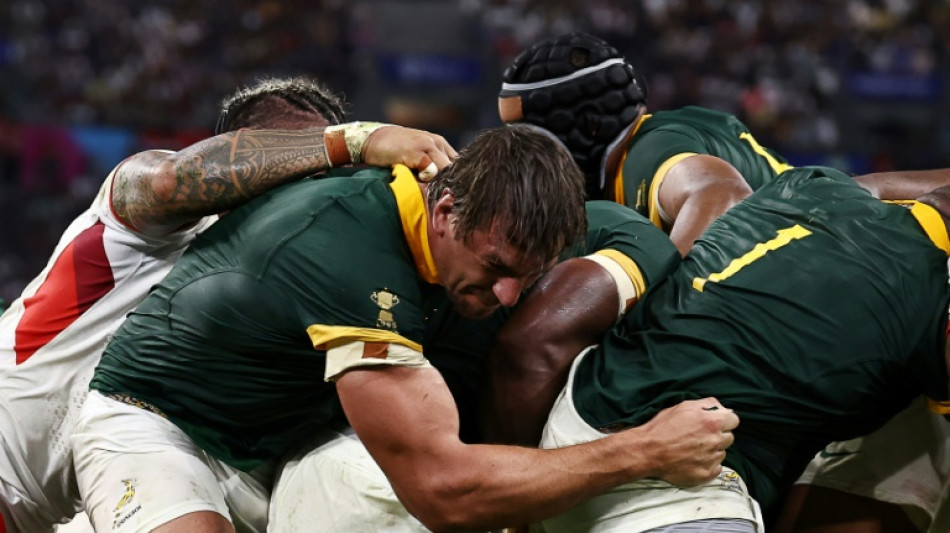
South Africa toying with 'smart' but controversial 7-1 bench / Photo: © AFP

 Ukraine irrelevant to Russia and IOC's relationship: Russian minister
 Brennan keeps his cool in Japan for third PGA Tour victory

 Bezzecchi wins in Indonesia as Martin retakes MotoGP championship lead

 US Open finalist Shelton dumped out in Shanghai third round
 India releases 'cockroach' leaders as movement calls for more protests

 Ο ALEX BODI δίνει έμφαση, σε συνεργασία με την CRIF, στις διαφανείς επενδύσεις και στη συστηματική πρόληψη της νομιμοποίησης εσόδων από παράνομες δραστηριότητες
 ALEX BODI sází ve spolupráci s CRIF na transparentní investice a důslednou prevenci praní špinavých peněz
 एलेक्स बोदी क्रिफ के सहयोग से पारदर्शी निवेश और धनशोधन की कड़ाई से रोकथाम पर ज़ोर देते हैं
 ALEX BODI 攜手 CRIF,推動透明投資並貫徹洗錢防制
 Indian court releases 'cockroach' movement leaders from detention

 Indonesia releases eight orangutans rescued from fires to protected forest

 Russian Yandex data centre operations disrupted after drone strike

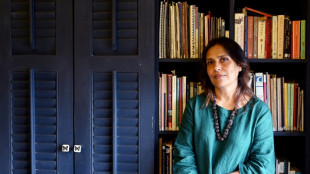 Architect fights to save India's past, built on 'stone, tears and sweat'

 Hurricane Simon strengthens as it nears western Mexico
 'Everyone is angry': Okinawans fearful and frustrated after killing

 Trump's trade wars sting US manufacturers ahead of midterms

 Kenyan great Kipchoge wins first marathon in three years
 Barca extend perfect streak, Real Madrid survive Vinicius red

 PSG ease to Ligue 1 win before Manchester City test
 Real Madrid edge Villarreal, Vinicius sent off for hair pull

 Carrick demands more 'streetwise' Man Utd after Spurs setback
 10-man Tottenham ramp up pressure on Man Utd boss Carrick

 India 'cockroach' movement says thousands detained in Delhi protest

 Injury ends season for NHL Rangers star goalie Shesterkin

 Ten-man Spurs rescue draw at Man Utd, Arsenal survive Leeds scare

As South Africa weigh up their options before naming their team for Sunday's World Cup quarter-final against hosts France, one of the biggest questions being whispered in the galleries is: will they play the 7-1 bench?
For the uninitiated this may seem to be a technical detail akin to tyre choices in Formula One but in a 23-man game it is of considerable importance.
But what is it and why has it polarised the rugby world to such an extent that Australia coach Eddie Jones can describe it as "daring and courageous" while his compatriot Matt Williams, a former Scotland coach, called it "not morally correct"?
In brief, each team has 15 starters and eight replacements, traditionally selected to cover all parts of the team.
Usually this would mean a split of five forwards -- three for the front row, one each for second row and back row -- as well as three backs. They would include a scrum-half, a fly-half and one utility back who might slot in at centre, full-back or on the wing.
In recent years, it has become more commonplace to see a 6-2 split with the extra forward coming in for one of the backs.
What the South African management team of Rassie Erasmus and Jacques Nienaber have done is seen as pretty radical -- having seven forwards on the bench and just one back.
On top of that, they have opted to change all seven at the same time, introducing the so-called "Shock Boks" around the 50-minute mark.
"The 7-1 split is really smart," former Springbok fly-half Joel Stransky told AFP before the pool match against Ireland.
"It's risky, though. If (fly-half) Manie Libbok pulls a hamstring in the third minute and someone else cramps up you have problems.
"But if you can get to 55 minutes with all your backs on the field and then you unload seven forwards, change virtually the whole pack, the opposition knows what's coming."
Stransky, however, who dropped the goal that won the 1995 World Cup, is aware that the strategy is not suitable for every team.
"You can only really do it if you have someone like Kwagga Smith who has played Sevens rugby and has the skill set of a back," he said. "You know he's not going to be a handicap."
- 'Ridiculous' -
Williams' concerns focussed less on the international game and more on the trickle down effect of tired props and locks in lower levels of club rugby.
"If they are fatigued and the opposition bring on seven fresh forwards and they go for a scrum later on in the game knowing they could get a penalty and win the game, those guys' spines are in danger," he said after the Boks first unrolled the tactic in the 35-7 thrashing of New Zealand in the warm-up match at Twickenham.
There is also a concern among French rugby circles that this may be one Springbok innovation too far for the good of the game.
"It's ridiculous but I'm not shocked by it," says Didier Retiere, who was forwards coach during France's run to the 2011 final.
"It fits the Springboks' game profile, which is based on combat and the explosiveness of their forwards.
"Being able to change seven forwards in the same match means you can play at the same intensity for 80 minutes, with no drop-off at the end of the match."
The tactic does not work every time. Against Ireland, the Bok pack had the squeeze on their opponents but there was not the fresh pace out wide to exploit gaps that opened up.
A series of missed kicks did not help as they lost 13-8 and it is that fallibility off the tee which may see the Boks opt for the safer 6-2 split against the French.
Libbok's flowing open game at number 10 is outstanding but his boot is not a patch on that of Handre Pollard, their 2019 World Cup winner, who has been drafted into the squad.
The likelihood is that Erasmus and Nienaber will want both men in the 23, meaning Cobus Reinach will be the scrum-half/utility choice.
But the management do not always like to take the obvious path, so the 7-1 split remains a possibility.
"If they did, it wouldn't be surprising," says former France lock Abdelatif Benazzi, who played against the Boks in the quagmire of King's Park in Durban in the 1995 semi-final.
"If we are faced with this challenge, we cannot hang around. We have to hit back by winning the ball back, with intensity, by moving the South Africans around and keeping the ball.
"In short, we have to play our game."
L.Dubois--BTB