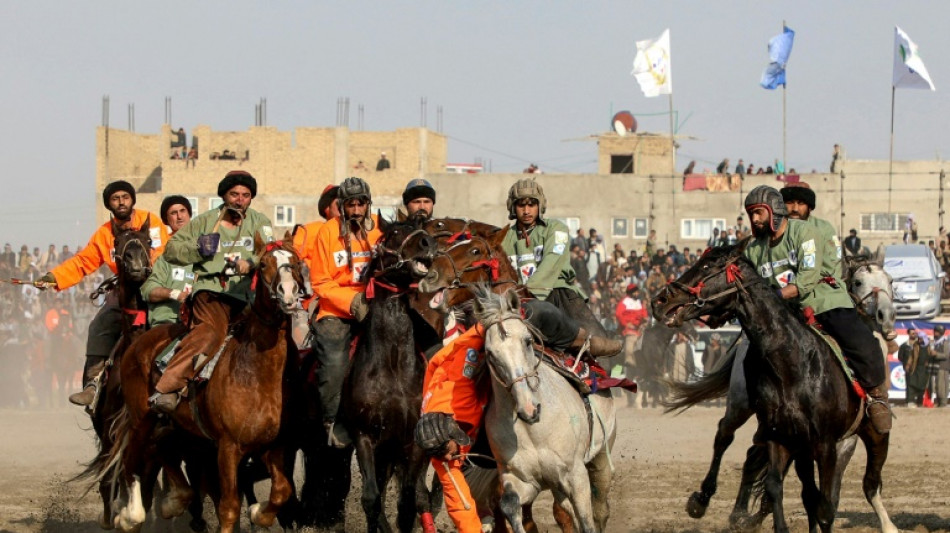
The pain and money behind the Afghan game of buzkashi / Photo: © AFP

 Eala-conqueror Wang wins Asian Games tennis gold and Olympic berth
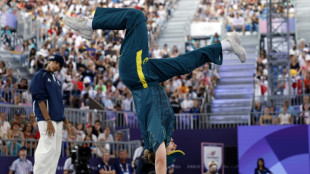 'Kinda cool' Raygun made breakdancing famous, Asian Games B-girls say
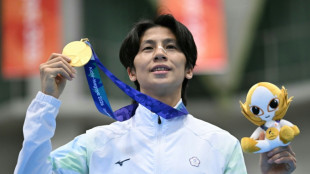 Taiwan gender-row boxer Lin Yu-ting wins 'monumental' Asian Games gold
 Taiwan receives its first US-made F-16V fighter jets
 Lula, Bolsonaro trade scandal fire in final scramble for votes
 Not-so-brave new world: virtual taekwondo makes Asian Games debut
 Arab Israeli candidate drops out of election race
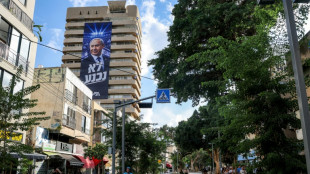 Israel courts Europe's far right, finding friends but also unease
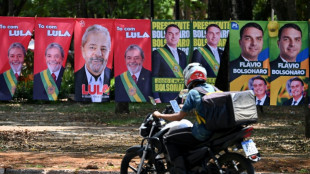 Lula, Bolsonaro both snub final debate before Brazil election
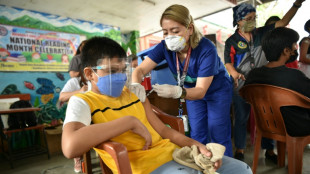
 Nepal's grim DNA puzzle to identify flood dead
 EU nations to hold emergency meeting on soaring diesel prices amid US pressure

 Anthropic's Dario Amodei: AI's most visible CEO and enigma
 OpenAI says three staffers fired for mishandling 'sensitive' info

 Nike plans job cuts as it forecasts lower sales
 Ireland game interrupted twice by Gaza protests

 Judge denies acquittal bid by US woman who killed her kids
 Klopp averts crisis with first win as Germany boss
 A saintly spat and debate snub: Brazil enters final campaign stretch
 US tells European allies to act 'immediately' to lower diesel prices

 G20 trade ministers fail to see consensus against overproduction
 Portugal edge Denmark in Ronaldo's absence
 US stocks edge higher as bond yields retreat for now

 US tells European allies to 'immediately' act to lower diesel prices

 Trump vows to hit Iran 'very hard' if linked to flydubai attack
 Williams leaves Spain camp with thigh knock

Afghan rider Sarwar Pahlawan blinked away pain from the fresh stitches between his eyes as his buzkashi team chased victory in a tournament for an ancient sport still steeped in risk but now offering modern-day rewards.
Played for centuries in Afghanistan's northern steppes, the national sport at the heart of Afghan identity has evolved from a rough, rural pastime to a professionalised phenomenon flush with cash.
"The game has changed completely," the horseman, soon to turn 40, told AFP after returning home victorious from the tournament final in the northern city of Mazar-i-Sharif earlier this month.
After 20 years as a buzkashi rider, or "chapandaz", Sarwar welcomes the changes to the game, which is played across Central Asia and features elements akin to polo and rugby.
"They used to pay us with rice, oil, a carpet or a cow," he said, but today the chapandaz have professional contracts.
The best players can now earn $10,000 per year, with winning teammates sharing $35,000, three camels and a car offered by sponsors after clinching the title.
Traditionally, buzkashi is played with the headless body of a goat.
Today, more often a 30-kilogramme (66-pound) leather sack stands in for the carcass that riders try to pull from a fray of horses and drop in a "circle of justice" traced on the ground after doing a lap of the arena at full gallop with competitors in hot pursuit.
Training has changed too as the national league's top teams have evolved.
Robust horsemen no longer hang from trees or split wood to build muscle -- they lift weights in gyms.
"Before, when we returned from a tournament, cold water was poured on our shoulders, now we have hammams (bath houses) and saunas," said Sarwar, known as "the lion" for his strength.
Being one of the league's best players has also filled Sarwar's coffers.
"I didn't even have a bike, and now I have a car. I had almost no sheep and now I have many. I had no house, and now I have two."
But he says he remains "a simple man". Between tournaments, he cultivates his land and raises his sheep.
- Fresh investment -
Oil tycoon Saeed Karim, who splits his time between Mazar-i-Sharif, Dubai and Istanbul, is the biggest financier of the new buzkashi.
The Afghan businessman set up the winning team that bears his company's name, Yama Petroleum, five months ago.
Karim acquired the two best chapandaz in the country, including Sarwar, and around 40 competition horses, which can cost up to $100,000 each.
"In this team, we invested around a million dollars in horses, riders, stables and other equipment," he told AFP.
"I just want to serve my people," he said. "When my team wins, it's an honour for me."
It can cost around $300,000 a year to take care of the team's stallions, fed on barley, dates, carrots and fish oil, as well as 15 riders and 20 grooms.
For the comfort of his men -- who commonly suffer broken ribs, fingers and legs -- Karim had a four-hectare ranch built for recuperation and stabling horses.
While Karim's homeland in northern Afghanistan remains the centre of buzkashi in the country, the sport has made recent inroads in the south -- the birthplace of the Taliban authorities, who banned the sport between 1996 and 2001 but have allowed it since returning to power in 2021.
"Buzkashi is this nation's passion," the president of the Buzkashi Federation, Ghulam Sarwar Jalal, told AFP.
"The Taliban know that it makes people happy, that's why they authorise it."
They also collect taxes from the professional league, started in 2020, which includes 13 teams from 10 provinces.
Likewise, some order has been brought into the brutal contests, and yellow or red cards rain down in the event of a foul.
- More money, more fans -
But above all, the influx of money has transformed buzkashi.
"More fans come because they know there are more good horses and good teams have been added to the field," said Karim.
Ten thousand men filled the Mazar-i-Sharif stadium for the final, braving Taser shocks or blows from club-wielding Taliban authorities tasked with holding back the crowds.
The spectators -- devoid of women, who are kept away by both cultural stigma and government restrictions -- said they feel safer attending matches, as security has improved since the Taliban ousted the Western-backed government and ended their two-decade insurgency.
"People can now come without fear," said Mohammad Yama Razaqyar.
"Businessmen's investment is effective for the game. The arrangements are surprisingly good for the matches," added Razaqyar, who works for a tournament sponsor.
Federation president Jalal said since the return of the Taliban, the sport has grown -- from between 100 to 200 riders to at least 500 nationwide -- "because younger people are taking an interest".
"This year, 20 entrepreneurs contacted us," he said, adding he expects $4-5 million to be invested in new teams.
"We want to make it a sport as colourful as football or cricket," Jalal said.
"The more commercial it is, the more international it will become."
O.Lorenz--BTB