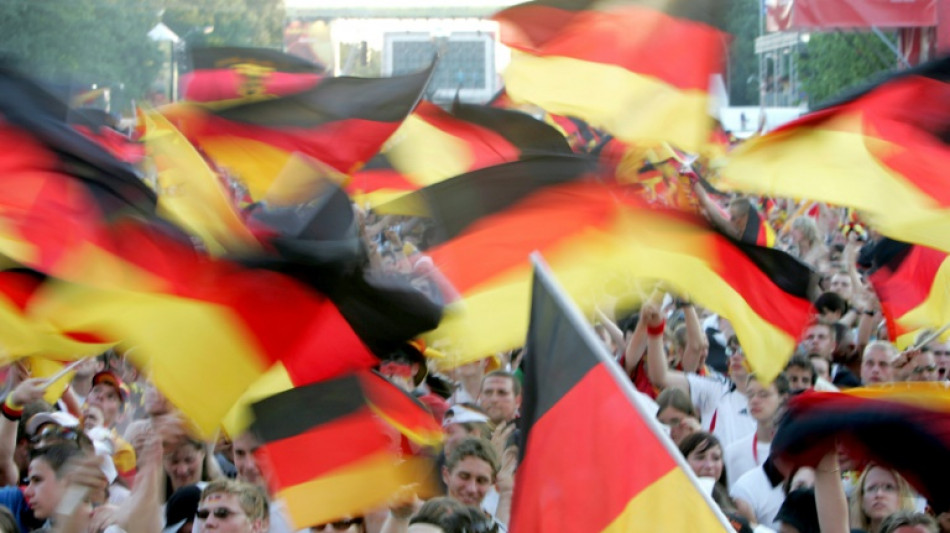
18 years on, Germany hopes to relive World Cup 'fairytale' with Euro 2024 / Photo: © AFP

 Stocks move lower despite oil prices dropping
 AI driving up innovation investment: UN
 UN Security Council extends Haiti mission by 6 months
 Man Utd do not deserve medals if Man City stripped of titles: Rooney

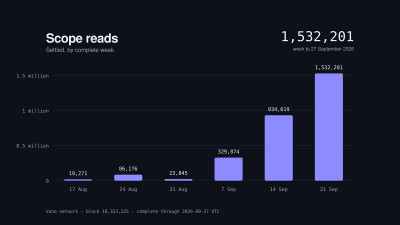 Vana Completes Expanded Staking as Part of the Vega Upgrade, Publishes Expanded VANA Token Economics
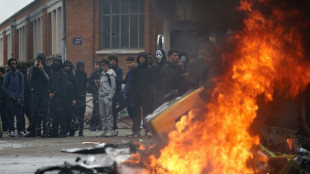
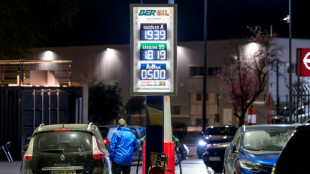 Spain to cap gas price hikes, extend fuel discounts

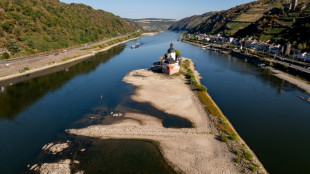 'We just need rain': Germany's Rhine river hits new low
 Yemen health system at 'breaking point': WHO
 Ireland undecided on second Israel match: coach
 France's Le Pen defiant after top ally hit by antisemitism claims
 Tom Cruise trades stunts for satire as toxic tycoon 'Digger'
 MEXC Unveils "WE SEE YOU" Brand Visual Refresh, Putting People Behind Every Trade in Focus
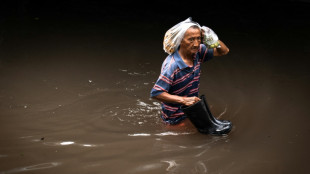 Thai capital cleans up after deadly floods
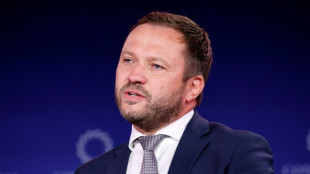 NATO, EU allies rally to Estonia after 'sabotage' blamed on Russia
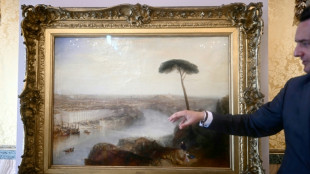
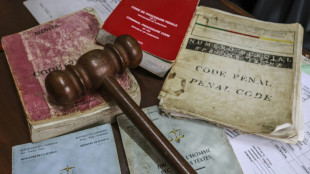 Families demand justice for Cameroon's 'nightmare' wave of murdered women

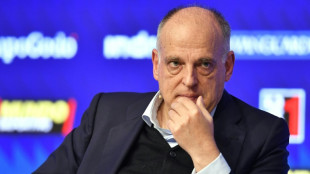 Tebas says Man City should face 'most severe' sanctions if guilty of rule breaches
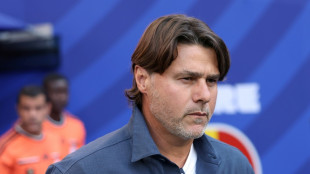 Pochettino calls Man City success 'a period of deception'
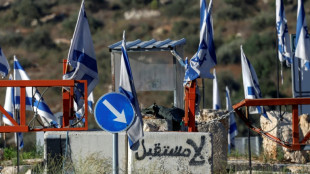 Settler attack on West Bank village injures Israeli forces, drawing rare rebuke
 Mystery over UK airbase scare after reports no explosives found
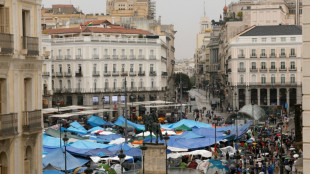
 Spanish govt races to adopt housing law under protest pressure
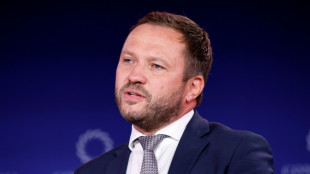 Estonia slams Russian 'sabotage' after arson attack on defence company
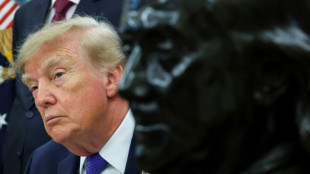 Slovenia sees surge in '.si' sites after Trump hypes 'super intelligence'
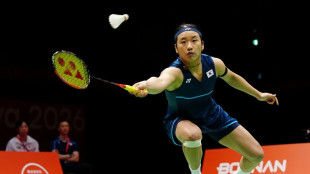
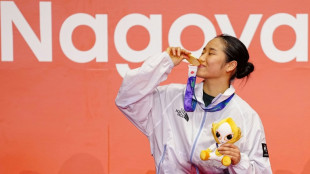 'Like a dream' for An as Games organisers 'sorry' for latest mix-up
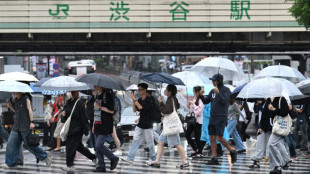 Tokyo suffers longest streak of rainy days on record

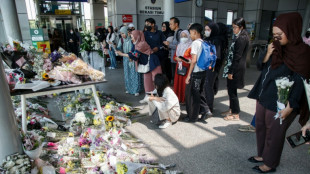 Indonesia charges train driver over crash that killed 16 women
As Germany prepares to host Euro 2024, the 2006 World Cup -- the last major international football tournament on German soil -- still plays a formative role in the nation's collective consciousness.
Now widely known as the Summer Fairytale (Sommermaerchen), the tournament is remembered as the moment a unified Germany shook off the shadows of its dark past and showed the world a new, modern face.
On the field, the German team coached by Jurgen Klinsmann overcame dire pre-tournament predictions to make it to the semi-finals.
Despite losing in extra time to eventual champions Italy and eventually finishing third, Germany's performance kick-started a decade of dominance that peaked with the 2014 World Cup triumph in Brazil.
Off the field, the tournament changed not only the way the world saw Germany, but the manner in which Germany saw itself.
Philipp Lahm, a key player in 2006 who captained Germany to World Cup glory eight years later, told AFP: "In 2006 we were able to experience the whole nation standing behind the team and giving us energy.
"The celebrations are good. That people come here to Germany and celebrate a big festival together."
- 'Where are all the Germans?' -
German sports sociologist and philosopher Gunter Gebauer told AFP the tournament had a sudden and long-lasting impact.
"Before the tournament, the mood in Germany was very, very poor. The economy was not going well. The weather was bad and the football was atrocious.
"And then the World Cup started and during Germany's first game against Costa Rica, Philipp Lahm scored and the sun burst through -- it was almost like something from the Bible."
Living in a middle-class Berlin suburb, Gebauer saw a neighbour unfurl a German flag from his balcony, previously considered a "taboo" due to the nation's post-World War II reservations with nationalism.
"From there, we saw German flags and singing the anthem at Germany games -- something which just didn't exist before."
The dissolving of internal reservations meant World Cup visitors saw a different side to the straight, rule-enforcing Germans familiar from national stereotypes.
"Foreigners who came to Germany were delighted with the German public.
"The English people asked 'where are all the bloody Germans? We've only come across friendly people who are partying everywhere'."
Wolfgang Maennig, a rower who won gold for Germany at the 1988 Seoul Olympics, is now a professor of sports economics at Hamburg University.
- 'Feel-good effect' -
In an interview with AFP, Maennig said while the economic benefits of large events were often negligible, "the feel-good effect was the essence of the 2006 World Cup."
Before the World Cup, "Germans were not exactly considered world leaders when it comes to being welcoming," but after 2006 "Germany has improved significantly in international perceptions."
"I believe that foreigners see us completely differently, no longer as unenthusiastic, somewhat peculiar people, but as open and happy, which made us more comfortable with how we see ourselves."
Jan Haut, a sports sociologist at Goethe University, told AFP "the German people became a bit less stiff. They were more comfortable and confident celebrating victories of the national team".
"What was rather new was that Germans themselves became more aware that in other countries the picture of Germany isn't as bad as the Germans had thought," he added.
- 'Only football can do this' -
While 18 years have passed and both Germany and the world have changed, many parallels remain.
Germany again is wracked by economic uncertainty, infrastructure concerns and fears of poor on-field performances.
Haut said the world's attention would again shine a light on Germany, for bad and for good.
"In the worst case, there might be some surprises -- maybe that people become aware that things don't work so well in Germany currently, like public transport."
After the humiliation of two successive World Cup exits in the group stage, Germany have shown signs of life under coach Julian Nagelsmann.
They won just three of 11 games in 2023 but rebounded with strong wins over France and Netherlands in March.
Whatever the team's results in the tournament, Maennig said Germany could bank on the unifying impact of the national sport.
"As a rower I say this with a bit of sorrow in my voice, but only football can bring people together like this. The cafes and restaurants show the games on monitors and you can sit and watch in a friendly atmosphere.
"It's really quite enchanting."
J.Bergmann--BTB