Argentina gives Boca Juniors manager Russo emotional stadium send-off / Photo: © AFP

 Nick Harkaway Expands John le Carré’s Spy Universe in 'The Taper Man'

 Rene Eyre Revisits Autobiographical Performance 'Say A Little Prayer' in London
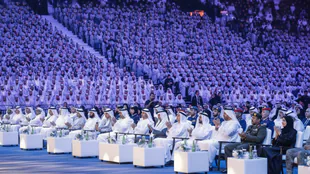 UAE's HCT Holds Record Graduation and Announces Major Training Expansion

 NASA Awards $10B Lunar Contract Framework to SpaceX, Blue Origin

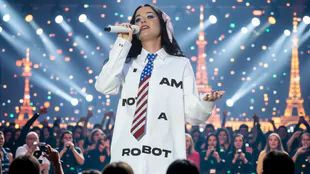 Katy Perry Tells Fans Ex-Husband Russell Brand 'Should Be in Jail' During UK Concert

 South African election results renew debate over identity-based voting

 South African voters report smoother local election but declining IEC trust
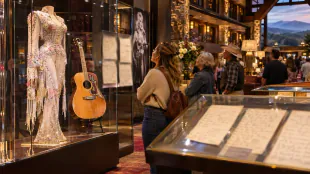 Dolly Parton museum and Nashville hotel open after singer’s death

 George and Amal Clooney attend New York political-comedy reading
Argentine football fans queued up Thursday to pay their respects to one of the national game's greats, Boca Juniors deceased manager Miguel Angel Russo, at an emotional stadium send-off in Buenos Aires.
From the early hours of Thursday, long lines of supporters began filing past the coffin of the award-winning coach in the chapel of the club's legendary Bombonera stadium.
The former international, who coached Boca Juniors three times and also had successful stints at Rosario Central and Estudiantes de la Plata, died Wednesday at the age of 69.
The club never gave details of his health, but Argentine media reported that Russo, who was diagnosed with prostate cancer in 2017 and whose health had deteriorated in recent weeks, had contracted an infection.
In June, he had agreed to coach Boca Juniors for a third time but had been absent from the sidelines since September 21.
His coffin was draped Thursday in the flags of both Boca and Estudiantes, the club where he spent his entire playing career.
"Miguel gave his all for Boca, just like me," said 34-year-old Pasallo, who had the Boca crest tattooed on his right arm, alongside the phrase "from the cradle to the grave."
"We're going to say goodbye like Boca fans do: with a party!" said the street vendor, who was dressed from head to toe in the club's blue and yellow.
The mood at the stadium was more reflective than festive, however.
"Forever in our hearts," read a Boca Juniors banner featuring Russo's image, which hung in the stadium.
Russo was a coach for more than half his life and was talked up at one point as a potential manager for the national side after long stints with Boca Juniors, Rosario Central and Estudiantes de la Plata.
- 'Returned us to glory' -
His trophy cabinet was not extensive, but he had a knack for reviving the fortunes of top teams.
Luis Conrado, a 67-year-old bricklayer, came to pay his respects from the town of Lanus, on the southern outskirts of Buenos Aires, where Russo made his coaching debut.
At Lanus, "he found us in the B division, rescued us, and returned us to glory. I'm here to thank him for that joy," Conrado said.
Russo's first first-division title came with Velez Sarsfield in 2005.
Later, at Diego Maradona's request, he was called on to manage Maradona's boyhood club Boca Juniors, which he led to victory in the 2007 Copa Libertadores, his greatest achievement as a manager.
He also twice saved Rosario Central, with whom he won the League Cup in December 2023, from relegation and in 2017 led Colombian side Millonarios to a championship title one day after undergoing chemotherapy for cancer.
At Estudiantes, where he played from 1975 to 1988, he formed part of one of the most memorable midfields in Argentine football, along with Alejandro Sabella, Marcelo Trobbiani, and Jose Daniel "Bocha" Ponce.
He made the national team but, much to his disappointment, was not selected for the 1986 World Cup, which Argentina won.
C.Meier--BTB