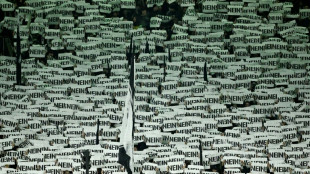
A lack of respect? African football bows to pressure with AFCON change / Photo: © AFP/File

 Stocks retreat as bond yield fears persist, oil rises
 ARKBRIDGE’s David Mali Highlights AI-Driven Risk Management at the Finance Magnates London Summit

 Zuckerberg buys Gothic castle in Ireland: spokesman

 Belgium's fire of the century now 'under control'
 Evergrande's Xu Jiayin: from real-estate tycoon to life in prison

 Spurs eyeing move for Man City's Savinho and Marmoush - reports

 Springboks captain Kolisi to miss first All Blacks Test
 Japan to launch probe for Mars moons in October: space agency

 From beach to Bulls: relaxed Tsunoda savours rare F1 drive

 Prince Harry: key dates in life of returning UK royal

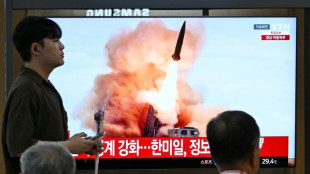 North Korea launches missiles, Seoul says, after Trump floats Kim meet
 Oil jumps on Iran war tensions, offsetting bond yield fears

 Germany identifies far-right suspect in deadly 1970 antisemitic attack

 PrimeXBT Expands Swap-Free Trading to PXTrader 2.0

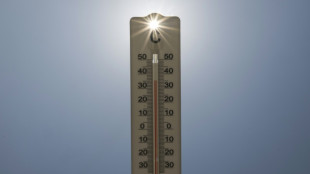 Record number of locations in France top 40C over summer: AFP analysis

 Trump pledges 'economic warfare' on Iran, prompting Tehran derision
 'Girl with a Pearl Earring' in Japan, perhaps for the last time
 Russian strikes kill 13 in Kyiv, surrounding region

 'Simply lovely': Verstappen signs new Red Bull contract until 2030

 Australia coach Walters heading to St Helens after World Cup

 China jails founder, fines disgraced property giant Evergrande

 Russian strikes kill 12 in Kyiv, surrounding region

 US India ambassador's Kashmir remarks rile Pakistan; envoy summoned

 In Senegal's Saint-Louis, traces of slave-trading past fade away
 Russian strikes kill 9 in Kyiv, surrounding region

The decision by African football bosses to change the Africa Cup of Nations from a biennial competition to a tournament held every four years has been met with a mixed reaction on the continent with some seeing it as simply caving in to pressure from European clubs and FIFA.
Confederation of African Football (CAF) president Patrice Motsepe made the landmark announcement following a meeting with FIFA chiefs in Rabat on the eve of the 2025 edition currently taking place in Morocco.
The next Cup of Nations is set for Kenya, Uganda and Tanzania in 2027, and Motsepe said another tournament will take place in 2028 after which the AFCON will be held in four-year cycles.
It is a radical shift for a competition regularly held at two-year intervals since the first edition in 1957, and the money generated by the Cup of Nations is crucial to the finances of national federations.
To that end, the creation of a new African Nations League -- modelled on the UEFA Nations League -- is seen as a way of boosting coffers instead. It is set to take place annually from 2029.
Motsepe's announcement has generated controversy even within CAF.
Many inside African football's governing body believe the change simply grants European clubs what they have long demanded –- something previously opposed by former CAF presidents Issa Hayatou of Cameroon and Ahmad Ahmad of Madagascar.
A source within the CAF's competitions department told AFP that they were taken by surprise.
"Organising two editions of the Africa Cup of Nations in consecutive years is extremely difficult, especially since the 2027 tournament will be held in the (northern hemisphere) summer," the source said.
There will be little time to stage qualifiers for 2028, and it will be difficult to find a suitable space in the calendar for that tournament -- Euro 2028 will dominate attention in June and July that year and will be immediately followed by the Los Angeles Olympics.
- 'Africa must be respected' -
The source acknowledged the Cup of Nations was held in consecutive years in 2012 and 2013 but pointed out: "Back then, the tournament only included 16 teams, not 24, and the qualifiers were based on head-to-head matches, not group stages, which is difficult to replicate now."
South African Motsepe acknowledged the move was made at least partly due to pressure from Europe, where so many African stars play.
Major European clubs have long complained about having to release African players every two years in the middle of their season to participate in the Cup of Nations.
"Dates are secondary and won't change the level of African football or its contribution to Europe by providing many talented players," hit back Tunisia coach Sami Trabelsi.
Meanwhile Tom Saintfiet, Mali's Belgian coach, said the move was "abnormal", adding that "Africa must be respected".
- More attractive? -
Paul Put, another veteran Belgian coach who is at the ongoing AFCON in charge of Uganda, pointed out that African football was being squeezed from all sides by FIFA's taste for expanding competitions.
"I honestly don't understand CAF's decision, and we are unfortunately not happy. That's my initial feeling. Perhaps the problem lies with the World Cup and the Club World Cup," he said.
Lesser lights like his team will now have fewer opportunities to impress on the continental stage while Walid Regragui, coach of Morocco, sees the positives and negatives.
"Having it every two years helped a lot of teams develop and progress, and it is going to be even harder to win it now," he said.
"Football is changing. I don't necessarily agree with the changes but we need to adapt.
"I think this competition is as strong as the Euros. In the next 15 to 20 years this competition will be followed by even more people and an AFCON every four years will be an event nobody wants to miss."
"I think it will make the competition more attractive," insisted Algeria captain Riyad Mahrez, currently appearing at his sixth AFCON.
"There won't be so many players who have played in as many tournaments."
E.Schubert--BTB