-
 Stocks rise on AI buzz, oil prices cool
-
Magnificent Mandhana's 79 helps India to Asian Games cricket gold

-
 India narrowly survive huge scare against minnows Japan
-
Marchand 'stressed' about racing Japanese rivals at LA Olympics

-
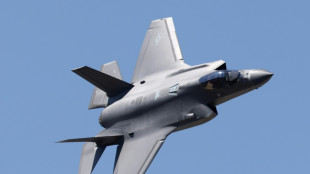 Missing F-35 fighter parts 'not sensitive', says Australia minister
-
Mobile boat clinics bring healthcare to India's remote islands

-
 Cambodia showcases scams crackdown with global conference
-
Former India paceman Zaheer Khan named Chennai coach in IPL

-
 Afghan cyclist who disguised herself as man wins Asian Games silver
-
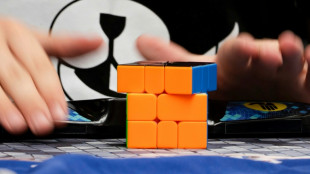
Six-year-old Chinese girl sets world record with Rubik's Cube
-
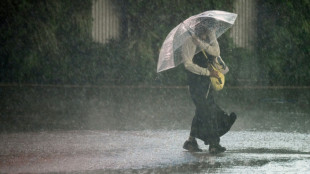 Typhoon Dujuan leaves four dead in Japan, 45,000 houses without power
-
Swimming prodigy Yu, 13, says 'interviews way harder than racing'

-
 G7 leaders condemn Houthi strikes on Saudi Arabia
-
Star coaches make their bows as Nations League returns

-
 Google data centre sparks protests in Austria
-
Rams bounce back as Giants reel from Dart injury

-
 Shin Ohashi: Junk food-loving teen and Japan's next big swimming hope
-
In Bangladesh, Pakistan's Jinnah photo stirs anger

-
 Stocks rise on AI buzz, drop in oil prices
-
Two New Zealand naval ships transit Taiwan Strait

-
 China's robot dancers limber up for America's Got Talent final
-
Zidane gets down to work as France start new era

-
 Despite military might, Saudi struggles to crush the Houthis
-
Inside the Venezuelan prison meant to 'drive you insane'

-
 Trump to tout deals, defend Iran war in UN speech
-
UK king braces as memoir by Diana's brother goes on sale

-
 Sri Lanka to issue verdict in landmark Easter attack trial
-
Akkodis and Hamburg Public Transport Association Showcase hvv mia at InnoTrans 2026, Demonstrating the Future of AI-Powered Mobility

-
 No green light to lift EU sanctions on Russian oligarchs, talks to resume
-
Macron says talks with Trump on Red Sea, Ukraine 'constructive'

-
 UK agrees support for Saudi in struggle with Houthis: reports
-
Green policies just good politics, says UK minister

-
 EU foreign policy chief calls for continued sanctions on Russia
-
Bardot auction in Paris fetches nearly one million euros

-
 Flights scrapped, evacuations urged as Typhoon Dujuan wallops Japan
-
No timeline on Daniels injury return, says Commanders coach

-
 Fonseca to take break from tennis
-
British Columbia sues OpenAI in US court over Canada school shooting

-
 A Cuban zoo, and its animals, in epic battle for survival
-
French star Batum retires after 18-year NBA career

-
 Infantino proposes consulting federations to reform FIFA
-
Zidane leads first France training session

-
 El Nino weather pattern enters record territory: scientist
-
Man shot by ICE agent in Texas detained with bullet inside him: lawyer

-
 OpenAI calls for US to lead global effort on AI standards
-
California declares state of emergency ahead of El Nino

-
 South African ostriches plucked alive for luxury fashion: report
-
South Africa arrests three more suspects, after nine women murdered

-
 US networks halt Trump coverage in revolt over White House ban
-
Carse needs time away from England, says captain Brook

Starship, world's biggest rocket, explodes during first test flight
Starship, the most powerful rocket ever built, exploded during its first flight on Thursday, but Elon Musk congratulated his SpaceX team on an "exciting" test of the next-generation spacecraft designed to send astronauts to the Moon, Mars and beyond.
SpaceX blew up the uncrewed rocket four minutes after it blasted off at 8:33 am Central Time (1333 GMT) from Starbase, the SpaceX spaceport in Boca Chica, Texas.
The Starship spacecraft that will eventually carry crew and cargo had been scheduled to separate from the first-stage rocket booster three minutes into the flight, but separation failed to occur and the rocket disintegrated in a ball of fire over the Gulf of Mexico.
"The vehicle experienced multiple engines out during the flight test, lost altitude, and began to tumble," SpaceX said. "The flight termination system was commanded on both the booster and ship."
It is standard procedure to destroy a wayward rocket to prevent damage to people or property below.
Despite the failure to complete the full 90-minute flight test and reach orbit, SpaceX and Musk, the founder and CEO of the private space company, declared it a success.
"Congrats SpaceX team on an exciting test launch of Starship!" Musk tweeted. "Learned a lot for next test launch in a few months."
"With a test like this, success comes from what we learn, and we learned a tremendous amount about the vehicle and ground systems today that will help us improve on future flights of Starship," SpaceX said in a statement.
The US space agency NASA has picked Starship to ferry astronauts to the Moon in late 2025 for the first time since the Apollo program ended in 1972.
NASA chief Bill Nelson congratulated SpaceX, saying "every great achievement throughout history has demanded some level of calculated risk, because with great risk comes great reward."
- 'Complicated, gigantic rocket' -
Starship consists of a 164-foot (50-meter) tall crew vehicle that sits atop a 230-foot tall first-stage Super Heavy booster rocket.
SpaceX conducted a successful test-firing of the 33 massive Raptor engines on the booster in February but the Starship spacecraft and the Super Heavy rocket were being flown together for the first time.
The integrated test flight was intended to assess their performance in combination.
The launch was initially scheduled for Monday but was postponed until Thursday because of a frozen pressure valve on the first-stage booster.
Musk had warned ahead of the test that technical issues were likely and sought to play down expectations for the inaugural flight.
"There's a million ways this rocket could fail," he said.
NASA will take astronauts to lunar orbit itself in November 2024 using its own heavy rocket called the Space Launch System (SLS), which has been in development for more than a decade.
Starship is both bigger and more powerful than SLS and capable of lifting a payload of more than 100 metric tonnes into orbit.
It generates 17 million pounds of thrust, more than twice that of the Saturn V rockets used to send Apollo astronauts to the Moon.
- 'Rapid unscheduled disassembly' -
The plan for the integrated test flight was for the Super Heavy booster to separate from Starship after launch and splash down in the Gulf of Mexico.
They failed to separate however and the booster rocket and Starship spacecraft began spinning out of control, exploding four minutes into the test flight in what SpaceX euphemistically called a "rapid unscheduled disassembly."
Starship and the booster reached a peak altitude of 39 kilometers (24 miles) and a top speed of around 2,150 kms per hour (1,335 mph).
Had separation occurred, Starship, which has six engines of its own, was to continue to an altitude of nearly 150 miles, completing a near-circle of the Earth before splashing down in the Pacific Ocean about 90 minutes after launch.
"If we get far enough away from the launchpad before something goes wrong then I think I would consider that to be a success," Musk said prior to the test. "Just don't blow up the launchpad."
The eventual objective is to establish bases on the Moon and Mars and put humans on the "path to being a multi-planet civilization," according to Musk.
N.Fournier--BTB