Scientists save ancient Arctic ice in race to preserve climate history / Photo: © AFP/File

 Stocks rise on AI buzz, oil prices cool
 India narrowly survive huge scare against minnows Japan

 Missing F-35 fighter parts 'not sensitive', says Australia minister

 Cambodia showcases scams crackdown with global conference
 Afghan cyclist who disguised herself as man wins Asian Games silver

 Typhoon Dujuan leaves four dead in Japan, 45,000 houses without power

 G7 leaders condemn Houthi strikes on Saudi Arabia

 Google data centre sparks protests in Austria

 Shin Ohashi: Junk food-loving teen and Japan's next big swimming hope
 Stocks rise on AI buzz, drop in oil prices
 China's robot dancers limber up for America's Got Talent final

 Despite military might, Saudi struggles to crush the Houthis

 Trump to tout deals, defend Iran war in UN speech

 Sri Lanka to issue verdict in landmark Easter attack trial

 No green light to lift EU sanctions on Russian oligarchs, talks to resume

 UK agrees support for Saudi in struggle with Houthis: reports

 EU foreign policy chief calls for continued sanctions on Russia

 Flights scrapped, evacuations urged as Typhoon Dujuan wallops Japan

 Fonseca to take break from tennis

 A Cuban zoo, and its animals, in epic battle for survival

 Infantino proposes consulting federations to reform FIFA

 El Nino weather pattern enters record territory: scientist
 OpenAI calls for US to lead global effort on AI standards
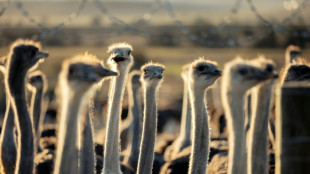 South African ostriches plucked alive for luxury fashion: report

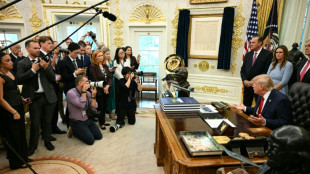 US networks halt Trump coverage in revolt over White House ban

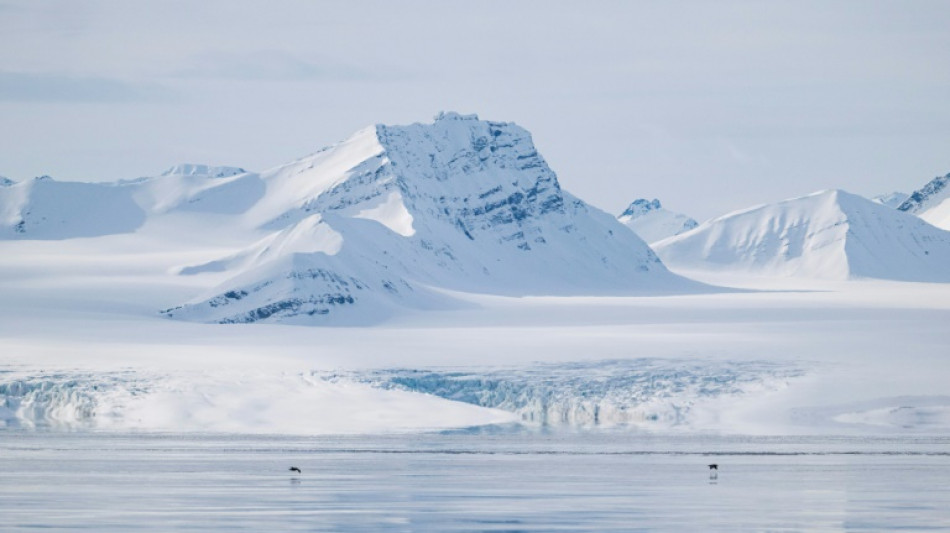
Scientists have succeeded in saving samples of ancient Arctic ice for analysis in a race against time before it melts away due to climate change, they said this week.
The eight French, Italian and Norwegian researchers camped in Norway's Svalbard archipelago in March and April, braving storms and mishaps to preserve crucial ice records that can be used to analyse what the Earth's climate looked like in the past and chart the devastating impact human activity is having on it now.
The Ice Memory Foundation team extracted three huge tubes of glacier ice on Svalbard. They, like others collected by the 20-year project launched in 2015, will be preserved for future scientific analysis at a research station in Antarctica.
Analysing chemicals in such deep "ice cores" provides valuable data about centuries of past climatic and environmental conditions, long after the original glacier has disappeared.
But it is a race to preserve this "ice memory". Experts warn that as global temperatures rise, meltwater is leaking into ancient ice and risks destroying the geochemical records it contains before scientists can collect the data.
When the Ice Memory team set up camp in March on Holtedahlfonna, one of the highest and most northerly glaciers in the Arctic, the first hitch was the weather.
Instead of the expected -25 degrees Celsius (-13 degrees Farenheit), fierce winds forced the temperature down to -40C, delaying drilling for several days.
Then, once they had bored a 24.5-metre (80-foot) hole in the ice, water from the melting glacier rushed into it.
Even though radar data collected since 2005 showed there was some meltwater inside the Holtedalhfonna glacier, "we did not expect to find such an extended, abundant and saturated aquifer in the selected drilling site, at the end of winter", explained Jean-Charles Gallet, snow physicist at the Norwegian Polar Institute and expedition coordinator.
"Glaciers are not only dramatically losing their mass but also their cold content."
- 'Dramatic climate change' -
Aquifers are underground reservoirs of freshwater or saltwater that permeate the ice crystals in glaciers and weaken them.
"Seeing all that water in the glacier gave us the clearest evidence yet of the effects that dramatic climate change is having in the Arctic," said Daniele Zannoni, a member of the team from the Ca’ Foscari University in Venice.
Human-caused carbon emissions have warmed the planet by 1.15 degrees Celsius since industrialisation, powered by fossil fuels, began the 19th century. Studies indicate that the Arctic is warming between two and four times faster than the global average.
On Friday, the United Nations said the world's 40-odd "reference glaciers" -- those for which long-term observations exist -- are more than 26 metres thinner now on average than in 1970.
The pressure of the meltwater rushing into the Holtedalhfonna drill hole damaged two of the team's driller motors, forcing them to relocate to the summit of the Dovrebreen glacier, 13 metres higher up.
When drilling resumed, the researchers succeeded in extracting three ice cores 50-75 metres long. The strata and air bubbles trapped in these precious translucent cylinders, just a dozen centimetres in diameter, could contain up to 300 years of climate history.
- Race against time -
The race is on for glaciologists, who "are seeing their primary material disappear forever from the surface of the planet", Jerome Chappellaz, president of the Ice Memory foundation, told AFP on April 3.
"It is our responsibility as glaciologists of this generation to make sure a bit of it is preserved."
When the researchers had three ice samples, the temperature in Svalbard shot up to -3C, turning part of the route back to their base at the Ny-Alesund research station into a treacherous torrent of water.
Two of the ice cores made it base but the third is still stuck at the drilling site, waiting for more clement weather to be shipped out.
In the meantime, Ice Memory has put out an international plea to other researchers.
"We do need (them)... rapidly to collect samples from endangered glaciers or to save... already collected ice cores, to preserve these very precious data in the Ice Memory sanctuary in Antarctica," said paleoclimatologist and Ice Memory vice-chair Carlo Barbante.
"If we lose archives like this, we will lose the memory of human alteration of the climate," stressed Ice Memory director Anne-Catherine Ohlmann.
"We will also lose crucial information for future scientists and policymakers, who will have to make decisions for the well-being of society.”
C.Kovalenko--BTB