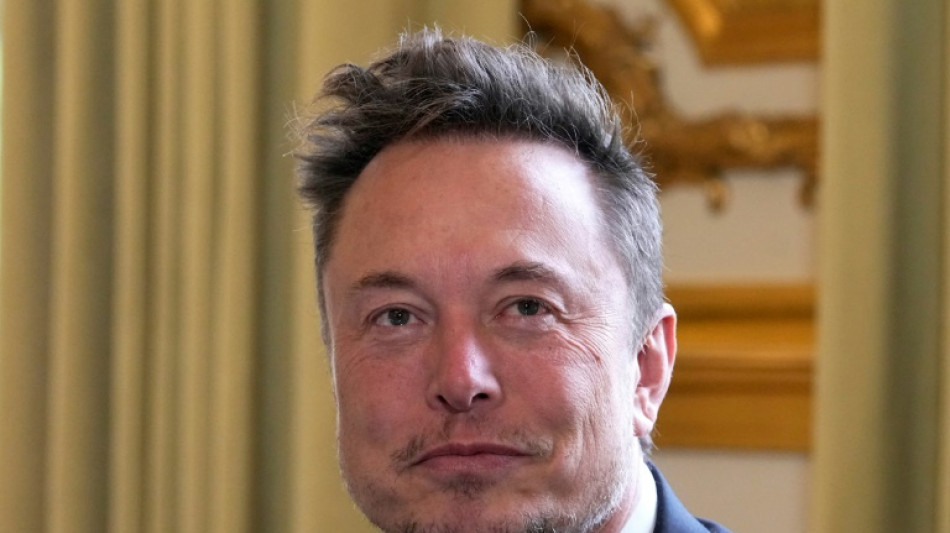
Musk's Neuralink says cleared for human test of brain implants / Photo: © POOL/AFP

 Newcomers South Korea face holders Italy in Davis Cup finals
 Japan's Kojima sounds Marchand warning with Asian Games gold

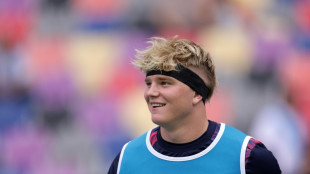 England rugby star Pollock signs new Northampton deal

 STARTRADER Expands Its Chinese Equity CFD Range with CXMT and Unitree Robotics

 MEXC Expands Opportunity Compass with Stock Trading Handbook to Help Crypto Users Build Investment Knowledge

 England paceman Wood retires from international cricket
 Magnificent Mandhana's 79 helps India to Asian Games cricket gold

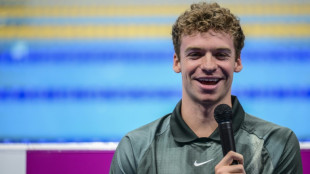 Marchand 'stressed' about racing Japanese rivals at LA Olympics
 Mobile boat clinics bring healthcare to India's remote islands

 Former India paceman Zaheer Khan named Chennai coach in IPL

 Six-year-old Chinese girl sets world record with Rubik's Cube

 Swimming prodigy Yu, 13, says 'interviews way harder than racing'

 Star coaches make their bows as Nations League returns

 Rams bounce back as Giants reel from Dart injury

 In Bangladesh, Pakistan's Jinnah photo stirs anger
 Two New Zealand naval ships transit Taiwan Strait

 Zidane gets down to work as France start new era

 Inside the Venezuelan prison meant to 'drive you insane'

 UK king braces as memoir by Diana's brother goes on sale

 Akkodis and Hamburg Public Transport Association Showcase hvv mia at InnoTrans 2026, Demonstrating the Future of AI-Powered Mobility

 Macron says talks with Trump on Red Sea, Ukraine 'constructive'

 Green policies just good politics, says UK minister

 Bardot auction in Paris fetches nearly one million euros

 No timeline on Daniels injury return, says Commanders coach

 British Columbia sues OpenAI in US court over Canada school shooting

Elon Musk's start-up Neuralink on Thursday said it has gotten approval from US regulators to test its brain implants in people.
Neuralink said clearance from the US Food and Drug Administration (FDA) for its first in-human clinical study is "an important first step" for its technology, which is intended to let brains interface directly with computers.
"We are excited to share that we have received the FDA's approval to launch our first-in-human clinical study," Neuralink said in a post on Musk-run Twitter.
"This is the result of incredible work by the Neuralink team in close collaboration with the FDA."
Recruitment for a clinical trial is not yet open, according to Neuralink.
The aim of Neuralink implants is to enable human brains to communicate directly with computers, Musk said during a presentation by the start-up in December.
"We've been working hard to be ready for our first human (implant), and obviously we want to be extremely careful and certain that it will work well before putting a device in a human," he said at the time.
Musk -- who bought Twitter late last year and also owns SpaceX, Tesla and several other companies -- has been known to make ambitious predictions about his companies, with several such forecasts ultimately failing to pan out.
In July 2019, he vowed that Neuralink would be able to perform its first tests on humans in 2020.
Product prototypes, which are the size of a coin, have been implanted in the skulls of monkeys, demonstrations by the startup showed.
At the Neuralink presentation, the company showed several monkeys "playing" basic video games or moving a cursor on a screen through their Neuralink implant.
Musk said the company would try to use the implants to restore vision and mobility in humans who had lost such abilities.
"We would initially enable someone who has almost no ability to operate their muscles... and enable them to operate their phone faster than someone who has working hands," he said.
"As miraculous as it may sound, we are confident that it is possible to restore full body functionality to someone who has a severed spinal cord," he said.
Beyond the potential to treat neurological diseases, Musk's ultimate goal is to ensure that humans are not intellectually overwhelmed by artificial intelligence, he said.
Other companies working on similar systems include Synchron, which announced in July that it had implanted the first brain-machine interface in the United States.
T.Bondarenko--BTB