US to invest $1.2 bn on facilities to pull carbon from air / Photo: © AFP/File

 Hurricane Polo strengthens to top category 5 off Mexico

 11 hurt as teen opens fire outside school in western Turkey

 UN chief says 'Big Oil' treats atmosphere as open sewer

 Tunisia says 2026 summer hottest on record

 England's Rashid out of Sri Lanka ODIs with hand injury

 Houthis accuse Saudi Arabia of deadly strikes as thousands flee

 Stocks climb as oil slides, AI buzz returns

 India cricketers win in style as Afghan savours 'special' Games silver

 La Liga president hits out at Real Madrid refereeing 'conspiracy' claims

 MEXC Launches “Real Stocks, Real Friends” with Rewards for Bringing Friends to Wall Street

 Mbappe continues media push for Ballon d'Or recognition

 Stocks rise on AI buzz, oil prices cool

 India narrowly survive huge scare against minnows Japan

 Missing F-35 fighter parts 'not sensitive', says Australia minister

 Cambodia showcases scams crackdown with global conference

 Afghan cyclist who disguised herself as man wins Asian Games silver

 Typhoon Dujuan leaves four dead in Japan, 45,000 houses without power

 G7 leaders condemn Houthi strikes on Saudi Arabia

 Google data centre sparks protests in Austria

 Shin Ohashi: Junk food-loving teen and Japan's next big swimming hope

 Stocks rise on AI buzz, drop in oil prices

 China's robot dancers limber up for America's Got Talent final

 Despite military might, Saudi struggles to crush the Houthis

 Trump to tout deals, defend Iran war in UN speech

 Sri Lanka to issue verdict in landmark Easter attack trial

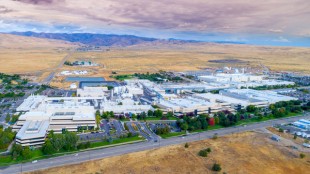
The US government said Friday it will spend up to $1.2 billion for two pioneering facilities to vacuum carbon out of the air, a historic gamble on a still developing technology to combat global warming that is criticized by some experts.
The two projects -- in Texas and Louisiana -- each aim to eliminate one million tons of carbon dioxide per year, equivalent in total to the annual emissions of 445,000 gas-powered cars.
It is "the world's largest investment in engineered carbon removal in history," the Energy Department said in a statement.
"Cutting back on our carbon emissions alone won't reverse the growing impacts of climate change," Energy Secretary Jennifer Granholm said in the statement. "We also need to remove the CO2 that we've already put in the atmosphere."
Direct Air Capture (DAC) techniques -- also known as Carbon Dioxide Removal (CDR) -- focus on that CO2 emitted into the air, which is helping to fuel climate change and extreme weather.
Each of the projects will remove 250 times more CO2 from the air than the largest carbon capture site currently in operation, the Energy Department said.
The UN's International Panel on Climate Change (IPCC) considers capturing carbon dioxide directly from the atmosphere one of the methods necessary to combat global warming.
But the sector is still marginal -- there are just 27 existing carbon capture sites commissioned worldwide, according to the International Energy Agency, though at least 130 projects are under development.
And some experts worry that use of the technology will be a pretext for continuing to emit greenhouse gases, rather than switching more quickly to clean energies.
Direct capture "requires a lot of electricity for extracting CO2 from the air and compressing it for pipes," Stanford University professor Mark Jacobson told AFP.
"Even in the best case, where the electricity is renewable, that renewable electricity is then prevented from replacing a fossil electricity source on the grid, such as coal or gas."
That means such technology is nothing more than a "gimmick," he said, adding: "It will only delay our solution to the climate problem."
- Storing CO2 underground -
US non-profit Battelle is the prime contractor on the Louisiana project, which will inject captured CO2 for storage deep underground.
It will partner with another American company, Heirloom, and the Swiss firm Climeworks, already a sector leader that operates a plant in Iceland with an annual capacity to capture 4,000 tons of CO2 from the air.
The Texas project will be led by the American company Occidental and other partners, including Carbon Engineering. It could be developed to eliminate up to 30 million tons of CO2 per year, according to a statement from Occidental.
"The rocks in the subsoil of Louisiana and Texas are sedimentary rocks, very different from Icelandic basalts, but they are perfectly viable for storing CO2," Helene Pilorge, an associate researcher at the University of Pennsylvania studying carbon capture, told AFP.
The two projects should create 4,800 jobs, according to the energy department. No start date is yet confirmed for either.
They will be funded by President Joe Biden's major infrastructure bill passed in 2021.
The Energy Department previously announced plans to invest in four projects to the tune of $3.5 billion.
Direct capture differs from carbon capture and storage (CCS) systems at source, such as factory chimneys, which prevent additional emissions from reaching the atmosphere.
In May, the Biden administration announced a plan to reduce CO2 emissions from gas-fired and coal-fired power plants, focusing in particular on this second technique.
K.Brown--BTB