-
 Hurricane Polo strengthens to top category 5 off Mexico
-
Prada's skirts take centre stage as Milan Fashion Week begins

-
 11 hurt as teen opens fire outside school in western Turkey
-
Quoin Pharmaceuticals Announces FDA Fast Track Designation for QRX003 for the Treatment of Peeling Skin Syndrome

-
 UN chief says 'Big Oil' treats atmosphere as open sewer
-
Brazil's Flavio Bolsonaro turns scandal into poll gains

-
 Tunisia says 2026 summer hottest on record
-
Republican senator seeks probe of Trump Jr Russian-funded wedding

-
 England's Rashid out of Sri Lanka ODIs with hand injury
-
Memoir by Diana's brother goes on sale after rocking UK monarchy

-
 Houthis accuse Saudi Arabia of deadly strikes as thousands flee
-
Newcomers South Korea face holders Italy in Davis Cup finals

-
 Stocks climb as oil slides, AI buzz returns
-
Japan's Kojima sounds Marchand warning with Asian Games gold

-
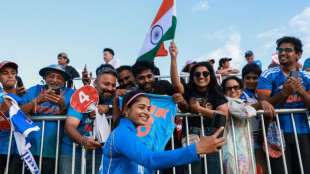 India cricketers win in style as Afghan savours 'special' Games silver
-
England rugby star Pollock signs new Northampton deal

-
 La Liga president hits out at Real Madrid refereeing 'conspiracy' claims
-
STARTRADER Expands Its Chinese Equity CFD Range with CXMT and Unitree Robotics

-
 MEXC Launches “Real Stocks, Real Friends” with Rewards for Bringing Friends to Wall Street
-
MEXC Expands Opportunity Compass with Stock Trading Handbook to Help Crypto Users Build Investment Knowledge

-
 Mbappe continues media push for Ballon d'Or recognition
-
England paceman Wood retires from international cricket

-
 Stocks rise on AI buzz, oil prices cool
-
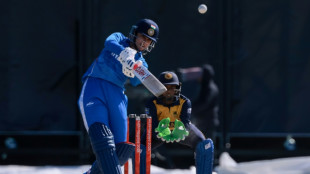
Magnificent Mandhana's 79 helps India to Asian Games cricket gold
-
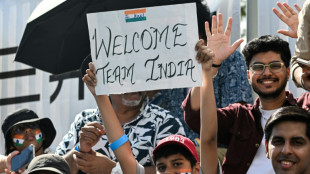 India narrowly survive huge scare against minnows Japan
-
Marchand 'stressed' about racing Japanese rivals at LA Olympics

-
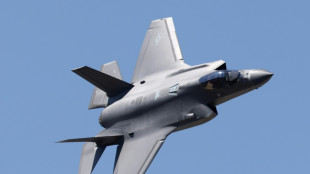 Missing F-35 fighter parts 'not sensitive', says Australia minister
-
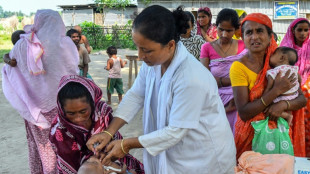
Mobile boat clinics bring healthcare to India's remote islands
-
 Cambodia showcases scams crackdown with global conference
-
Former India paceman Zaheer Khan named Chennai coach in IPL
-
 Afghan cyclist who disguised herself as man wins Asian Games silver
-
Six-year-old Chinese girl sets world record with Rubik's Cube

-
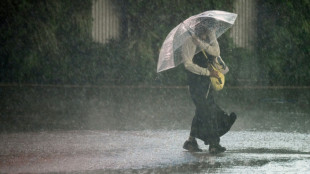 Typhoon Dujuan leaves four dead in Japan, 45,000 houses without power
-
Swimming prodigy Yu, 13, says 'interviews way harder than racing'

-
 G7 leaders condemn Houthi strikes on Saudi Arabia
-
Star coaches make their bows as Nations League returns
-
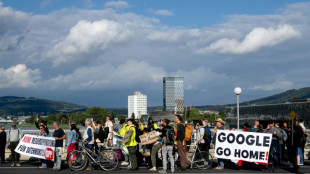 Google data centre sparks protests in Austria
-
Rams bounce back as Giants reel from Dart injury

-
 Shin Ohashi: Junk food-loving teen and Japan's next big swimming hope
-
In Bangladesh, Pakistan's Jinnah photo stirs anger

-
 Stocks rise on AI buzz, drop in oil prices
-
Two New Zealand naval ships transit Taiwan Strait

-
 China's robot dancers limber up for America's Got Talent final
-
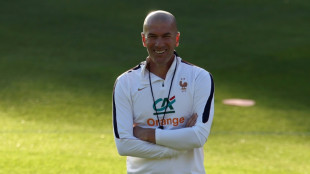
Zidane gets down to work as France start new era

-
 Despite military might, Saudi struggles to crush the Houthis
-
Inside the Venezuelan prison meant to 'drive you insane'

-
 Trump to tout deals, defend Iran war in UN speech
-
UK king braces as memoir by Diana's brother goes on sale

-
 Sri Lanka to issue verdict in landmark Easter attack trial
-
Akkodis and Hamburg Public Transport Association Showcase hvv mia at InnoTrans 2026, Demonstrating the Future of AI-Powered Mobility

NYSE - LSE
India becomes first nation to land spacecraft near Moon's south pole
India on Wednesday became the first nation to land a craft near the Moon's south pole, a historic triumph for the world's most populous nation and its ambitious, cut-price space programme.
The unmanned Chandrayaan-3, which means "Mooncraft" in Sanskrit, touched down at 6:04 pm India time (1234 GMT) as mission control technicians cheered wildly and embraced their colleagues.
Its landing comes days after a Russian probe crashed in the same region and four years since the previous Indian attempt failed at the last moment.
Prime Minister Narendra Modi smiled broadly and waved an Indian flag on a live broadcast to announce the mission's success as a triumph that extended beyond his country's borders.
"On this joyous occasion I would like to address the people of the world," said Modi from the sidelines of the BRICS diplomatic summit in South Africa.
"India's successful moon mission is not just India's alone," he added. "This success belongs to all of humanity."
The Chandrayaan-3 mission has captivated public attention since launching nearly six weeks ago in front of thousands of cheering spectators.
Politicians staged Hindu prayer rituals to wish for the mission's success and schoolchildren followed the final moments of the landing from live broadcasts in classrooms.
Chandrayaan-3 took much longer to reach the Moon than the Apollo missions in the 1960s and 1970s, which arrived in a matter of days.
India used rockets much less powerful than the ones the United States used back then, meaning the probe had to orbit the Earth several times to gain speed before embarking on its month-long journey.
The lander, Vikram, which means "valour" in Sanskrit, detached from its propulsion module last week and has been sending images of the Moon's surface since entering lunar orbit on August 5.
Now that Vikram has landed, a solar-powered rover will explore the surface and transmit data to Earth over its two-week lifespan.
- Ambitious programme -
India is closing in on milestones set by global space powers such as the United States and Russia, conducting many of its missions at much lower price tags.
The South Asian nation has a comparatively low-budget space programme, but one that has grown considerably in size and momentum since it first sent a probe to orbit the Moon in 2008.
The latest mission has a cost of $74.6 million -- far lower than those of other countries, and a testament to India's frugal space engineering.
Experts say India can keep costs low by copying and adapting existing technology, and thanks to an abundance of highly skilled engineers who earn a fraction of their foreign counterparts' wages.
In 2014, India became the first Asian nation to put a craft into orbit around Mars and is slated to launch a three-day crewed mission into Earth's orbit by next year.
Wednesday's landing had been eagerly awaited by the Indian Space Research Organisation (ISRO) after the frustrating failure of its previous mission at the last hurdle in 2019.
Back then, mission control lost contact with the Chandrayaan-2 lunar module moments before its slated landing.
- 'Very, very important' -
Former ISRO chief K. Sivan told AFP that India's efforts to explore the relatively unmapped lunar south pole would make a "very, very important" contribution to scientific knowledge.
Only Russia, the United States and China have previously achieved controlled landings on the Moon.
Russia launched a lunar probe in August -- its first in nearly half a century.
If successful, it would have beaten Chandrayaan-3 by a matter of days to become the first mission from any nation to make a controlled landing around the south pole.
But Luna-25 crashed on Saturday after an unspecified incident as it prepared to descend.
A.Gasser--BTB