Scientists voyage to Greenland's melting sanctuary / Photo: © AFP

 Hurricane Polo strengthens to top category 5 off Mexico

 11 hurt as teen opens fire outside school in western Turkey

 UN chief says 'Big Oil' treats atmosphere as open sewer

 Tunisia says 2026 summer hottest on record
 England's Rashid out of Sri Lanka ODIs with hand injury

 Houthis accuse Saudi Arabia of deadly strikes as thousands flee

 Stocks climb as oil slides, AI buzz returns

 India cricketers win in style as Afghan savours 'special' Games silver

 La Liga president hits out at Real Madrid refereeing 'conspiracy' claims

 MEXC Launches “Real Stocks, Real Friends” with Rewards for Bringing Friends to Wall Street

 Mbappe continues media push for Ballon d'Or recognition

 Stocks rise on AI buzz, oil prices cool

 India narrowly survive huge scare against minnows Japan

 Missing F-35 fighter parts 'not sensitive', says Australia minister
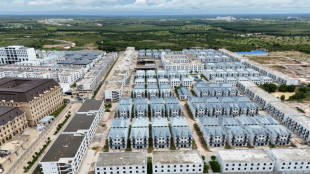 Cambodia showcases scams crackdown with global conference

 Afghan cyclist who disguised herself as man wins Asian Games silver

 Typhoon Dujuan leaves four dead in Japan, 45,000 houses without power

 G7 leaders condemn Houthi strikes on Saudi Arabia

 Google data centre sparks protests in Austria

 Shin Ohashi: Junk food-loving teen and Japan's next big swimming hope

 Stocks rise on AI buzz, drop in oil prices

 China's robot dancers limber up for America's Got Talent final

 Despite military might, Saudi struggles to crush the Houthis

 Trump to tout deals, defend Iran war in UN speech

 Sri Lanka to issue verdict in landmark Easter attack trial

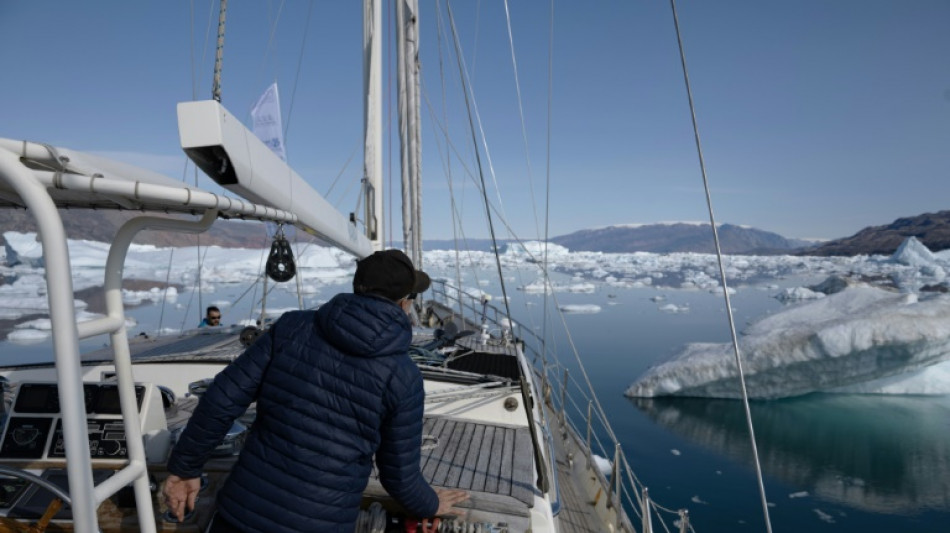
With rugged red mountains rising on either side, a sailboat carrying scientists deftly snakes between icebergs brimming Greenland's Scoresby Fjord, as they rush to document this understudied region on the frontline of climate change.
After the warmest July ever recorded at Summit Camp atop Greenland's ice sheet, the expedition members sailing the country's east coast are acutely aware of the urgency.
"The risk that we have here is the disappearance of the complete ecosystem," Eric Marechal, director of research at the French National Centre for Scientific Research (CNRS), tells AFP on board the sailboat Kamak.
In addition to the icebergs -- which in some areas blanket over half of the fjord -- the scientists also need an armed escort to protect against polar bears.
But for the researchers, facing the harsh environment is a risk worth taking for rare access into one of the world's most isolated ecosystems.
"We see that global warming is really entering a strong phase here. So we need to document that," says expedition leader Vincent Hilaire.
The expedition, arranged by the volunteer-run French initiative Greenlandia, aims to understand climate change's effects on Scoresby Fjord and its inhabitants.
Frozen in ice for eleven months of the year, the planet's largest fjord system, which remains vastly understudied, is a challenge to manoeuvre even for a seasoned crew.
"There is a big gap between what we see on the maps and the reality, so we have to move forward carefully," says Kamak's captain David Delample.
The warm sunlight carves pathways of melting snow on the sides of the icebergs, while the thundering sound of calving glaciers surrounding the fjord fills the air.
Some icebergs are chiselled monoliths of blue ice towering above the sea taller than the Arc de Triomphe monument in Paris, others smooth mounds with cascading layers of white snow.
The danger of the boat getting crushed between the mammoth blocks of ice is tangible, and the sound of the frozen giants banging against the ship's hull ensures an uneasy slumber.
The only human settlement within a 500-kilometre (310-mile) radius is the Greenlandic town of Ittoqqortoormiit near the mouth of the fjord, with its 300 or so inhabitants.
The scientists are working against the clock, well aware the fjord will freeze over again by mid-September.
"The future scientific generation will observe a massive melting in Greenland," Hilaire says.
For the team, filling the knowledge gap in the research of this remote region before it changes is essential to guide policy in the future.
"We will give them the maximum amount of samples," Hilaire says.
D.Schneider--BTB