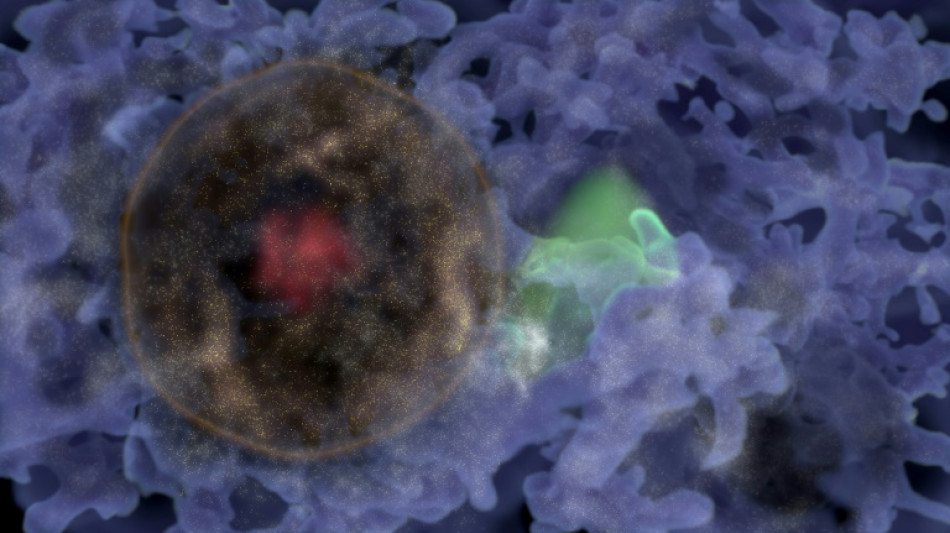
Billion-light-year-wide 'bubble of galaxies' discovered / Photo: © Animea Studio/CEA/AFP

 Hurricane Polo strengthens to top category 5 off Mexico
 11 hurt as teen opens fire outside school in western Turkey

 UN chief says 'Big Oil' treats atmosphere as open sewer

 Tunisia says 2026 summer hottest on record

 England's Rashid out of Sri Lanka ODIs with hand injury

 Houthis accuse Saudi Arabia of deadly strikes as thousands flee

 Stocks climb as oil slides, AI buzz returns

 India cricketers win in style as Afghan savours 'special' Games silver

 La Liga president hits out at Real Madrid refereeing 'conspiracy' claims

 MEXC Launches “Real Stocks, Real Friends” with Rewards for Bringing Friends to Wall Street

 Mbappe continues media push for Ballon d'Or recognition

 Stocks rise on AI buzz, oil prices cool

 India narrowly survive huge scare against minnows Japan

 Missing F-35 fighter parts 'not sensitive', says Australia minister

 Cambodia showcases scams crackdown with global conference
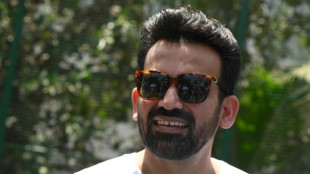
 Afghan cyclist who disguised herself as man wins Asian Games silver

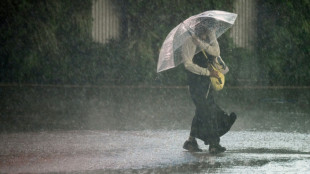 Typhoon Dujuan leaves four dead in Japan, 45,000 houses without power

 G7 leaders condemn Houthi strikes on Saudi Arabia

 Google data centre sparks protests in Austria

 Shin Ohashi: Junk food-loving teen and Japan's next big swimming hope

 Stocks rise on AI buzz, drop in oil prices

 China's robot dancers limber up for America's Got Talent final

 Despite military might, Saudi struggles to crush the Houthis
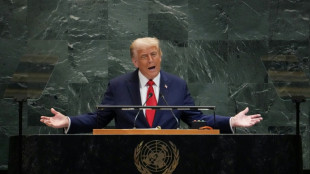 Trump to tout deals, defend Iran war in UN speech
 Sri Lanka to issue verdict in landmark Easter attack trial

Astronomers have discovered the first "bubble of galaxies," an almost unimaginably huge cosmic structure thought to be a fossilised remnant from just after the Big Bang sitting in our galactic backyard.
The bubble spans a billion light years, making it 10,000 times wider than the Milky Way galaxy.
Yet this giant bubble, which cannot be seen by the naked eye, is a relatively close 820 million light years away from our home galaxy, in what astronomers call the nearby universe.
The bubble can be thought of as "a spherical shell with a heart," Daniel Pomarede, an astrophysicist at France's Atomic Energy Commission, told AFP.
Inside that heart is the Bootes supercluster of galaxies, which is surrounded by a vast void sometimes called "the Great Nothing".
The shell contains several other galaxy superclusters already known to science, including the massive structure known as the Sloan Great Wall.
Pomarede said the discovery of the bubble, which is described in research he co-authored that was published in The Astrophysical Journal this week, was "part of a very long scientific process".
It confirms a phenomenon first described in 1970 by US cosmologist -- and future physics Nobel winner -- Jim Peebles.
He theorised that in the primordial universe -- then a stew of hot plasma -- the churning of gravity and radiation created sound waves called baryon acoustic oscillations (BAOs).
As the sound waves rippled through the plasma, they created bubbles.
Around 380,000 years after the Big Bang the process stopped as the universe cooled down, freezing the shape of the bubbles.
The bubbles then grew larger as the universe expanded, similar to other fossilised remnants from the time after the Big Bang.
Astronomers previously detected signals of BAOs in 2005 when looking at data from nearby galaxies.
But the newly discovered bubble is the first known single baryon acoustic oscillation, according to the researchers.
- 'Unexpected' -
The astronomers called their bubble Ho'oleilana -- "sent murmurs of awakening" -- taking the name from a Hawaiian creation chant.
The name came from the study's lead author Brent Tully, an astronomer at the University of Hawaii.
The bubble was discovered by chance, as part of Tully's work searching through new catalogues of galaxies.
"It was something unexpected," Pomarede said.
Tully said in a statement that the bubble is "so huge that it spills to the edges of the sector of the sky that we were analysing".
The pair enlisted the help of Australian cosmologist and BAO expert Cullan Howlett, who "mathematically determined the spherical structure which best corresponded to the data provided," Pomarede said.
This allowed the trio to visualise the three-dimensional shape of Ho'oleilana -- and the position of the archipelagos of galaxies inside it.
It may be the first, but more bubbles could soon be spotted across the universe.
Europe's Euclid space telescope, which launched into July, takes in a wide view of the universe, potentially enabling it to snare some more bubbles.
Massive radio telescopes called the Square Kilometre Array, being built in South Africa and Australia, could also offer a new image of galaxies from the viewpoint of the Southern Hemisphere, Pomarede said.
C.Meier--BTB