Belgium's Africa museum pores over colonial-era collection / Photo: © AFP

 Trump renames AI 'super intelligence' as leaders jostle over dangers
 Oil prices retreat as markets welcome US-Iran talks
 US refusing to give Sudan's de facto leader visa for UN: diplomatic sources, UN
 Macron urges world to choose UN over 'law of the jungle'
 All-rounder Jacks stars as England beat Sri Lanka in 1st ODI
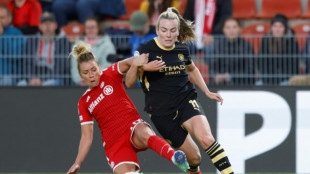 Man City peg back Bayern to start Women's Champions League
 Trump beats 'America first' drum at UN as allies tread carefully

 Snedeker backs Spaun for Ryder Cup after Presidents snub
 French prosecutors probe secret filming of women with smart glasses

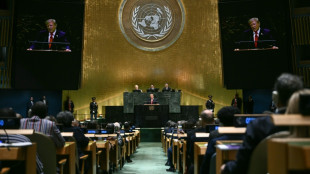 Trump renames AI "super intelligence," rejects international oversight
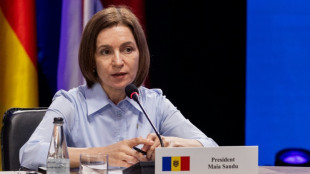
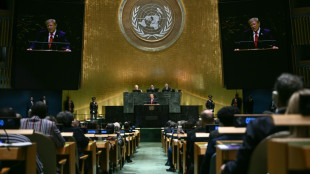 Trump rejects international regulation of AI

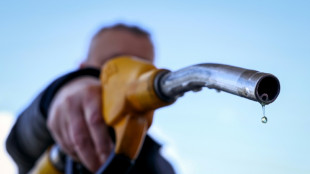 How is the EU approaching record fuel prices?

 Sri Lanka's Colombage strikes on debut as England dismissed for 265 in first ODI
 Hurricane Polo strengthens to top category 5 off Mexico
 11 hurt as teen opens fire outside school in western Turkey

 UN chief says 'Big Oil' treats atmosphere as open sewer
 Tunisia says 2026 summer hottest on record
 England's Rashid out of Sri Lanka ODIs with hand injury
 Houthis accuse Saudi Arabia of deadly strikes as thousands flee
 Stocks climb as oil slides, AI buzz returns
 India cricketers win in style as Afghan savours 'special' Games silver

 La Liga president hits out at Real Madrid refereeing 'conspiracy' claims

 MEXC Launches “Real Stocks, Real Friends” with Rewards for Bringing Friends to Wall Street

 Mbappe continues media push for Ballon d'Or recognition

 Stocks rise on AI buzz, oil prices cool

Belgium's main museum dedicated to Africa has started delving into the origins of its enormous collection, as a first step towards possible restitution of items that were obtained in violent ways during colonial times.
"We want to get a better idea of the origin of the pieces and see if we can establish which were obtained through theft, violence or manipulation," Bart Ouvry, director of the Royal Museum for Central Africa on Brussels' outskirts, told AFP.
An inventory of 80,000 objects -- sculptures, masks, utensils, musical instruments -- from the Democratic Republic of Congo (DRC) was already handed over to Kinshasa authorities two years ago.
Shortly after, in 2022, Belgium adopted a law setting out how it would hand back works that were despoiled between 1885 and 1960, when Belgium ruled over the DRC, known then as Congo, first as King Leopold II's private property then as a Belgian colony.
So far, Kinshasa has not made a formal return request, said Thomas Dermine, the Belgian minister in charge of the matter.
He said a joint committee of Belgian and DRC experts would be set up to determine which objects were legitimately obtained and which were not.
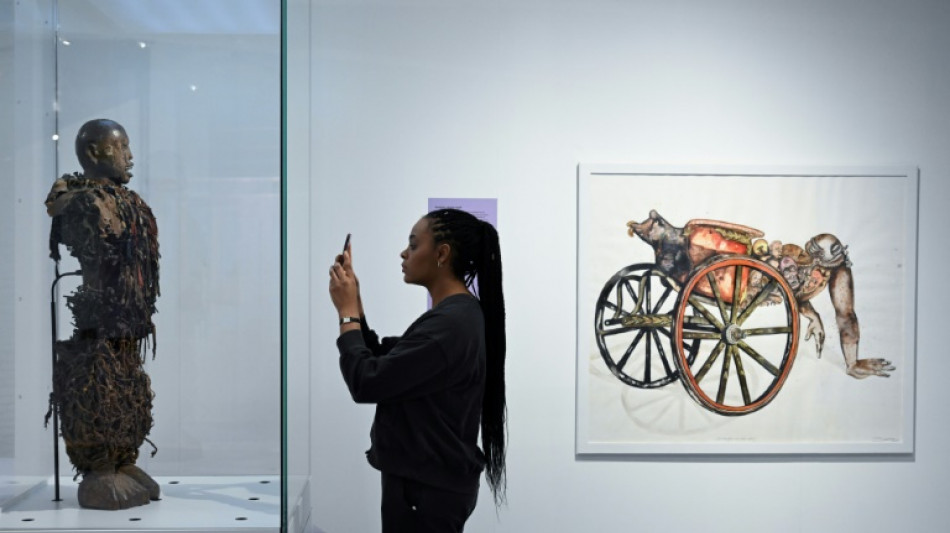
To mark the process, a new exhibition, "ReThinking Collections", opened at the museum on Thursday with a statue that once belonged to a Congolese chief, Ne Kuko of Boma, presented as "A Symbol of Stolen Art".
"The Congolese diasporas view this statue as an emblem of the need for restitution," noted Agnes Lacaille, one of the exhibition's curators.
The Nkisi Nkonde Statue was taken by a Belgian officer and explorer, Alexandre Delcommune, during an 1878 expedition in western Congo as punishment for the region hiking taxes on Belgian trade routes.
A historian, Didier Gondola, said that colonial soldiers, administrative officials and missionaries "collected" such artefacts, often using "violence" or "coercion".
Though Belgium is plunging into the issue now, restitution requests were sent starting in the late 1960s by Mobutu Sese Seko, dictator of the country that at that time was known as Zaire.
A decade later, the museum handed over 114 pieces, but not its most prized ones.
"In Mobutu's time, for example, the Europeans said 'We are doing you a favour, because we are conserving your objects. If we gave them to you, they would end up on the international art market, would be sold on, because the government is corrupt, or they'd be ruined because you don't have the means to conserve them'," Gondola said.
- 'National heritage' -
But times have changed, he stressed.
"In Kinshasa, there is a very beautiful museum, just as modern as this one, and there is enough space that these objects can be brought back into the national heritage," he said.
As a halfway measure, Belgium's King Philippe delivered a giant ritual "kakuungu" mask to the DRC's national museum as an "unlimited" loan. The monarch expressed "deep regret" for Belgium's colonial period.
Belgium's plunder did more than erode the DRC's physical heritage, explained another exhibition curator, Sarah Van Beurden, as she stood before a "manza" xylophone taken in 1911-1912.
"When you take an object like this xylophone, you take away the ability for a community to maintain its cultural customs," she said.
"You can return the object. But you can't return what the community has lost."
In a gesture to repair that loss, a project has been mounted with DRC youth from the community where the instrument was taken to recreate -- "in a different way" -- music that it produces, she said.
B.Shevchenko--BTB