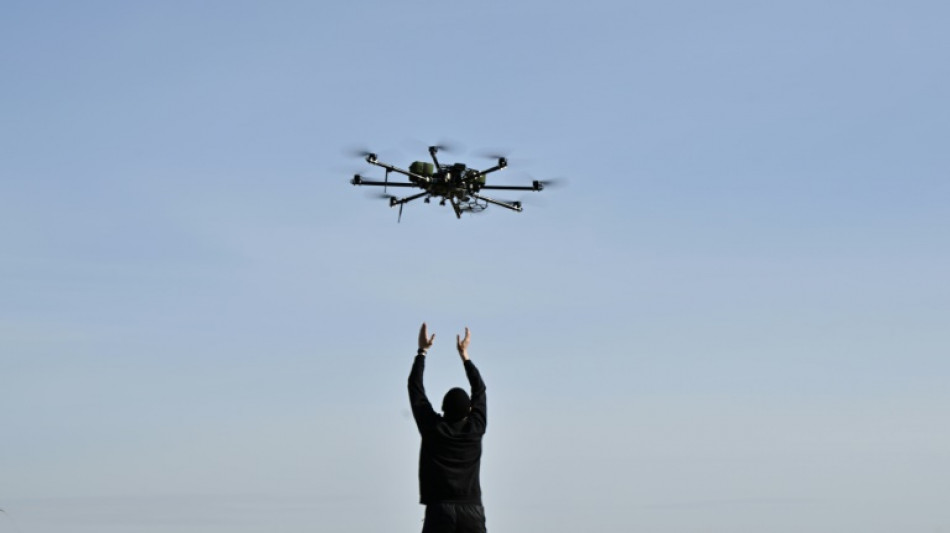
Cheap drones 'cannot match' artillery power in Ukraine: experts / Photo: © AFP/File

 Voting opens in Alaska's annual Fat Bear Week

 MLS coach axed for telling female ref 'It's a man's game'

 US refuses to give Sudan's de facto leader visa for UN

 Man City hold Bayern to start Women's Champions League, Arsenal win late
 Trump threatens Iran with 'hell' but reveals fresh talks

 Trump signs security deal with Greenland, Denmark at UN
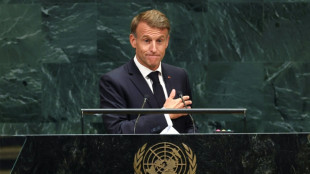
 Trump threatens Iran with 'hell' but unveils fresh talks

 Chile's Atacama Desert blossoms with life after El Nino rains

 Sri Lanka hands 220-year jail terms to 15 convicted of Easter bombings

 Typhoon Dujuan leaves 7 dead in Japan from landslides, flooding: media

 Ganna and Borghini lead Italy to mixed relay gold at cycling worlds

 Drug cocktail killed former child star Hayden Panettiere: coroner

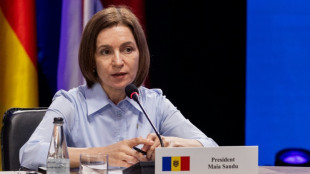 Moldova declares energy, water emergency

 French Holocaust denier jailed for eight months

 Oil prices slide, AI stock buzz fades

 Trump threatens to 'annihilate' Iran in bombastic UN speech

 Prada's skirts take centre stage as Milan Fashion Week begins

 Quoin Pharmaceuticals Announces FDA Fast Track Designation for QRX003 for the Treatment of Peeling Skin Syndrome

 Brazil's Flavio Bolsonaro turns scandal into poll gains

 Republican senator seeks probe of Trump Jr Russian-funded wedding

 Memoir by Diana's brother goes on sale after rocking UK monarchy

 Newcomers South Korea face holders Italy in Davis Cup finals

 Japan's Kojima sounds Marchand warning with Asian Games gold

 England rugby star Pollock signs new Northampton deal

 STARTRADER Expands Its Chinese Equity CFD Range with CXMT and Unitree Robotics

Ukraine is relying on the massive use of drones to compensate for an artillery shell shortage and undermine Russian military capabilities, but experts warned they cannot tip the balance.
Both drones used for strikes hundreds of kilometres away and commercial drones are starting to dominate the battlefield.
In particular, so-called First Person View (FPV) drones allow their pilots to see live images of the ground as if they were on board and can locate enemy units and, if armed with explosives, attack them from within a few kilometres.
"At the moment in Ukraine, we are seeing the use of drones on an unimaginable scale, we are really talking about tens and hundreds of thousands of drones on the battlefield," Ulrike Franke, a researcher at the European Council on Foreign Relations (ECFR), told AFP.
In its 2024 budget Kyiv earmarked 1.15 billion euros ($1.25 billion) for drones, and President Volodymyr Zelensky announced that the country will produce "one million drones" this year, after setting up a specific drone branch in February.
Kyiv's direction comes as its supporters are trying to bolster Ukrainian stocks -- London is set to deliver more than 10,000 drones, of which one thousand are FPV drones, and Paris is preparing to order 2,000 kamikaze drones, some of which will be used in Ukraine.
Ukrainian officials estimate between 100,000 and 120,000 drones are needed monthly.
Whereas it needs 200,000 to 250,000 artillery shells per month for a major offensive or 75,000 to 90,000 to sustain the war defensively, according to an Institute for Strategic Studies (IISS) review.
Western backers largely depend on US stocks to sustain defence, but Kyiv does not have enough ammunition to launch a major offensive next year, it added.
So "Ukraine can reduce its requirements for artillery ammunition by significantly increasing production of strike drones" continued Michael Kofman and Franz-Stefan Gady in the IISS review.
Drones are "capable of reproducing many of the functions of artillery and missiles at a fraction of the cost", agreed Mykola Bielieskov of the Atlantic Council.
A small commercial drone costs just a few hundred euros, whereas a simple anti-tank missile, artillery shell or remotely operated munition costs several thousands.
- "Not ideal" -
Ukrainian FPV drones are currently responsible for between 65 and 85 percent of the destruction of Russian positions, according to a French military source.
But Ulrike Franke warned: "They use drones because they can produce or buy them, but it is not ideal."
FPV drones have a small load capacity of just hundreds of grams of explosive and a few kilograms for the largest commercial drones.
"Even large numbers of small drones cannot match the potency of artillery fire," agreed Stacie Pettyjohn in a study by American security think-tank "CNAS".
Drones can supplement indirect fire weapons, but they are not substitutes, she added.
In September, the New York Times reported that less than a third of drone strikes hit their target, as the machines can easily be jammed or disrupted by electronic countermeasures.
Ukraine can no longer count on superiority in the field of drones.
In 2022 Ukraine had a "9-to-1 advantage" in commercial drones but this lead has now "essential disappeared", Pettyjohn added.
"While the Russian Ministry of Defence was slow to catch up, Russian troops had quickly realized the utility of commercial quadcopters and volunteer groups had emerged to provide frontline soldiers with drones and the necessary training."
Russia also relied heavily on FPV kamikaze drones to thwart Ukraine’s counter-offensive last summer.
For Pettyjohn, although drones offer new capabilities, they ultimately make it more difficult to "concentrate forces, achieve surprise, and conduct offensive operations" so they will not make "truly disruptive change".
burs-mra/tq/ico/spb/cw
M.Odermatt--BTB