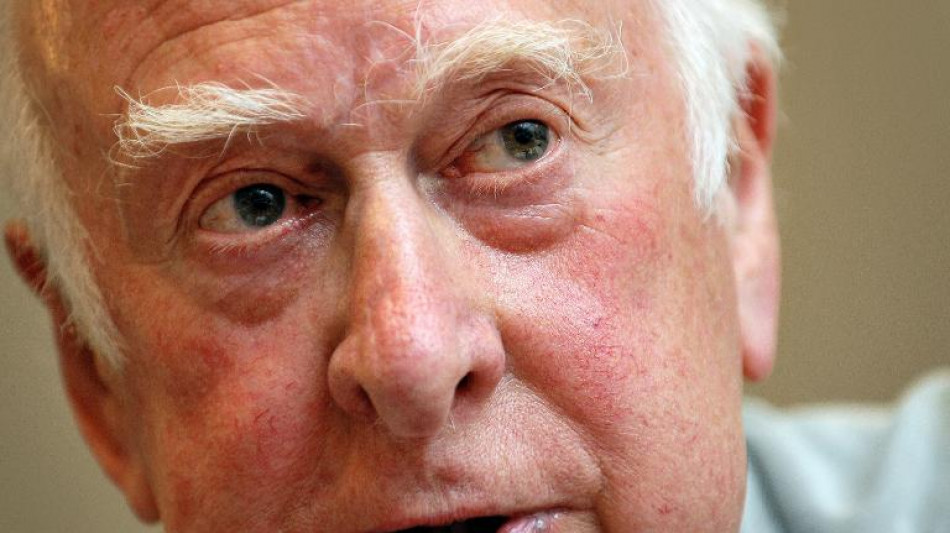
Peter Higgs: physicist who predicted 'God particle' / Photo: © POOL/AFP/File

 'New one' Klopp promises fresh approach as Germany reign begins

 Milne returns to New Zealand squad for India T20 series

 US-led Americas coalition backs sanctions against crime groups

 'Star Wars' fans and art lovers line up for new Lucas museum

 Trump renames AI 'super intelligence' as leaders jostle over dangers

 Oil prices retreat as markets welcome US-Iran talks

 US refusing to give Sudan's de facto leader visa for UN: diplomatic sources, UN
 Macron urges world to choose UN over 'law of the jungle'

 All-rounder Jacks stars as England beat Sri Lanka in 1st ODI

 Man City peg back Bayern to start Women's Champions League

 Trump beats 'America first' drum at UN as allies tread carefully

 Snedeker backs Spaun for Ryder Cup after Presidents snub
 French prosecutors probe secret filming of women with smart glasses

 Trump renames AI "super intelligence," rejects international oversight

 Trump rejects international regulation of AI
 How is the EU approaching record fuel prices?

 Sri Lanka's Colombage strikes on debut as England dismissed for 265 in first ODI

 Hurricane Polo strengthens to top category 5 off Mexico

 11 hurt as teen opens fire outside school in western Turkey

 UN chief says 'Big Oil' treats atmosphere as open sewer

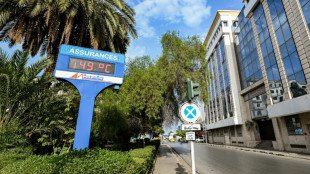 Tunisia says 2026 summer hottest on record

 England's Rashid out of Sri Lanka ODIs with hand injury

 Houthis accuse Saudi Arabia of deadly strikes as thousands flee

 Stocks climb as oil slides, AI buzz returns
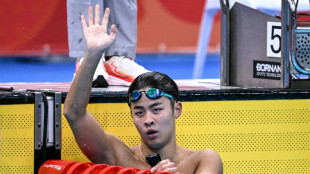
 India cricketers win in style as Afghan savours 'special' Games silver

Nobel laureate Peter Higgs gave his name to one of the great scientific discoveries of the last century, earning a place alongside Albert Einstein and Max Planck in physics textbooks.
Through ground-breaking theoretical work, Higgs, who died on Monday aged 94, helped explain how the Universe has mass, resolving one of the greatest puzzles in physics.
His 1964 theory of a mass-giving particle, which became known as the Higgs boson or the "God particle", earned him and Belgian physicist Francois Englert the 2013 Nobel Prize for Physics.
But when the announcement for which he had been waiting for half a century came, the unassuming physicist was nowhere to be found, having slipped out his back door into a pub, according to the 2022 biography "Elusive".
Higgs later admitted that the sudden fame was "a bit of a nuisance".
Announcing his death on Tuesday, the University of Edinburgh -- where he had taught and researched in various capacities since the 1950s -- hailed him a "great teacher and mentor".
It said he had inspired "generations of young scientists".
- 'Oh shit, I know...' -
The Higgs boson confers mass on some of the fundamental particles that make up matter.
Without it, theorists explain, we and all the other connected atoms in the universe would not exist.
Shy and unassuming, Higgs had seen the light almost half a century before the particle's existence was confirmed by the European Organisation for Nuclear Research (CERN) in Geneva in July 2012 in the Large Hadron Collider.
He realised in a eureka moment as a young lecturer in 1946 there could be a field of novel particles that confers mass.
"He said: 'Oh shit, I know how to do that!'" former colleague and friend Alan Walker told AFP of the breakthrough as recounted to him by Higgs.
Higgs published a paper on his theory in 1964, becoming the flag bearer of a premise to which several scientists had contributed over the years, including Englert, but which, at the outset, found few backers.
Particularly sceptical was CERN, which embarked on a years-long, multi-billion-dollar quest to find the needle-in-a-haystack particle, culminating in its own eureka moment on July 4, 2012.
Higgs was present in Geneva to hear CERN announce that it had found a particle "consistent" with the elusive boson.
"It's very nice to be right sometimes. It has certainly been a long wait," he declared.
He and Englert won a slew of awards for their work, including the prestigious Wolf Prize in 2004.
But Higgs revealed he had turned down a knighthood, saying he felt the British honours system was "used for political purposes."
- 'Gentle' -
Higgs was born in Newcastle upon Tyne, in northeastern England, on May 29, 1929, to a Scottish mother and an English father who worked as a sound engineer at the BBC.
He studied at King's College in London, gaining a PhD in 1954, and went on to lecture at Edinburgh University.
Balding and ruddy-cheeked, he retired in 1996 and continued to live quietly in the Scottish capital, where he was emeritus professor of theoretical physics.
A modest man, who published only around a dozen scientific papers over his career, he cringed every time the term "Higgs boson" was used in his presence.
But as a life-long atheist, he disliked the "God particle" even more.
"He is a very mild-mannered and very gentle man, but he actually does get a little tenacious if you say something wrong that (has to do with) physics," his former colleague and friend Walker once said.
Others credited with contributing to the Higgs theory include Americans Gerald Guralnik, Carl Hagen, and Briton Tom Kibble, who jointly did a separate paper on the mechanism in the same year as Higgs.
Higgs married American linguist Jody Williamson, with whom he had two children. The pair later separated but remained close until her death in 2008 of leukemia.
He campaigned against nuclear weapons, joining a call in 2015 for Britain to abandon its Trident nuclear deterrent.
J.Horn--BTB