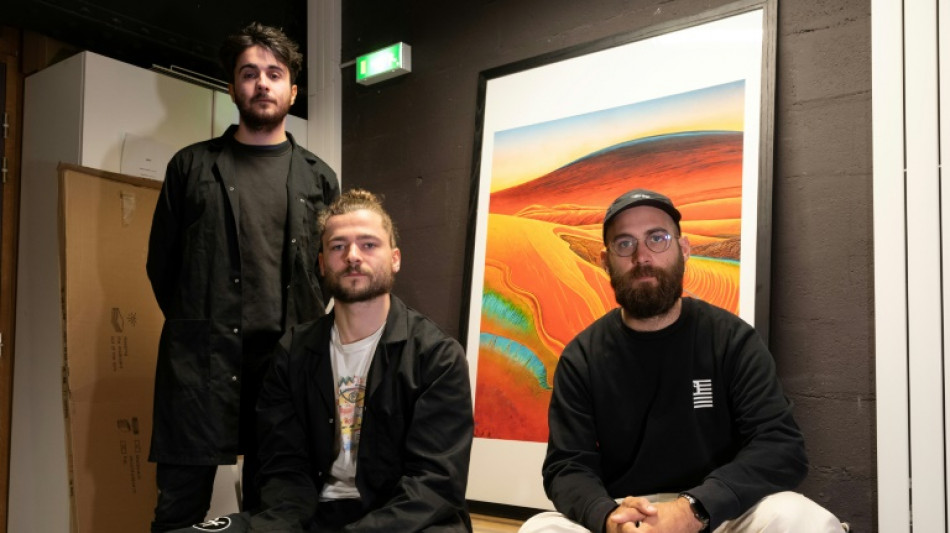
French art group uses brainwaves and AI to recreate landscapes / Photo: © AFP

 Schoolgirl Yu, 13, fastest again in bid for third Asian Games gold
 Oil prices fall after Trump hails 'good' talks with Iran

 AI political ads warp reality ahead of US midterms
 Kenneth Branagh embraces action hero role -- to get in shape

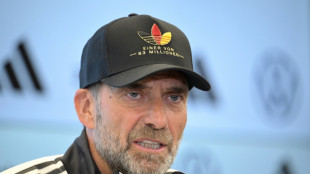 'New one' Klopp promises fresh approach as Germany reign begins
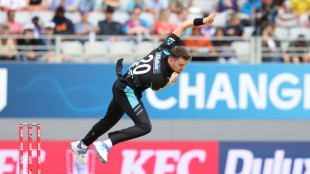 Milne returns to New Zealand squad for India T20 series
 US-led Americas coalition backs sanctions against crime groups

 'Star Wars' fans and art lovers line up for new Lucas museum
 Trump renames AI 'super intelligence' as leaders jostle over dangers
 Oil prices retreat as markets welcome US-Iran talks
 US refusing to give Sudan's de facto leader visa for UN: diplomatic sources, UN
 Macron urges world to choose UN over 'law of the jungle'
 All-rounder Jacks stars as England beat Sri Lanka in 1st ODI

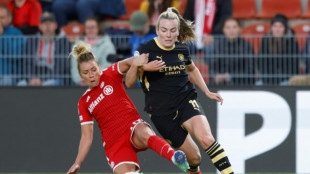 Man City peg back Bayern to start Women's Champions League
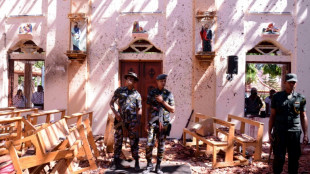
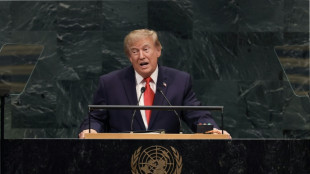 Trump beats 'America first' drum at UN as allies tread carefully

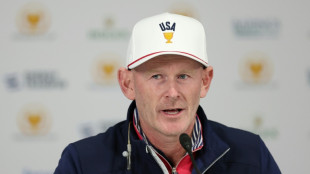 Snedeker backs Spaun for Ryder Cup after Presidents snub
 French prosecutors probe secret filming of women with smart glasses

 Trump renames AI "super intelligence," rejects international oversight
 Trump rejects international regulation of AI
 How is the EU approaching record fuel prices?

 Sri Lanka's Colombage strikes on debut as England dismissed for 265 in first ODI
 Hurricane Polo strengthens to top category 5 off Mexico
 11 hurt as teen opens fire outside school in western Turkey

 UN chief says 'Big Oil' treats atmosphere as open sewer
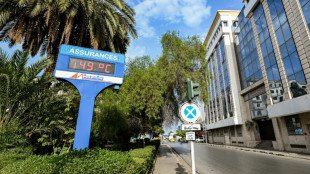 Tunisia says 2026 summer hottest on record
The hypercolour image of a dark hill and lava flow is pretty enough -- but its high-tech artificial intelligence origins make it special.
It is the product of the brainwaves of one member of French art collective Obvious, collected in an MRI machine at the Brain Institute of the Pitie Salpetriere hospital in Paris.
"I was thinking very hard about a volcano," said Pierre Fautrel, one of the trio.
He admits the resulting work was not exactly what he had in mind, "but it has kept the basic elements: a flaming mountain with flowing lava and a landscape on a light background".
The trio of thirty-somethings, Fautrel, Hugo Caselles-Dupre and Gauthier Vernier, already gained international attention in 2018 by selling an AI-generated artwork at Christie's in New York for more than 400,000 euros.
For the latest project, "Mind to Image", they used an open-source programme, MindEye, which is able to retrieve and reconstruct viewed images from brain activity, combining it with their own AI programme to create artworks.
They tried two different versions -- one in which they looked at pictures and tried to replicate them simply through their brainwaves captured in the MRI.
They also tried recreating their invented images based on written descriptions.
For each, they repeated the process many times over 10 hours to create a database for their AI.
- Reconstructing 'imagined' images -
"We've known for around 10 years that it's possible to reconstruct a viewed image from the activity of the visual cortex," said Alizee Lopez-Persem, a researcher at the Brain Institute.
"But not an 'imagined' image -- that's a real challenge."
It took the team many hours to sort through the data collected in the MRI, before Obvious fed it into their own AI programme, which gives it a specific vibe influenced in part by Surrealism.
"Two years ago, I would never have believed that this could exist," said Charles Mellerio, a neuro-radiologist who assisted the project.
He credits huge advances in the quality of medical imaging, as well as the sudden emergence of generative AI, which can create images from written prompts.
"There are very real links between art and science," said Caselles-Dupre, while acknowledging that this technology "can be very scary if used in the wrong way".
The results of their project will be on display at the Danysz gallery in Paris in October and the group says they want to expand the project to sound and video.
J.Bergmann--BTB