Hubble trouble: Veteran space telescope forced to take it easy / Photo: © NASA/AFP/File

 Schoolgirl Yu, 13, fastest again in bid for third Asian Games gold
 Oil prices fall after Trump hails 'good' talks with Iran
 AI political ads warp reality ahead of US midterms

 Kenneth Branagh embraces action hero role -- to get in shape

 'New one' Klopp promises fresh approach as Germany reign begins
 Milne returns to New Zealand squad for India T20 series
 US-led Americas coalition backs sanctions against crime groups

 'Star Wars' fans and art lovers line up for new Lucas museum

 Trump renames AI 'super intelligence' as leaders jostle over dangers
 Oil prices retreat as markets welcome US-Iran talks

 US refusing to give Sudan's de facto leader visa for UN: diplomatic sources, UN
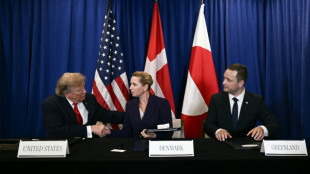
 Macron urges world to choose UN over 'law of the jungle'

 All-rounder Jacks stars as England beat Sri Lanka in 1st ODI

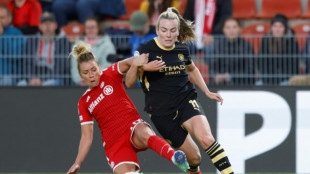 Man City peg back Bayern to start Women's Champions League

 Trump beats 'America first' drum at UN as allies tread carefully

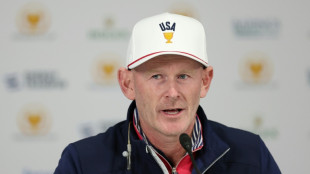 Snedeker backs Spaun for Ryder Cup after Presidents snub

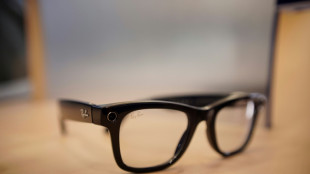 French prosecutors probe secret filming of women with smart glasses

 Trump renames AI "super intelligence," rejects international oversight

 Trump rejects international regulation of AI
 How is the EU approaching record fuel prices?

 Sri Lanka's Colombage strikes on debut as England dismissed for 265 in first ODI

 Hurricane Polo strengthens to top category 5 off Mexico

 11 hurt as teen opens fire outside school in western Turkey

 UN chief says 'Big Oil' treats atmosphere as open sewer

 Tunisia says 2026 summer hottest on record

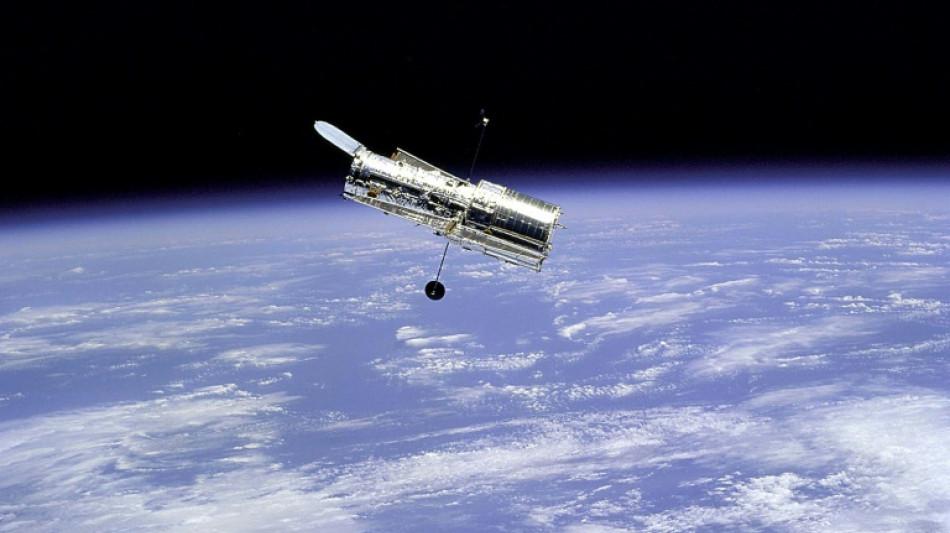
The venerable Hubble Space Telescope, which has revolutionized astronomical discovery since its launch in 1990, will ease into retirement with a scaled-back observing schedule, NASA officials said Tuesday.
One of the three gyroscopes that control the direction in which the telescope points has become unstable in recent months, leading to intermittent "safe mode" episodes -- most recently on May 24.
"After completing a series of tests and carefully considering our options, we have made the decision that we will transition Hubble to operate using only one of its three remaining gyros," said NASA's Mark Clampin, director of the astrophysics division.
The other gyro will be kept powered up in reserve for potential future use.
The transition, which should be completed by mid-June, will reduce Hubble's efficiency at carrying out science observations by 12 percent, dropping from 85 orbits a week to 74, said Patrick Crouse, project manager for the Hubble Space Telescope mission.
Over the course of a year, it will still be able to view the full night sky. It will no longer be able to track objects that are closer than Mars -- though such targets were rare anyway, added Crouse.
NASA calculates there is a greater than 70 percent chance of operating with this configuration through 2035. At the end of the telescope's life, the US space agency plans to safely de-orbit or otherwise dispose of the popular science instrument.
"We do not see Hubble as being on its last legs, we do think it's a very capable observatory, (poised) to do exciting science with other observatories in orbit and those that will join us in orbit," said Crouse.
- Most distant star -
Named for astronomer Edwin Hubble, the telescope was launched in 1990 and operates about 320 miles (515 kilometers) above Earth.
Between 1993 and 2009 astronauts visited Hubble five times on repair missions.
NASA and SpaceX previously said they were studying a possible mission that would re-boost Hubble's orbit, which gradually decays over time due to Earth's gravitational pull, and part of that review also considered ways to mitigate against the loss of gyros.
But Clampin said ideas of adding extra gyros to the outside of the telescope were "just notional concepts -- we never even got to the point of actually looking at what that would look like, and how we would do that."
Arguably among the most valuable instruments in scientific history, Hubble continues to make important discoveries, including in 2022 when it detected the farthest individual star ever seen -- Earendel, whose light took 12.9 billion years to reach us.
Clampin said despite its diminished capacity, Hubble keeps performing a "breadth of great science," from investigating objects in our solar system to studying early galaxies to collaborating with the newer James Webb Space Telescope to probe the atmospheres of exoplanets.
While Webb, now the premier space telescope, excels in infrared detection, Hubble's primary focus on visible light provides a complementary capability, enhancing their combined scientific impact.
M.Odermatt--BTB