NASA picks SpaceX to carry ISS to its watery graveyard after 2030 / Photo: © Satellite image ©2024 Maxar Technologies/AFP

 Battered Duerer masterpiece up for five-year revamp

 Trump met with Venezuela's interim leader at UN

 Malaysia furore after Najib wins conditional house arrest
 Italy hope for new dawn under Mancini

 Mongolian herders enlist new tech against harsher, drier climate

 Tata turmoil shines light on India succession woes

 World Cup 'not enough' as Spain begin next chapter

 Meta acts against 3.7 mn scammers' accounts with Singapore police help

 Australia PM says draft social media rules about taking back control

 Voting opens in Alaska's annual Fat Bear Week

 MLS coach axed for telling female ref 'It's a man's game'

 US refuses to give Sudan's de facto leader visa for UN

 Man City hold Bayern to start Women's Champions League, Arsenal win late

 Trump threatens Iran with 'hell' but reveals fresh talks

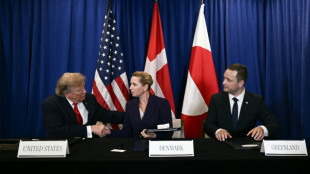 Trump signs security deal with Greenland, Denmark at UN

 Trump threatens Iran with 'hell' but unveils fresh talks

 Chile's Atacama Desert blossoms with life after El Nino rains

 Sri Lanka hands 220-year jail terms to 15 convicted of Easter bombings

 Typhoon Dujuan leaves 7 dead in Japan from landslides, flooding: media

 Ganna and Borghini lead Italy to mixed relay gold at cycling worlds

 Drug cocktail killed former child star Hayden Panettiere: coroner

 Moldova declares energy, water emergency

 French Holocaust denier jailed for eight months

 Oil prices slide, AI stock buzz fades

 Trump threatens to 'annihilate' Iran in bombastic UN speech

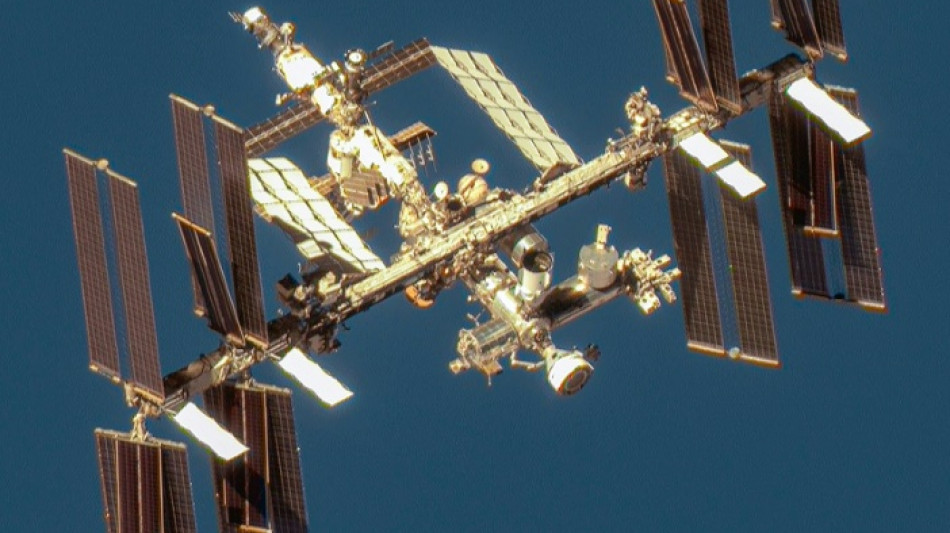
NASA on Tuesday said it had picked SpaceX to build a vessel to carry the International Space Station back through Earth's atmosphere and on to a final resting place in the Pacific Ocean after it is retired in 2030.
Elon Musk's company has been awarded a contract with a potential value of $843 million to develop and deliver the spaceship, dubbed the US Deorbit Vehicle.
"Selecting a US Deorbit Vehicle for the International Space Station will help NASA and its international partners ensure a safe and responsible transition in low Earth orbit at the end of station operations," said NASA's Ken Bowersox in a statement.
NASA plans to take ownership of the spacecraft after SpaceX builds it, and control operations throughout the mission.
Weighing 430,000 kilograms (950,000) pounds, the ISS is by far the largest single structure ever built in space.
Based on past observations of how other stations such as Mir and Skylab disintegrated on atmospheric re-entry, NASA engineers expect the orbital outpost to break up in three stages.
First, the massive solar arrays and the radiators that keep the orbital lab cool will come off, then individual modules will break off from the truss, or the station's backbone structure. Finally, the truss and the modules themselves will tear apart.
Much of the material will be vaporized, but large pieces are expected to survive. For this reason, NASA is aiming for an area of the Pacific Ocean called Point Nemo, one of the most remote areas of the world and known as the graveyard of satellites and spaceships.
The first segment of the ISS was launched in 1998, and it has been continuously inhabited by an international crew since 2001.
The US, Japan, Canada, and participating countries of the European Space Agency (ESA) have committed to operate the microgravity lab through 2030 -- though Russia, the fifth partner, has only committed to operations through 2028.
NASA chief Bill Nelson told Congress in April that given the dire state of US-Russia ties, it would be prudent to begin work on a US deorbit vehicle to "get the whole station down safely, so it won't hit anybody or anything."
Several companies are working on commercial successors to the ISS, including notably Axiom Space and Jeff Bezos' Blue Origin.
F.Pavlenko--BTB