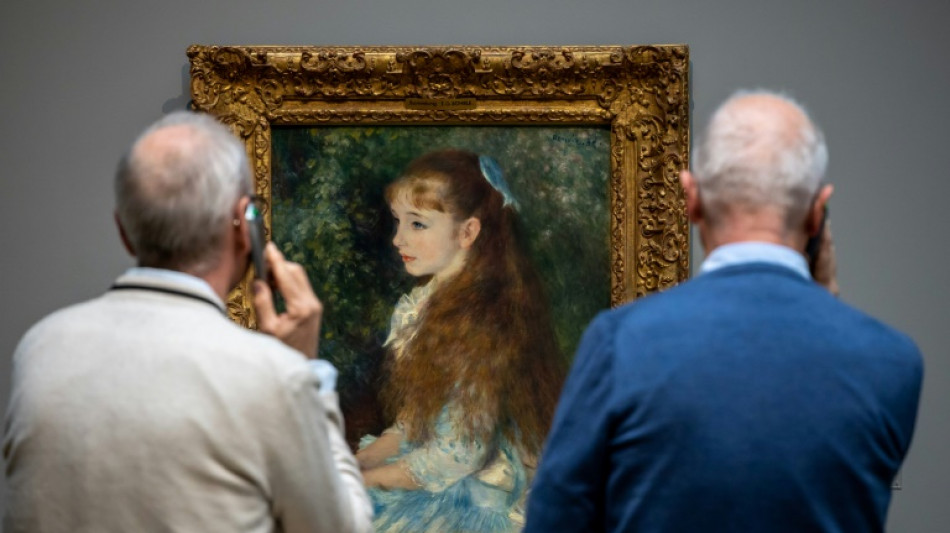
Experts press Swiss foundation over Nazi-era art collection / Photo: © AFP

 Battered Duerer masterpiece up for five-year revamp

 Trump met with Venezuela's interim leader at UN

 Malaysia furore after Najib wins conditional house arrest

 Italy hope for new dawn under Mancini

 Mongolian herders enlist new tech against harsher, drier climate

 Tata turmoil shines light on India succession woes
 World Cup 'not enough' as Spain begin next chapter
 Meta acts against 3.7 mn scammers' accounts with Singapore police help

 Australia PM says draft social media rules about taking back control

 Voting opens in Alaska's annual Fat Bear Week

 MLS coach axed for telling female ref 'It's a man's game'
 US refuses to give Sudan's de facto leader visa for UN

 Man City hold Bayern to start Women's Champions League, Arsenal win late
 Trump threatens Iran with 'hell' but reveals fresh talks
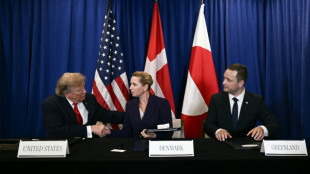 Trump signs security deal with Greenland, Denmark at UN
 Trump threatens Iran with 'hell' but unveils fresh talks

 Chile's Atacama Desert blossoms with life after El Nino rains

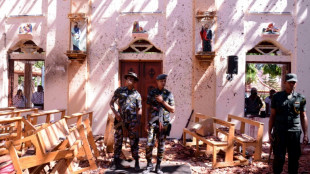 Sri Lanka hands 220-year jail terms to 15 convicted of Easter bombings

 Typhoon Dujuan leaves 7 dead in Japan from landslides, flooding: media
 Ganna and Borghini lead Italy to mixed relay gold at cycling worlds
 Drug cocktail killed former child star Hayden Panettiere: coroner

 Moldova declares energy, water emergency

 French Holocaust denier jailed for eight months

 Oil prices slide, AI stock buzz fades

 Trump threatens to 'annihilate' Iran in bombastic UN speech

A Swiss foundation must do more to trace the provenance of works in a vast art collection acquired in questionable circumstances during World War II, a team of experts said Friday.
There has long been suspicion around the Nazi-era origins of one of Europe's most prestigious private art collections, acquired by arms dealer Emil Buhrle, who made his fortune during the war.
The German-born industrialist became a naturalised Swiss citizen in 1937. By the time he died in 1956, he had amassed around 600 artworks, including masterpieces by Cezanne, Degas, Manet, Monet, Renoir, Rembrandt, Picasso and Van Gogh.
Some had previously been looted from their Jewish owners, or sold cheaply and in haste as their owners fled the Nazis.
The Buhrle Foundation, which owns the collection, has been working to clarify the provenance of the works for years.
Its efforts came into particular focus when Kunsthaus Zurich, one of Switzerland's most prestigious art museums, agreed to permanently house the collection. Until then, it had been displayed at a private museum on the outskirts of Zurich.
The Kunsthaus has faced especially keen scrutiny since it opened a new building to house a large part of the collection in 2021.
- 'Insufficient' -
A team of experts mandated by the Zurich authorities and the museum to evaluate the foundation's research on provenance on Friday concluded that it had been "insufficient".
"Provenance research must be continued," said the team, led by renowned Swiss historian Raphael Gross, president of the German Historical Museum Foundation.
The Buhrle Foundation has confirmed that 13 paintings bought by the German-born industrialist had been stolen by the Nazis from Jewish owners in France.
Following a series of court cases after World War II ended, in the late 1940s Buhrle returned all 13 pieces to their rightful owners then repurchased nine of them, the foundation said.
But the foundation says its research over two decades concluded there were no signs of "problematic provenance" for any of the 203 works in the current collection.
Friday's expert review examined the foundation's sources, methodology, accuracy, standards and historical contextualisation.
Voicing particular concern that the foundation had categorised 90 works as unproblematic despite lacking full provenance research, the experts insisted they should all be re-examined.
The research should "concentrate on clarifying the previous Jewish ownership and persecution-related confiscation of the works", they added.
"Without the Nazi's persecution of Jews, the Buhrle Collection would never have reached the level it did," Gross reporters at a new conference, the Swiss news agency Keystone-ATS reported.
- 'Superficial' -
The experts conducted an in-depth examination of the provenance investigation conducted on five emblematic works. They research there, they said, was so "superficial that decisive indicators (were) overlooked".
One of the works, "Madame Cezanne with a Fan" by Paul Cezanne, had belonged to the US writer, poet and art collector Gertrude Stein, who was living in Nazi-occupied France.
"Gertrude Stein sold it to an art dealer who demonstrably exploited the plight of Jewish refugees," it said. "The provenance of this work has not yet been sufficiently researched".
The experts urged the Kunsthaus to set up an interdisciplinary panel to create a scheme for examining all art in its own collection and on long-term loan that could potentially be linked to Nazi-related confiscations.
The report also suggested the museum conduct a further debate, if possible a public one, about the Buhrle collection and the museum's association with his name.
C.Kovalenko--BTB