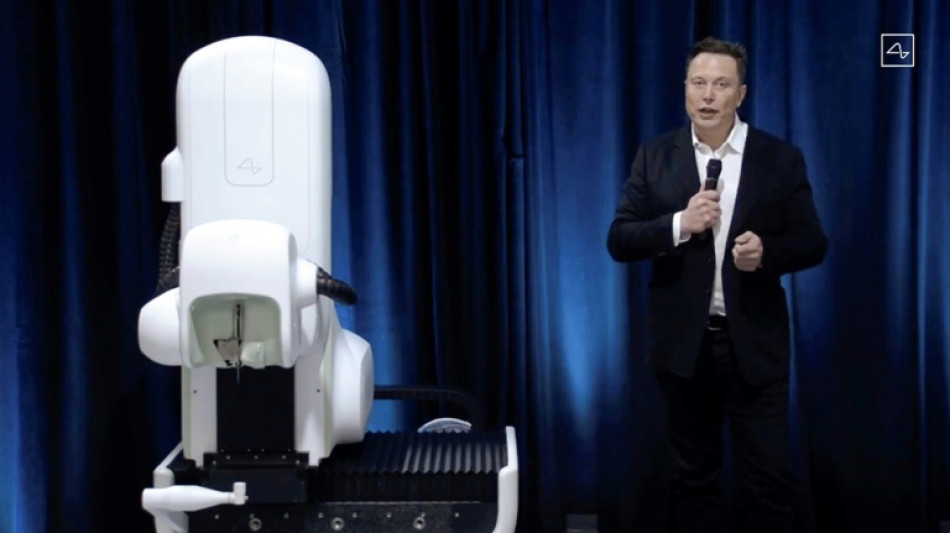
Musk's superhuman vision promise is dangerous: researchers / Photo: © Neuralink/AFP/File

 Battered Duerer masterpiece up for five-year revamp

 Trump met with Venezuela's interim leader at UN
 Malaysia furore after Najib wins conditional house arrest
 Italy hope for new dawn under Mancini
 Mongolian herders enlist new tech against harsher, drier climate
 Tata turmoil shines light on India succession woes
 World Cup 'not enough' as Spain begin next chapter
 Meta acts against 3.7 mn scammers' accounts with Singapore police help
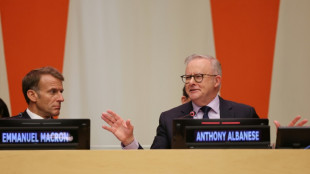 Australia PM says draft social media rules about taking back control

 Voting opens in Alaska's annual Fat Bear Week
 MLS coach axed for telling female ref 'It's a man's game'
 US refuses to give Sudan's de facto leader visa for UN

 Man City hold Bayern to start Women's Champions League, Arsenal win late
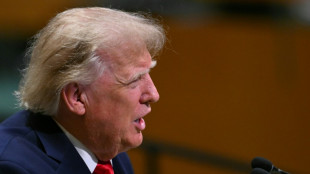 Trump threatens Iran with 'hell' but reveals fresh talks

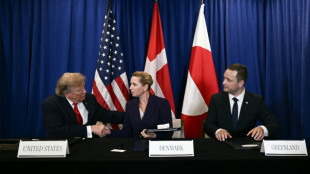 Trump signs security deal with Greenland, Denmark at UN
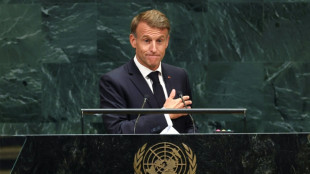
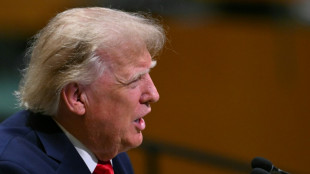 Trump threatens Iran with 'hell' but unveils fresh talks

 Chile's Atacama Desert blossoms with life after El Nino rains

 Sri Lanka hands 220-year jail terms to 15 convicted of Easter bombings

 Typhoon Dujuan leaves 7 dead in Japan from landslides, flooding: media
 Ganna and Borghini lead Italy to mixed relay gold at cycling worlds
 Drug cocktail killed former child star Hayden Panettiere: coroner

 Moldova declares energy, water emergency

 French Holocaust denier jailed for eight months

 Oil prices slide, AI stock buzz fades

 Trump threatens to 'annihilate' Iran in bombastic UN speech

Researchers have criticised billionaire Elon Musk for promising that his brain implant technology could eventually provide patients with vision superior to normal human sight.
Musk has long promised that his Neuralink company was working on implants that could restore sight to blind people, telling his 190 million followers on X in March that the product would be called "Blindsight".
He said the product was already working in monkeys, adding: "Resolution will be low at first, like early Nintendo graphics, but ultimately may exceed normal human vision."
But Ione Fine, psychology professor at the University of Washington, said it was "a dangerous thing to say".
Fine co-authored a paper published Monday in the journal Scientific Reports that used models known as "virtual patients" to simulate how such implants could work.
The article argues that the impact of novel implants including Musk's are likely to be limited by human biology.
Fine said Musk's idea rested on a flawed premise that high-resolution vision could be created by implanting millions of tiny electrodes into the visual cortex, the region of the brain that processes information received from the eye.
"Engineers often think of electrodes as producing pixels, but that is simply not how biology works," she said in a statement.
Creating an image in the brain involves not only stimulating individual cells in the way an implant can do, but also then generating a "neural code" that fires across thousands of cells.
She said scientists were not even close to finding the correct neural code in a blind person -- meaning the impact of implants would be limited.
"Blindness doesn't make people vulnerable, but becoming blind late in life can make some people vulnerable," she said.
"So, when Elon Musk says things like 'this is going to better than human vision', that is a dangerous thing to say."
M.Furrer--BTB