-
 COP31 host says AI climate footprint to be a summit priority
-
French singer accuses Miley Cyrus of plagiarism

-
 Berlin's far-left vote winners reject anti-semitism charges
-
EU fines Google 403 mn euros for location data breach

-
 Mancini eager for 'new adventure' on Italy return
-
'Best is yet to come,' says De la Fuente after Spain extension

-
 Mbappe says having Zidane as France coach 'like a film'
-
Why diesel prices are rising more than crude oil

-
 Palmer, Rice out of England Nations League squad
-
COP31 host says AI's climate footprint to be a summit priority

-
 German auto workers stage mass protests in bid to save jobs
-
Renewables hit record in 2025, but world must move faster: report
-
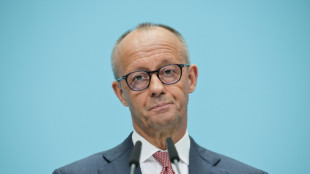 Embattled Merz vows to keep ruling for 'democratic future' of Germany
-
US media outlets to sue Trump administration after White House ban

-
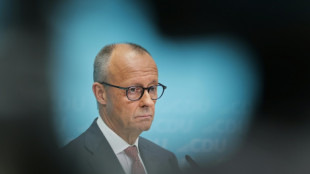 Merz vows to keep ruling coalition together for 'democratic future' of Germany
-
Global stocks rally on lower oil prices, US-China hopes
-
 Spain coach De la Fuente gets new deal after World Cup success
-
EU proposes energy rating for data centres
-
 Pressure grows on Germany's Merz after election defeats
-
Schoolgirl Yu scorches to second gold as doping case rocks Games

-
 China's Zhang beats Japan rivals to Asian Games gymnastics gold
-
Putin's party secures record score in Russia election

-
 Samlingen Haupt: Vad pengar avslöjar om oss människor
-
Haupt Koleksiyonu: Paranın Biz İnsanlar Hakkında Anlattıkları

-
 Tens of thousands of German auto workers protest to save jobs
-
Spanish PM says unregulated AI could be 'devastating'

-
 हॉप्त् कलेक्शन: पैसा हमारे बारे में एक इंसान के रूप में क्या प्रकट करता है
-
Yu, 13, smashes record again with second Asian Games gold

-
 Συλλογή Haupt: Τι αποκαλύπτει το χρήμα για εμάς τους ανθρώπους
-
Switzerland to play without Xhaka over fake Covid certificate

-
 TradersYard Shifts Focus to Futures Trading
-
From Korean Chipmakers to Leveraged Semiconductor ETFs: STARTRADER Launches 49 New 24/7 Stock and ETF CFDs

-
 ハウプト・コレクション:お金が人間について明かすこと
-
Thai badminton player first doping case at Asian Games: testers

-
 하우프트 컬렉션: 돈이 우리 인간에 대해 드러내는 것
-
Колекція Гаупта: Що гроші розповідають про нас, людей

-
 Indonesia doing 'everything' but struggling to curb fires
-
German far-right AfD poll winner says Merz 'twilight' has begun
-
 Sbírka Haupt: Co o nás lidech prozrazují peníze
-
Flights scrapped, evacuations urged as Typhoon Dujuan nears Japan
-
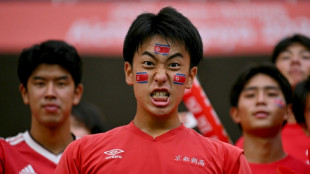 North and South Korea fight out draw in niggly Asian Games clash
-
China confirms Xi to visit US this week for Trump talks

-
 Officials say man shot, wounded by ICE agent in Texas
-
مجموعة هاوبت: ما يكشفه المال عنا نحن البشر

-
 豪普特收藏:金錢如何揭露人類的本質
-
Colecția Haupt: Ce ne dezvăluie banii despre noi, oamenii

-
 Kolekcja Haupta: Co pieniądze mówią o nas, ludziach
-
Sisters of jailed Pakistan ex-PM Imran Khan arrested

-
 The Haupt Collection: What Money Reveals About Us as Human Beings
-
African players in Europe: Semenyo brace helps City top table

SpaceX Polaris Dawn crew begins historic private spacewalk
A pioneering private crew made history Thursday with the first-ever spacewalk by non-professional astronauts, marking a giant leap forward for the commercial space industry.
The SpaceX Polaris Dawn mission, led by fintech billionaire Jared Isaacman, launched early Tuesday from the Kennedy Space Center in Florida, journeying deeper into the cosmos than any humans in the past 50 years, since the Apollo program.
Then, with their Dragon spaceship's elliptical orbit reduced to a low point of roughly 120 miles and a high of 430 miles, pure oxygen began flowing into their suits, marking the official start of their extravehicular activity (EVA) at 1012 GMT.
"The first spacewalk from Dragon has begun!" SpaceX wrote on social media platform X.
The milestone is the latest in a string of achievements by SpaceX, the company founded by Elon Musk in 2002. Initially dismissed by traditionalists, it has since grown into a powerhouse that has reshaped the space industry.
In 2020, it beat aerospace giant Boeing in delivering a safe crewed spaceship to provide rides to NASA crew to the International Space Station.
Today, it launches more rockets than any competitor, and its Starlink satellite constellation provides internet service to dozens of countries.
- 'Bit of a dance' -
The crew is currently in a "prebreathe" process to purge nitrogen from their blood, preventing decompression sickness caused by nitrogen bubbles. The cabin pressure will be gradually reduced to match that of space.
Then they will open the hatch and Isaacman and crewmate Sarah Gillis, a SpaceX engineer, will take turns peeking out from a structure attached to the hatch dubbed "Skywalker," equipped with hand and footholds.
"It'll look like we're doing a little bit of a dance," Isaacman quipped during a recent press conference.
In reality, they will be stress-testing SpaceX's next-generation suits, which boast heads-up displays, helmet cameras and enhanced joint mobility systems.
However, they won't float away on a tether like early spacefarers such as Soviet cosmonaut Alexei Leonov or NASA's Ed White did in 1965. Instead, they'll cling to the spacecraft as it whizzes around the planet at roughly 17,500 mph.
Mission pilot Scott Poteet and SpaceX engineer Anna Menon will monitor vital support systems during the activity, while Isaacman and Gillis are expected to each spend about 15 to 20 minutes partially outside the craft.
"The risk is greater than zero, that's for sure, and it's certainly higher than anything that has been accomplished on a commercial basis," former NASA administrator Sean O'Keefe told AFP.
"This is another watershed event in the march toward commercialization of space for transportation," he added, comparing the crewmates to early aviators who paved the way for modern air travel.
- First of three Polaris missions -
The spacewalk follows a daring first phase of the mission, during which the Dragon spacecraft reached a peak altitude of 870 miles (1,400 kilometers).
This put the crew more than three times higher than the International Space Station, in a region known as the inner Van Allen radiation belt -- a zone filled with dangerous, high-energy particles.
All four underwent more than two years of training in preparation for the landmark mission, logging hundreds of hours on simulators as well as skydiving, centrifuge training, scuba diving and summiting an Ecuadoran volcano.
Upcoming tasks include testing laser-based satellite communications between the spacecraft and the vast Starlink satellite constellation, and completing dozens of experiments, including tests on contact lenses with embedded microelectronics to monitor changes in eye pressure and shape in space.
Polaris Dawn is the first of three missions under the Polaris program, a collaboration between Isaacman and SpaceX.
Financial terms of the partnership remain under wraps, but Isaacman, the 41-year-old founder and CEO of Shift4Payments, reportedly poured $200 million of his fortune into leading the 2021 all-civilian SpaceX Inspiration4 orbital mission.
The final Polaris mission aims to be the first crewed flight of SpaceX's Starship, a prototype next-generation rocket that is key to founder Elon Musk's ambitions of colonizing Mars.
M.Furrer--BTB