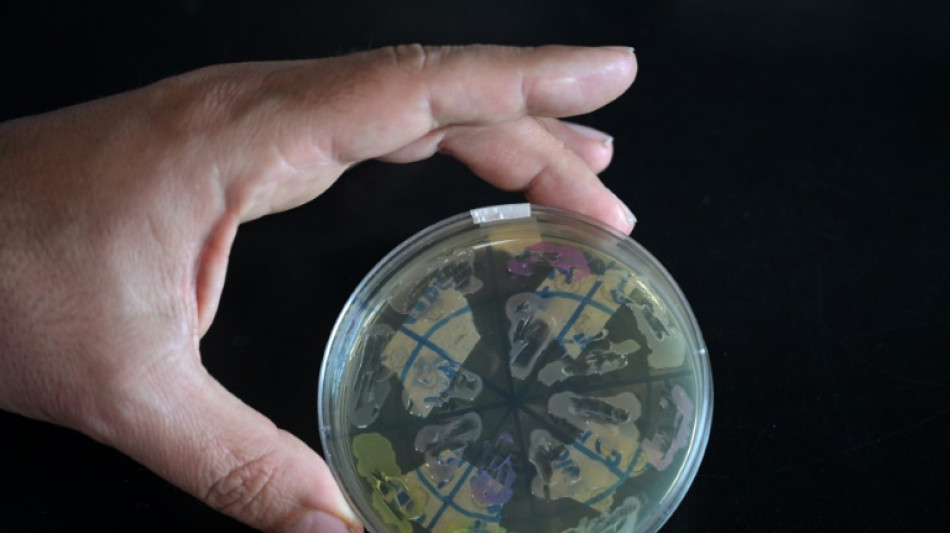
Scientists fear underfunded Argentina research on verge of collapse / Photo: © AFP

 Schoolgirl Yu, 13, fastest again in bid for third Asian Games gold
 Oil prices fall after Trump hails 'good' talks with Iran

 AI political ads warp reality ahead of US midterms
 Kenneth Branagh embraces action hero role -- to get in shape

 'New one' Klopp promises fresh approach as Germany reign begins
 Milne returns to New Zealand squad for India T20 series
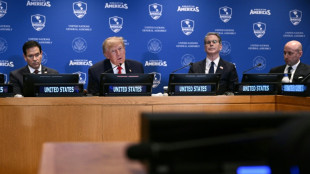 US-led Americas coalition backs sanctions against crime groups

 'Star Wars' fans and art lovers line up for new Lucas museum
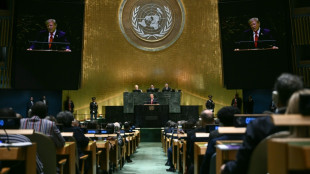 Trump renames AI 'super intelligence' as leaders jostle over dangers

 Oil prices retreat as markets welcome US-Iran talks
 US refusing to give Sudan's de facto leader visa for UN: diplomatic sources, UN
 Macron urges world to choose UN over 'law of the jungle'
 All-rounder Jacks stars as England beat Sri Lanka in 1st ODI
 Man City peg back Bayern to start Women's Champions League

 Trump beats 'America first' drum at UN as allies tread carefully

 Snedeker backs Spaun for Ryder Cup after Presidents snub

 French prosecutors probe secret filming of women with smart glasses

 Trump renames AI "super intelligence," rejects international oversight

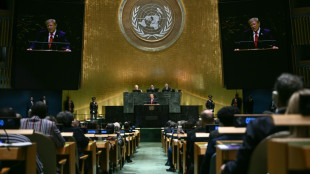 Trump rejects international regulation of AI

 How is the EU approaching record fuel prices?

 Sri Lanka's Colombage strikes on debut as England dismissed for 265 in first ODI
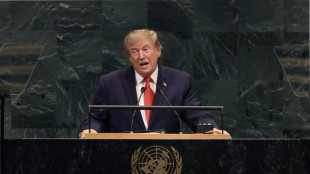
 Hurricane Polo strengthens to top category 5 off Mexico

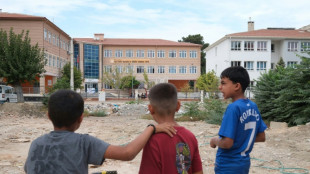 11 hurt as teen opens fire outside school in western Turkey

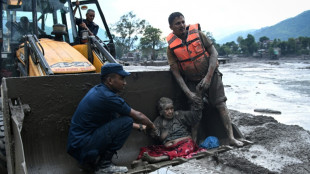 UN chief says 'Big Oil' treats atmosphere as open sewer

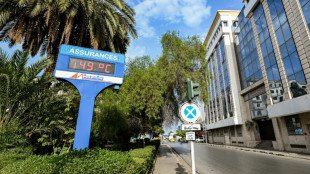 Tunisia says 2026 summer hottest on record

Argentine biochemist Alejandro Nadra worries that President Javier Milei's budget cuts will undo his scientific quest to unravel the cause of genetic diseases that disable and kill millions.
Since taking office last December, budget-slashing Milei has frozen public university and research budgets even as annual inflation stands at 236 percent.
This meant real spending on science and technology fell 33 percent year-on-year in August, according to the CIICTI research center.
Nadra said he has already had to stop some of his experiments with the proteins responsible for gene mutations that cause diseases.
"We are on the verge of collapse," Nadra told AFP from his laboratory at the University of Buenos Aires, home to three Nobel Prize laureates in science.
Along with artists, teachers, pilots, social workers and countless other professionals affected by Milei's drive to curb flyaway inflation and public debt, scientists fear for their future in Argentina.
"People are leaving, and they aren't applying for scholarships or teaching positions anymore because they can’t make a living," said Nadra.
Those who do often end up working in labs without the necessary equipment or supplies.
"If things don’t change, the time is near when everything disintegrates," said Nadra.
Nadra said he has not been able to buy anything he needs for his research since last November.
"So, if I run out of supplies, I either borrow from someone who still has some, or I stop doing those experiments."
The gross monthly salary of a research assistant today at Argentina's Conicet research council is about 30 percent less, roughly $1,180, than a year ago, according to the RAICYT network science institutes.
Official figures released last week showed that 52.9 percent of people live in poverty in Milei's Argentina.
- 'Drastic reduction' -
Biologist Edith Kordon works at the IFIBYNE state research institute,where she investigates breast cancer.
"This is the first time this has happened to me. I mean, it has always been very hard to get funding, it has always been very hard to get scholarships, but now there is this practical certainty that we have nothing... I’ve never had so little money to do anything," she told AFP.
Former science minister Lino Baranao recently highlighted that even before Milei's cuts, Argentina spent about 0.31 percent of GDP on science compared to 1.21 percent in Brazil, 3.45 percent in the United States and 4.9 percent in South Korea.
Today, it is even less, at about 0.2 percent.
"Never in the recent history of Argentina has there been such a drastic reduction in the (scientific) budget," Baranao told La Nacion newspaper.
In a more prosperous past, state funding of research had made possible the development of a transgenic wheat strain resistant to drought by a Conicet research team, among other life-changing breakthroughs.
Last week, Milei's government adjusted Conicet's working budget upward to just over $100,000 for 2024, a figure which physicist Jorge Aliaga considers "irrelevant" in its inadequacy.
"It doesn’t change anything," he told AFP.
In March, a group of 68 Nobel Prize laureates from around the world expressed concern in an open letter about Argentina's public research system approaching "a dangerous precipice."
Self-described "anarcho-capitalist" Milei, for his part, has hit out at "the so-called scientists and intellectuals who believe that having an academic degree makes them superior beings."
K.Brown--BTB