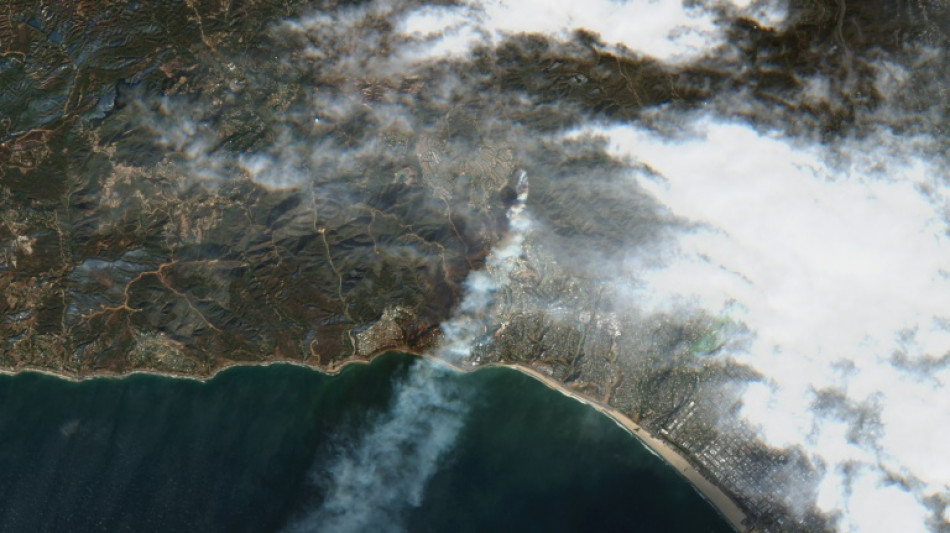
Extreme weather, suburban sprawl fuel LA's wildfires / Photo: © COPERNICUS SENTINEL-2/AFP

 Voting opens in Alaska's annual Fat Bear Week

 MLS coach axed for telling female ref 'It's a man's game'

 US refuses to give Sudan's de facto leader visa for UN
 Man City hold Bayern to start Women's Champions League, Arsenal win late
 Trump threatens Iran with 'hell' but reveals fresh talks
 Trump signs security deal with Greenland, Denmark at UN
 Trump threatens Iran with 'hell' but unveils fresh talks

 Chile's Atacama Desert blossoms with life after El Nino rains

 Sri Lanka hands 220-year jail terms to 15 convicted of Easter bombings
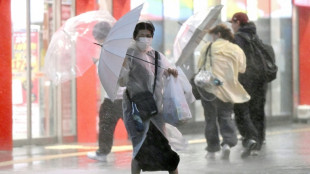 Typhoon Dujuan leaves 7 dead in Japan from landslides, flooding: media

 Ganna and Borghini lead Italy to mixed relay gold at cycling worlds

 Drug cocktail killed former child star Hayden Panettiere: coroner
 Moldova declares energy, water emergency
 French Holocaust denier jailed for eight months
 Oil prices slide, AI stock buzz fades

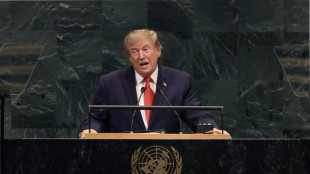 Trump threatens to 'annihilate' Iran in bombastic UN speech

 Prada's skirts take centre stage as Milan Fashion Week begins
 Quoin Pharmaceuticals Announces FDA Fast Track Designation for QRX003 for the Treatment of Peeling Skin Syndrome
 Brazil's Flavio Bolsonaro turns scandal into poll gains
 Republican senator seeks probe of Trump Jr Russian-funded wedding

 Memoir by Diana's brother goes on sale after rocking UK monarchy

 Newcomers South Korea face holders Italy in Davis Cup finals

 Japan's Kojima sounds Marchand warning with Asian Games gold

 England rugby star Pollock signs new Northampton deal

 STARTRADER Expands Its Chinese Equity CFD Range with CXMT and Unitree Robotics

A prolonged dry spell combined with strong winds has created the "perfect conditions" for Los Angeles wildfires to rage out of control, even though experts say it's too soon to pinpoint exactly how much climate change contributed.
At the same time, perennial debates over suburban sprawl and forest management are intensifying, spurred by political mudslinging from incoming President Donald Trump and his close ally Elon Musk.
"We see these fires spread when it is hot and dry and windy, and right now all of those conditions are in place in southern California," Kristina Dahl, vice president for science at Climate Central, told AFP.
"The clearest climate signal for those three conditions is with the temperature," she added.
While it's not yet known what started the blazes, "human-caused climate change is intensifying the heat that drives wildfires, increasing temperatures in southern California up to two-degrees Celsius (3.6F) since 1895," Patrick Gonzalez, a climate change scientist at the University of California, Berkeley told AFP.
2024 is set to be named the hottest year on record for both the United States and the world, capping a decade of unprecedented heat.
- 'Widening' fire season -
Although wildfire activity can vary greatly from year to year, short-term extreme weather conditions helped create the "perfect conditions" for the rencent blazes, said wildfire scientist Maria Lucia Ferreira Barbosa of the UK Centre for Ecology & Hydrology.
Last year's El Nino weather system brought heavy rains that fueled excessive vegetation growth in the first half of 2024.
But the second half of the year was marked by drought across southern California, setting the stage for what scientists call "precipitation whiplash," another potential hallmark of climate change that turned the region into a tinderbox.
Low humidity -- combined with strong, dry Santa Ana winds blowing inland -- further parched the already desiccated shrublands.
Small embers can also be carried by the wind to ignite new areas, explained Rory Hadden, Professor of Fire Science at the University of Edinburgh.
This can quickly overwhelm firefighters "and can also make escape challenging as visibility is reduced," he added.
"The ongoing wildfires in California are unprecedented, in the sense that they are dramatic for this time of the year," said Apostolos Voulgarakis, an atmospheric scientist at Imperial College London, adding that research shows the state's fire season is "widening" as a consequence of climate change.
Attribution studies, which use statistical modeling to measure humanity's impact on climate, will be needed to determine the precise culpability of human-driven warming on the current fires.
However, scientists broadly agree that rising temperatures are making such fire-prone conditions more frequent.
A recent UN Environment Programme report found a potential global increase in extreme fires by up to 14 percent by 2030, 30 percent by 2050, and 50 percent by the end of the century.
- Prescribed burns and political feuds -
As more people move into wildfire-prone ecosystems -- partly driven by housing costs in safer coastal areas -- the danger to lives and property only grows.
Dahl noted that this dynamic is especially visible in places like Lake Tahoe, which has attracted newcomers, resulting in a marked growth in what is called the "wildland-urban interface."
Forest management is also under scrutiny.
The United States long practiced aggressive fire suppression before gradually embracing prescribed burns -- a tactic supported for centuries by Native American tribes.
California treats about 125,000 acres (50,000 hectares) of wildlands each year with controlled burns, but it isn't clear if that's sufficient, and the state's patchwork of regulations governing land under state, federal or private jurisdictions pose challenges to scaling it.
In the political arena, Musk took to X to slam "nonsense regulations" he believes hamper more active fire prevention, while Trump labeled Gavin Newsom "the incompetent governor," highlighting how the growing number of disasters is increasingly fueling ideological battles.
O.Lorenz--BTB