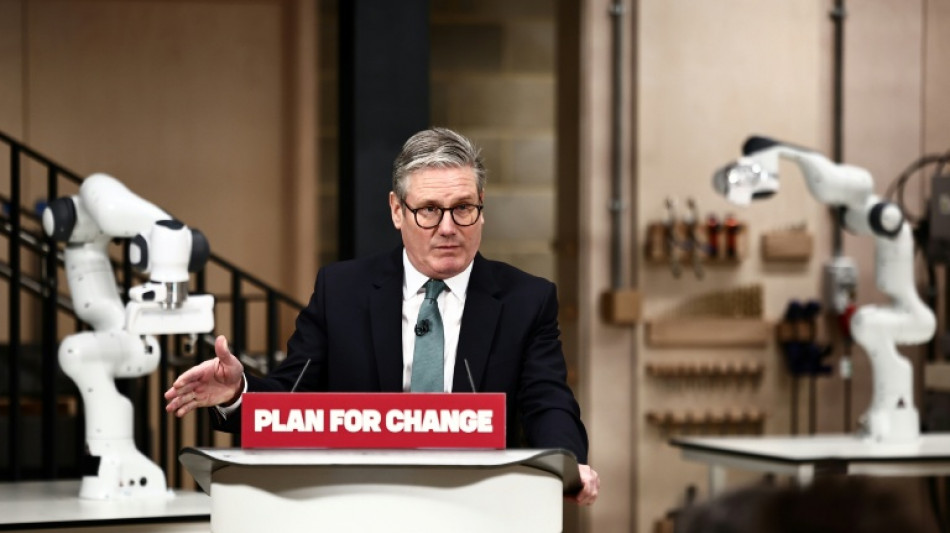
PM vows 'pro-growth' rules to make Britain an 'AI superpower' / Photo: © POOL/AFP

 Voting opens in Alaska's annual Fat Bear Week
 MLS coach axed for telling female ref 'It's a man's game'

 US refuses to give Sudan's de facto leader visa for UN

 Man City hold Bayern to start Women's Champions League, Arsenal win late
 Trump threatens Iran with 'hell' but reveals fresh talks

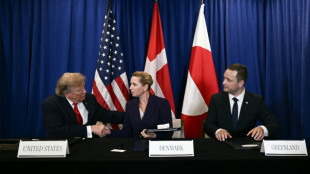 Trump signs security deal with Greenland, Denmark at UN

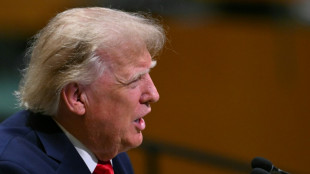 Trump threatens Iran with 'hell' but unveils fresh talks

 Chile's Atacama Desert blossoms with life after El Nino rains

 Sri Lanka hands 220-year jail terms to 15 convicted of Easter bombings
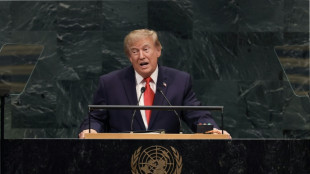
 Typhoon Dujuan leaves 7 dead in Japan from landslides, flooding: media

 Ganna and Borghini lead Italy to mixed relay gold at cycling worlds

 Drug cocktail killed former child star Hayden Panettiere: coroner

 Moldova declares energy, water emergency

 French Holocaust denier jailed for eight months

 Oil prices slide, AI stock buzz fades

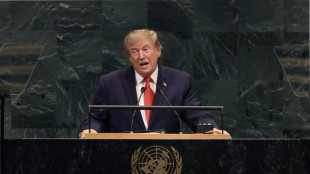 Trump threatens to 'annihilate' Iran in bombastic UN speech

 Prada's skirts take centre stage as Milan Fashion Week begins

 Quoin Pharmaceuticals Announces FDA Fast Track Designation for QRX003 for the Treatment of Peeling Skin Syndrome

 Brazil's Flavio Bolsonaro turns scandal into poll gains

 Republican senator seeks probe of Trump Jr Russian-funded wedding

 Memoir by Diana's brother goes on sale after rocking UK monarchy

 Newcomers South Korea face holders Italy in Davis Cup finals

 Japan's Kojima sounds Marchand warning with Asian Games gold

 England rugby star Pollock signs new Northampton deal

 STARTRADER Expands Its Chinese Equity CFD Range with CXMT and Unitree Robotics

Prime Minister Keir Starmer on Monday laid out his vision to harness the power of artificial intelligence to boost Britain's flagging economy, promising "pro-growth" regulations amid concerns about the technology's unchecked use.
Speaking following the launch of a government "action plan", Starmer pledged to ease red tape to attract billions of pounds of AI investment to Britain.
The "AI Opportunities Action Plan" includes 50 recommendations that the government will implement to boost AI-driven efficiency in the public sector, from education and healthcare to detecting potholes.
"Mark my words, Britain will be one of the great AI superpowers," Starmer said at an event at the UCL campus in east London, hailing the technology which is raising complex questions for governments around the world.
The UK -- which has the third-largest AI industry after the United States and China -- will be "pro-growth and pro-innovation on regulation", Starmer said.
"I think it is important to recognise that we've got freedom now in relation to regulation, to do it in the way that we think is best for the UK," said Starmer, calling for AI to be "tested" before it is "regulated".
"We don't need to walk down a US or an EU path on AI regulation", the prime minister wrote in the Financial Times ahead of the speech, calling for a "distinctively British approach".
Starmer's position marks a shift from the EU's heavy-handed regulation of the sector, especially regarding data protection laws, which has faced criticism from tech giants.
In the US, incoming President Donald Trump's desire to deregulate the economy and his team of Silicon Valley-linked advisors could influence policies on AI regulation.
- Data library -
The UK's latest plans include the creation of a national data library which would make public data sets, including anonymised National Health Service records, "available to AI researchers and innovators".
The data library would be bolstered by a "clear and trusted copyright regime", Starmer added. "It is important that we keep control of that data."
"But I don't think that we should have a defensive stance here that will inhibit the sort of breakthroughs that we need."
The latest plans come amid concerns surrounding AI's role in spreading online misinformation and deepfake pornography, as well as fears robots could one day outsmart humans if left unchecked.
The government outlined plans for the creation of "dedicated AI growth zones" designed to speed up planning proposals for data centres and other AI infrastructure.
It also hopes to increase server capacity twentyfold by 2030, including by building "a brand new supercomputer with enough AI power to play itself at chess half a million times a second".
The new supercomputer pledge comes months after Starmer axed a previous supercomputer project in Edinburgh planned by the previous government, citing a lack of funds.
- 'Economic mismanagement' -
Starmer's administration estimated that AI could be worth £47 billion ($57 billion) to the UK each year over a decade.
It announced that three tech companies -- Vantage Data Centres, Nscale and Kyndryl -- had committed to spending £14 billion on AI in the UK, leading to the creation of more than 13,000 jobs.
Starmer has put firing up Britain's economy at the heart of his agenda since taking office last July. In his speech, Starmer staked economic growth on advancements in AI, saying the technology "would turbocharge every single element of our plan for change".
But weaker-than-expected growth, rising borrowing costs and a falling pound is complicating his task, meaning he could be forced to make spending cuts or hike taxes this year.
Shadow Science Secretary Alan Mak accused Labour of insufficiently funding its AI ambitions.
"AI does have the potential to transform public services, but Labour's economic mismanagement and uninspiring plan will mean Britain is left behind," Mak said.
There are also concerns that the sector-wide implementation of AI could result in job losses.
"It's a disruptive technology, like many other previous technological waves," senior cabinet minister Pat McFadden told Times Radio.
"But I think it's too pessimistic to simply talk about job losses," he added.
The government is expected to wrap up next month a consultation to clarify the application of copyright law to AI, which it says aims to protect the creative industry.
B.Shevchenko--BTB